I’m curious about Israeli design habits. Could you go on about that?
What are some technical advantages of asymmetrical designs?
I’m curious about Israeli design habits. Could you go on about that?
What are some technical advantages of asymmetrical designs?
Very true. Notice that three of the planes linked by the OP have their engine air intakes at the leading edge of the wing where it meets the fuselage. All three of the British V bombers from the early '50s used that configuration, with the engines mounted within the wing. Jacquernagy compared the Vulcan to the American B-58 Hustler; both had delta wings but the Hustler had the engines in pods under the wing. It carried over to civilian planes, too; compare the British Comet with the American 707 and DC-8.
“If it looks right, it’ll fly right” was a real design principle for much of aviation history so yes, aesthetics does play a role in aircraft design, both civilian and military.
Actually, I can think of one example where ‘looks cool’ was unequivocally a design criterion for military aircraft - this one.
Seriously? We’re supposed hunt through that page to find out what you’re talking about? You know better.
You really had to read the article to find out what was special about the **Red **Baron’s plane?
Wow. I actually think you should read the whole article now.
I wish I could find a cite, but I remember reading that a General in the procurement stream for the US military during WWII basically said (paraphrasing from memory), “Style isn’t a main concern, but we’re not funding ugly aircraft.”
It’s bullshit, btw. Lots of pretty planes have flown like pigs, and plenty of ugly ones are pretty sweet.
It’s easier to sell a pretty plane, especially a civilian one, but there are exceptions. The F-22 beat the sleeker F-23 for the strike fighter competition based on cost and performance, for instance.
The aesthetics of the Bell X-1 were pretty cool, but it was designed that way for a totally different reason.
Take a look at the Anglo-French Concorde vs. the Russian Tu-144. Even the U.S. B-70, despite it’s twin tales, has a similar profile.
I would’ve thought aircraft are symmetrical because pilots prefer aircraft that perform to the left like they do to the right.
Typically speaking, a plane that doesn’t want to flip over is considered to fly better. YMMV.
Yeah, generally speaking symmetry of handling and performance is likely to go hand in hand with symmetry of appearance.
As I said earlier: shaped primarily by function and the state of the art at the time of design.
It’s not coincidence that all those contemporary SST passenger aircraft are hard to tell apart at a glance: they all solved the same performance problems with the same engineering solutions. The state of the art, circa early 1960s. The same “art”, and similar* performance requirements, shaped the XB-70 as well.
*“Similar” performance except that the B-70 was designed for triple-sonic cruise and the SSTs were expected to do Mach 1.5 to 2.0 in cruise. And those performance differences were generated by the differences in the design: the B-70’s compression lift design and radically different (and more powerful) engines.
Yeah. They look cool. But they look cool as a consequence of practical engineering, and often “looks cool” is applied after the fact. (My cite is the hordes of A-10 “Warthog” fans.)
ETA: I have no idea why this in in GQ.
No, aesthetics are not part of military aircraft design, unless you include paint jobs.
It just so happens that the features that make an aircraft look attractive to us tend to generally be those things that also make it fly well - sleek, efficient shapes, symmetry, etc. But no military aircraft designer will add weight or impede functionality in order to make the aircraft look ‘cooler’. Perhaps in civilian aircraft you might find some very minor compromises for aesthetics, but in general the rule is that the airplane should be designed for the mission, and not for looks.
So why do they look so good? Well, that starts to get into human psychology. Why do puppies look cute? Why do people look more or less attractive to us? Much of this is mystery, although we know that humans are attracted to symmetry, the golden ratio, and other geometric qualities that show up in efficient aircraft designs.
But we also know that standards of attractiveness change - at various times in the past, for example, being ‘plump’ was considered attractive, and being thin wasn’t. In the Victorian era being white as a ghost was considered attractive, and having a tan wasn’t. So standards of beauty change with society. It’s entirely possible that the reason we find aircraft beautiful is because we like aircraft, and if you had shown someone in the 19th century a picture of an SR-71 they might have thought it was ugly.
Define the mission, then design the aircraft. Both the US and Russia benefitted from each’s version of operation paperclip and collecting Nazi engineering and engineers. If you notice each aircraft by decade, you see the school of thought in its design. The fifties were an exercise in seeing what worked with Jets, primarily with a ww2 influence in the early jets followed by design and testing in peacetime conditions.
Most of the rest of the world in the 1960’s went with a delta wing high altitude energy fighter that had a minimum time to altitude to engage bombers, both the US and Russia had space to engage intruders on defense, but the Russians went with a ww2 asthetic with rough field conditions, poor support and expected heavy casualties. The US had a multi divergent path between naval aviation and airforce doctrines veered away from the pure fighter and start to see the introduction of the multi mission capable Phantom, the worlds first generation superfighter.
In the 70’s France and Sweden doubled down on the delta fighters, and were joined by clones from South Africa and Israel with the Cheetah and the Kafir respectively.The American experience in Vietnam led to the hi/lo doctrine with the heavy fighter, the F15. Big wing, lots of missiles, big gun and big radar. The airforce doctrine was to gain dominance in the air, followed up with the lo fighters, the F16 doing the air to mud. Naval aviation smarting from the F111 debacle went with the F14 Tomcat, carrying 6 huge missiles that pushed engagement ranges to 100 miles out, based on the adage of kill the archer, not the arrow.
By comparison the Russians only real improvement was the mig 25 foxbat for defense against a bomber that never entered service. Until the F15/16 started entering squadron level service in the early 80’s, everyone was limited to daylight ops. Russia’s main aviation chops during this decade was heavy bombers, designed to kill carriers working in concert with Russian submarines and fleet assets.
In the 80’s video killed the rockstar, but also Russia as a major power. With the introduction of microchip technology and the astonishing display of airpower that led to Israel disembowling the Syrian airforce, the Cossacks had a problem. They had a third rate airforce and really needed to upgrade, which led to the mig 29/ Su 27 , yeah they copied the american hi/lo doctrine and before they could capitalize on it, the wall came down. Russian design has never really recovered.
But to answer your question, American and Russian designs look like they were designed by aircraft engineers. British designs, by contrast look like they were designed by automotive engineers.
Isn’t this a trade-off between efficiency/performance, ease of maintenance and difficulty/cost of manufacturing? It’s not just a matter of British engineers thinking it looks cool.
This is a good point. The degree of aesthetic vs aerodynamic influence on design is often discussed. You can obviously have two aircraft which meet roughly the same performance spec yet which look very different. Some aircraft designers have consistently produced aesthetically beautiful planes, which aren’t always successful or dramatically superior to similar contemporaries in aerodynamic terms.
In civilian aviation an extreme example of this difference is between the Beech King Air 250 and the Beech Starship, both made by the same company but the Starship was essentially designed by Burt Rutan who often made nice-looking planes:
King Air 250:
https://blog.wepushtin.com/wp-content/uploads/sites/2/2016/10/King_Air_250.jpg
Starship:
https://airway.uol.com.br/wp-content/uploads/2015/12/star-n-large.jpg
Two Cold War military planes which were roughly similar in performance were the F-104 Starfighter and the Mig-21. They are very different aesthetically.
F-104:
Mig-21
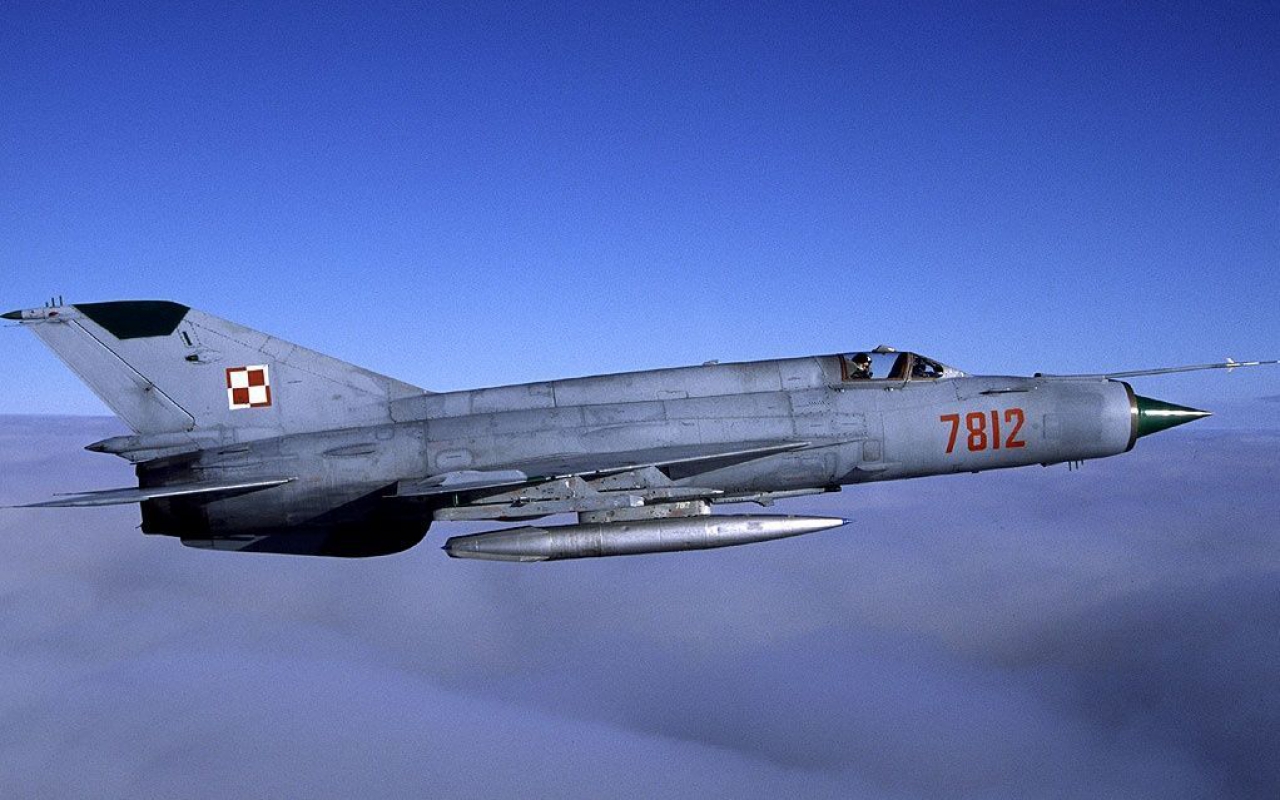
The F-104 was designed by Kelly Johnson who designed many beautiful planes, including the Lockheed Constellation, often considered the nicest-looking propliner: https://upload.wikimedia.org/wikipedia/commons/8/81/Lockheed_L-1649_Constellation_TWA.jpg
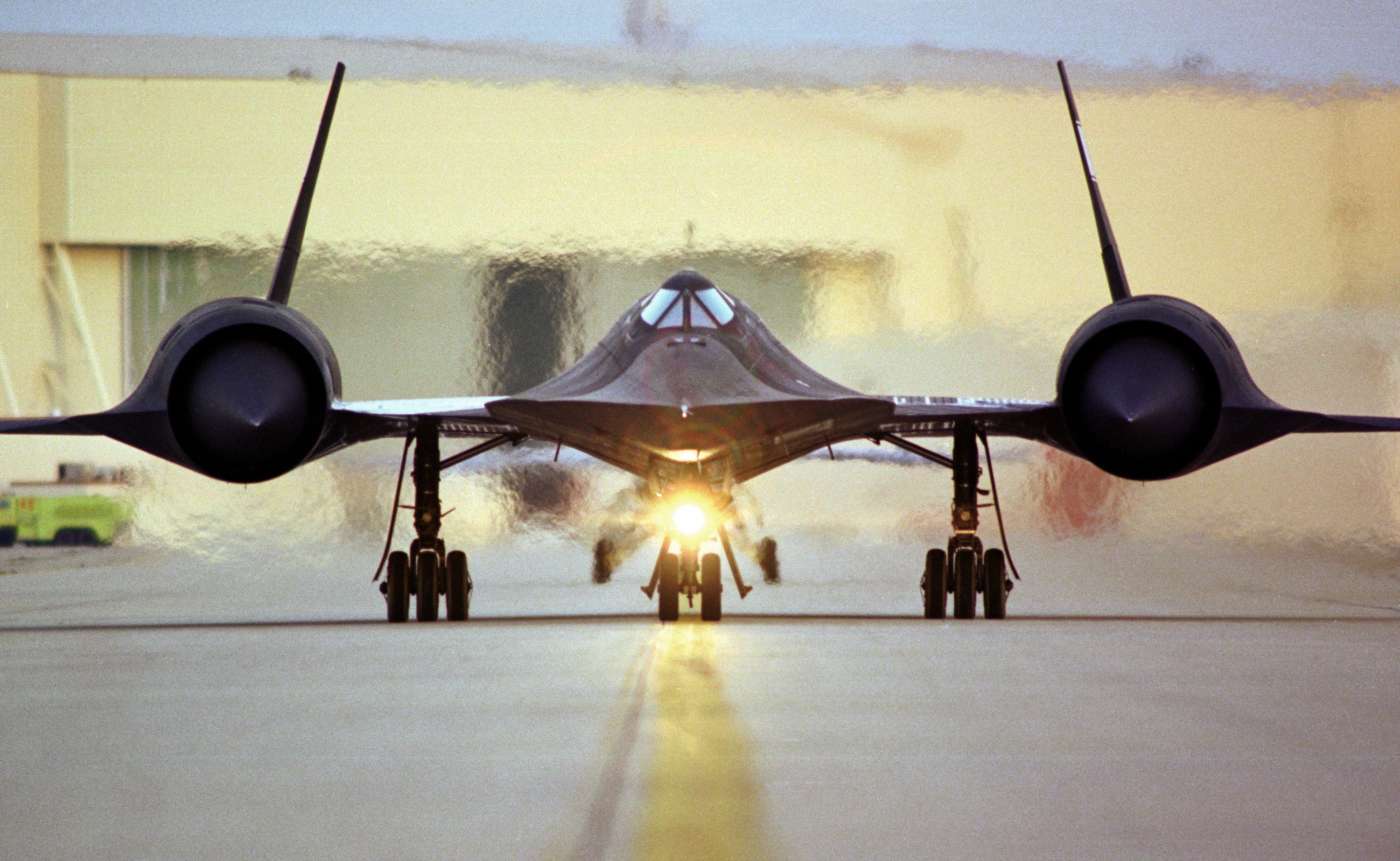
And the SR-71 which didn’t have an aerodynamic equivalent: https://upload.wikimedia.org/wikipedia/commons/f/fb/NASA’s_SR-71A_aircraft_taxiing.jpg
The Starfighter conveys very clearly: “this sucker’s fast, dude”
And lest we think the Brits were exclusively about the swoopy curvy relatively low-speed very conservative birds, there’s their very fast Lightningfighter with a whole bunch of *other *unusuals about it.
There was an experiment with a plane that had a wing that could be rotated as a unit. On takeoff, you had a nice wide wing for excellent lift; then, at high speed, the wing would be rotated so that, say, the port wingtip was forward of center by as much as the starboard tip was aft of it. This would give a good high-speed sweep to the wing that made it more aerodynamic than a symmetrical sweep. And I guess it worked pretty well except they ran into inertial coupling instabilities. It might have been good for straight-line fast travel in clean air, but the disadvantages were not enough to outweigh the gains, so it got set aside.