Determining whether two specimens are the same species is especially problematic with extinct species. For instance, the Cleveland Museum of Natural History has a theropod skull which is usually described as something called a “nanotyranosaurus”, but which might just be a juvenile T. rex. And there’s some speculation that all of the specimens we call “tricerotops” might be juveniles, with the adults of the same species being what’s called “torosaurus”. When all you have is fossils, you certainly can’t put two individuals together and see if they mate, you almost never have any DNA, and it’s very hard to just go out and find more specimens.
They resemble each other in that both are stubby burrowers with spikes. But they look very different. I mean, a horse looks a lot like a cow, they both have hooves and four legs and eat grass. But it’s pretty easy to tell the difference.
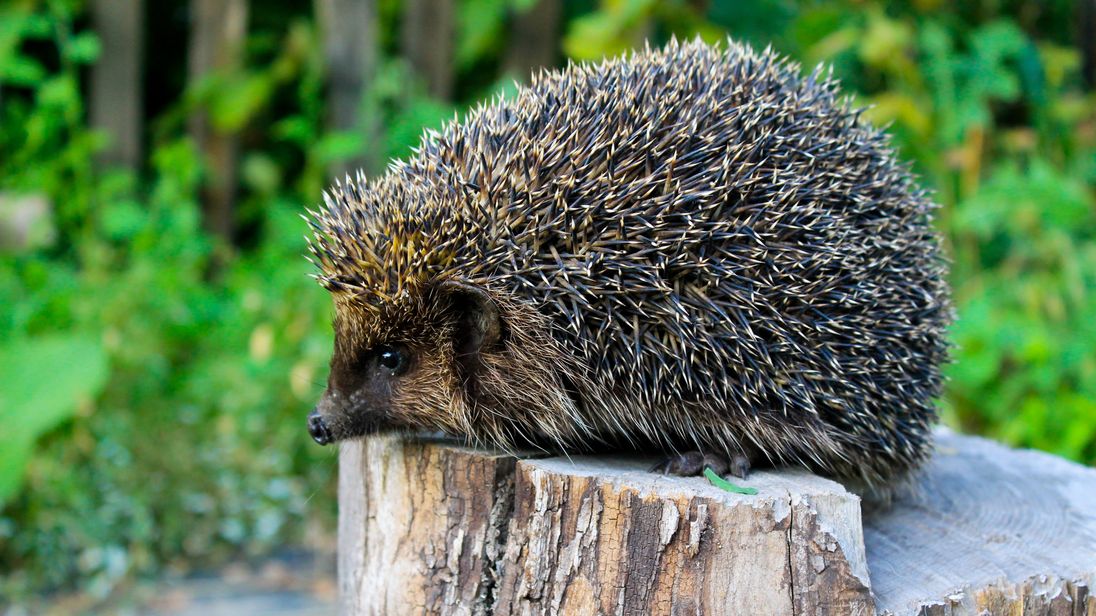
You’re reaching. The OP asked for species that look “exactly the same,” not species that “resemble each other.” By that criterion you could include dolphins and sharks. Aside from having spines, echidnas and hedgehogs don’t really look that much alike. Echidnas are much larger and have long beaks and large spines, hedgehogs are quite small and have button noses and short spines. If they were side by side you would never mistake one for the other.

The scrub jay “split” doesn’t refer to speciation in recent years, but to a new division in the taxonomy and nomenclature. The OP asked for “two different animal species that look exactly the same,” which, to my admittedly non-Colibri eyes, the two scrub jay species do.
What? One is CLEARLY a darker shade of blue ;)!
I actually hadn’t heard about that split, so thanks for posting that info since I’m in ‘California Jay’ country and am fond of the aggressive little buggers. Add it to ‘Ridgway’s Rail’ as another name I have to unlearn the original( Clapper Rail )and remember. The new one I heard yesterday is that apparently Gray Jays are now back to being Canada Jays( no taxonomic split, just a simple name change ).
Desert Cottontail (Sylvilagus audubonii) and Mountain Cottontail (Sylvilagus nuttallii)?
Obligatory XKCD mimic octopus reference.
Only if you line them up that way.
Actually, the Scrub Jay has now been split into four species.
Which brings us to exactly what “exactly the same” means.
Examples like the snakes cited by Maggie the Ocelot and the meadowlark/longclaw I mentioned appear the same to a casual observer, but can be distinguished if you look at them closely.
The Scrub Jays and many other closely related species have subtle but distinct differences that an experienced observer will be able to see in the field.
The Willow and Alder Flycatchers can’t be distinguished in the field even by experts unless they are calling. Even in the hand, identification depends on the ratio between certain wing and tail feathers.
In some small mammals, the living animals can’t be distinguished in the hand. The distinction is based on details of the skull and often the baculum (penis bone).
The sooty and dusky grouse. The only real difference is that the former live along the Pacific coast-ish and the dusky lives more inland. Before it was known that they are different species, both were called “blue grouse.”
In 2016, scientists published work indicating that modern giraffes are four species Giraffe genetic secret: Four species of tallest mammal identified - BBC News
"Conservation was the catalyst for this genetic research; the Giraffe Conservation Foundation asked the team to carry out genetic analysis of giraffes in Namibia.
The foundation wanted to understand the genetic differences between different giraffe populations, to see how the animals might be affected if different subspecies were mixed together when animals were moved into protected areas.
What we found then, says Axel Janke, a geneticist at the Senckenberg Biodiversity and Climate Research Centre, who led the research, "was that the sub-species were genetically very different and separate.
“I’d never seen that in a population study [of a species] before.” "
Hmm, yes, that’s what I was taught in biology class. But a few weeks later, I was also taught that it was not science-y to attribute an intention to evolution. So I guess all we can say is: monarchs and viceroys are two species that look similar, one of them is toxic, and the other one seems to be benefiting from the resemblance.
I’m not sure that’s a very good example, the different populations are visibly different, even to an amateur. They were already divided up into different subspecies and groups based largely on appearance, it’s just that the genetic differences were found to be larger than expected.
It’s hardly universally accepted that the difference rises to species level either, the IUCN still has them listed as a single species, 9 subspecies, 2 years after that paper was published.
Not an animal, but cycads and palms look very similar to each other, despite being almost as unrelated to each other as possible while remaining plants.
Actually, there’s been an enormous amount of experimental and theoretical work on mimicry. The mimic certainly benefits from reduced predation due to its resemblance to the toxic model. Scientists are not just guessing about how it works and how it evolved.
And the monarch and viceroy aren’t indistinguishable. Male monarchs have a black scent gland on each hindwing, which the viceroy doesn’t.
I’m not sure what the OP is after either, but we could also talk about convergent evolution, similar morphology evolving in species that are not closely related. But I’m not aware of any examples of species that look exactly the same through convergent evolution.
I was going to mention how numerous species of harmless snakes can be nearly indistinguishable from coral snakes (one of the most venomous snakes in the Americas) but in looking them up I see this similarity is due to mimicry, as mentioned in regards to other species. Which makes sense; you want to look like a nasty snake so you’re left alone.