Actually I just spotted a hole in my narrative: if Wicks’ body remained in the tomb with Samson, how’d Nat get it out without being caught on camera? Will have to retcon a camera switchoff in there.
My sense is that Father Wicks was never entombed. It was only ever Samson, who built his own escape hatch into the coffin. So… no reason to keep Father Wick’s carcass around, except as evidence tying its possessor to his murder as an accessory at least (and thus probably knowledgeable of who the principal perpetrator was).
True, but my point was that no part of the plan included leading people to the disposal site. It shouldn’t have mattered where the body was. If there was any reason for people to show up at Nat’s house, they wouldn’t have done it there.
You have to keep in mind that if they had ironed out every last detail and there was no way to get caught, there wouldn’t be a movie or, at least, it wouldn’t have been this movie.
That’s correct. If he was, he’d have still been in there after Samson left and they would’ve had to somehow remove him after Samson left, before the police/public showed up AND without getting caught on the conveniently placed security camera. And Jud still would’ve seen it all happening.
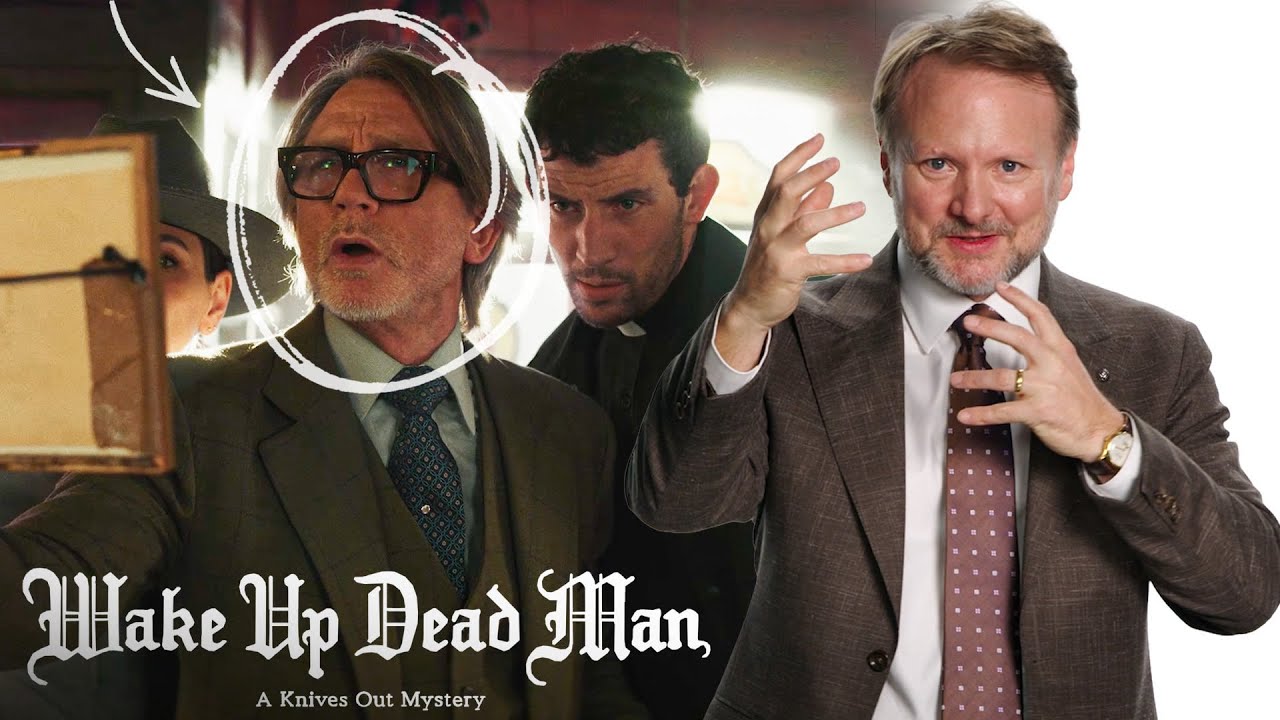
Rian Johnson did another Anatomy Of A Scene for Vanity Fair. Like his previous two, he talks about much more than just the one scene.
I figured that is what really happened to his wife and kid. I still don’t think she went off to her family. I think he had caught wind of her leaving, and took matters into his own hands to prevent that. I also figure the sheriff should take a look at his books. Yes, I have a whole backstory for him in my head. Why do you ask?
It leaves the skeleton intact after a couple of hours, what about after a couple of days of weeks?
I had the same thought as soon as they showed the acid bath, but the movie explicitly shoots it down. When Nat is telling Martha about his plan (thinking that she was drinking the poison tea) he explains that he hopes that being rich will get his wife to come back to him.
Caught up with this over New Year.
I liked it, probably not as much the other two (but some parts I really, really liked) and agree it was about 30 mins too long - but oddly, also felt rushed in places, which is probably the consequence of trying to do a complex locked room mystery and a searing exploration of the redemptive power of grace in the same movie.
The second part is the bit I really really liked. I was raised Catholic/Presbyterian, am firmly a metaphysical atheist but morally I’d be a liar to deny that some basic ideas about love for fellow man, the meek inheriting the earth, turning the other cheek etc were inculcated at an early age; equally, I have been close enough to the Catholic Church in particular to be well aware of the moral quicksand that is inherent in the priest/parishioner relationship and the tendency to substitute condemnation and abuse for genuine moral leadership.
So young idealistic priest with hard earned moral core vs old egotistic priest with a God complex is very much my jam. And I thought the elucidation of the power of faith to elevate others was incredibly well done, O’Connor did a great job of portraying genuine belief and the pivotal scene on the phone with the woman from the construction equipment firm was really well done.
As for Benoit Blanc, I agree he felt a little sidelined but he was in pretty much every non-flashback scene iwth Father Jud so I don’t think it’s about screen time. My instinct is that it’s about how other characters react to him. In Knives Out, Marta is afraid of him and spends most of the movie reacting to the threat he poses, so we are disposed to watch him very carefully. Ditto in Glass Onion he is the interloper, characters respond to his presence in various ways, even if its not his story he is a significant presence.
In Dead Man, I think because he initially tells Father Jud that he believes he’s innocent and will help him, there’s much less sense of jeopardy about his presence. We take it for granted that he will solve the murder at the end of the movie, none of the ensemble cast have much direct interaction with him or when they do he’s an annoyance to them rather than a threat.
Rian Johnson has released the shooting script:
WAKE UP DEAD MAN
I think it’s pretty cool that he does this. He does say because it’s the shooting script, there are bits in there that didn’t make the final edit, and bits that got moved around, which should make it more interesting to compare with the movie.
I’ve been thinking more about the film:
It’s kind of neat that Glass Onion ended with a woman smashing up everything in sight, including an object venerated and held sacred by many, and this one has a similar scene very early on.
Although, like previous movies, WUDM had something to say about the corrosive effect of wealth on the human psyche it seemed to me that this was as much about a different form of power - the power granted by charisma and authority.
Wicks was an effective priest, if not a good one. His fire and brimstone condemnations from the pulpit, his manipulation of the core members of his flock in small group or one on one conversations, his use of the leadership position granted to him by the Church - including his special title - all allowed him to carve out a small empire.
He uses that power to spread hate. The fight in the churchyard is where he lays it out - there are his people, and everyone else. Everyone else is a threat, they want to change things. Which change would mean he was no longer respected or in charge. So he has to fight to keep everyone else out, which leaves him in charge of the right kind of people.
But at least he is, in his own way, loyal to those people, right? Ha ha ha, of course not. At the first whiff of money (which will open the door to more power) he both abandons them and turns on them with total contempt.
The mark who has been suckered into funding this: dumped and left with nothing.
The weak man leaning on him for strength: knocked down into the gutter.
The intellectual who has been justifying him to the liberal elite: scorned and belittled.
The only relationship here is that of the user and the used, it’s all that Wicks understands.
The parallels seem obvious when I write that out, but I admit didn’t exactly leap at me the first time.
Contrast this with Father Judd, who literally says it’s about opening your arms to people, not raising your fists. His power comes from openness, acceptance and guidance. He doesn’t pretend to have glib answers for people’s pain - the cellist finishes the movie not cured but only with greater acceptance that her pain is part of her - but he will be there for them whenever they need him, and not ask anything in return.
There’s something here about the decline of institutions, the loss of values but also something about the route back from this which frankly I am going to struggle to agree with, which is that it will be necessary not to condemn others but to join them in seeking their redemption.
Well summarized, and it gets at a lot of why this is my favorite of the movies.
Speaking of his pulpit, I’m surprised it doesn’t get mentioned more often. Either just as an amazing set piece or whatever it’s meant to symbolize. I was surprised it wasn’t even brought up within the movie.

Are you referring to the eagle on the front of the pulpit? Otherwise, it’s a fairly typical pulpit of its type. I like woodworking, and have spent a lot of time admiring pulpits of that general type.
Apparently they filmed at an actual church in Essex, so I assumed that’s a real pulpit. The eagle is often found on lecterns and pulpits - I’ve heard it symbolises the gospels (the word soaring forth etc.) but Google suggest various interpretations - nearness to God in heaven, clear spiritual vision, rebirth etc.
There are some great uses of lighting in the church scenes, as mentioned upthread, which wre absolutely the work of talented creative types but they did get a massive boost from being in a building which is literally designed to inspire awe and meditation through its use of space, light, shade and symbolism.
I more meant that fact that it looks like a boat. All the churches I’ve been to, it’s always been more along the lines of a podium.
Here’s the altar at the church I went to while I was growing up (and my parent’s still go to).

I’ve seen some where the priest is raised up and the pulpit is considerably more ornate, but never one meant to look like a boat. I’ve been to a few weddings at this one, you can see the pulpit in front of the leftmost row of pews.
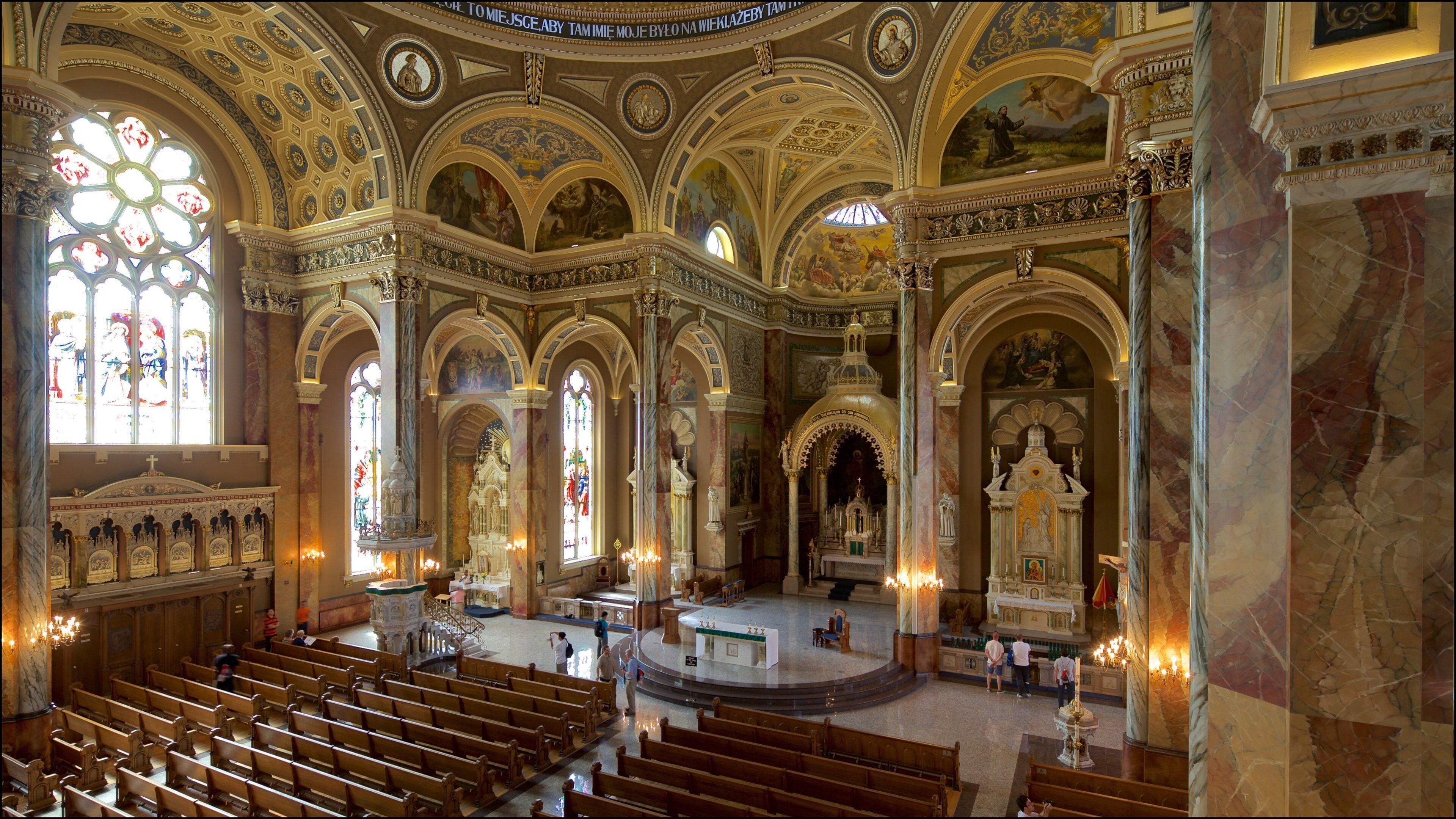
I’ve seen a lot of pulpits of that general style. They are maybe more common in Scandinavia (Lutheran) than in Catholic churches.
Although the church in the film is Catholic, the architectural style of a separate pulpit is one I’ve seen more often in Protestant - and low Protestant at that - churches, as in those denominations there is more emphasis on the sermon and elucidated word of God than there is on the mystery of transubstantiation. (It’s notable that eagle pulpits survived the iconoclasm of the Reformation whereas altarpieces on the whole did not).
Certainly the real church is CofE and according to its history page, was built in the late 19th Century in the Early English Gothic style - so was never Roman Catholic as such, and a pulpit from which the Reverend could deliver Biblical exegesis was a necessity.
I thought of the pulpit from Moby Dick:
Like most old fashioned pulpits, it was a very lofty one, and since a regular stairs to such a height would, by its long angle with the floor, seriously contract the already small area of the chapel, the architect, it seemed, had acted upon the hint of Father Mapple, and finished the pulpit without a stairs, substituting a perpendicular side ladder, like those used in mounting a ship from a boat at sea.