No doubt. Columbus thought that Japan- and associated islands- stuck out way way more than they actually did. He was quite wrong on that, but based upon little current info. That does not mean he thought the world was a lot smaller.
Similarly, it’s frequently noted that Zachary Taylor became ill after eating a bunch of cherries and cold milk. He died 5 days later, on July 9, 1850.
For a long time the milk and cherries combination was blamed for his death. Today, we know that the water supply in the White House was tainted. It likely killed several people.
Yes, for about the ten seconds that elapsed between a scientist wondering that, and doing the calculations to check. Then they stopped considering the possibility.
And is the miasma hypothesis actually false? Bad air does cause disease, where “bad air” is air that has virus-laden aerosols in it. We haven’t disproved miasma; we’ve just discovered why it’s bad.
The panda (bear) was originally described as a bear, until physiological and habitat similarities to the (red) panda changed scientific thinking, and it was determined that , nope, not a bear-- more closely related to racoons, as that was thought to be the closest relative to the red panda. That thinking lasted for decades until maybe the 1990s when better science showed that they had it right the first time. Panda bears are indeed bears. ( I refuse to call them giant pandas, and I think they should be renamed to one of their original bear names.). Not sure what the latest thinking is on red pandas’ closest relatives, procyons or mustelids.
Well, yes - it is as it was constructed. Shitty air quality is still a thing, but that wasn’t the miasma theory which was entirely about environmental conditions like rotting vegetation causing mysterious vapors to rise from the soil (especially at night) and triggering disease outbreaks.
Malaria literally means “bad air” in medieval Italian. Malaria is transmitted by an insect vector. So is plague, again often blamed on miasma. Ditto typhus. Ditto yellow fever. Cholera from fecal contamination of water supplies. Ditto dysentery. Chlamydia from sexual contact. Diseases like tuberculosis and influenza are spread as an aerial contaminant, but have human-to-human communicability chains rather than arising from environmental contaminants.
All of the above was blamed on miasma at one time or another, none of them were true.
There was certainly a general consensus that the research that led to RNA vaccines was worthless. Katalin Kariko never had more than an adjunct position at Penn, could never get her research funded and was eventually fired. We know how that turned out. As far as I know she never got a regular position.
Looks like the current construction is that the modern Mustelidae (weasals) and Procyonidae (raccoons et al) are sister taxa, while Ailuridae (red pandas) are considered more basal, with Mephitidae (skunks) more basal yet.
Yes.
A reminder that firmly held beliefs before acceptance of the scientific method were a form of orthodoxy, much different than modern scientific consensus. It’s certainly possible, and in fact happens frequently that scientific consensus is radically altered by new evidence. But attacking the idea of scientific consensus by simply saying “Science wuz wrong before!” is the hallmark of a crank.
Not very related to the Panda. Likely with the mustelids, but debate continues.
Sounds better than what I posted.
For years the consensus in medical science was that polyunsaturated hydrogenated oils are more healthful than saturated fats. People were encouraged to use margarine in place of butter, for instance. Biochemist Fred Kummerow conducted studies showing that the trans fats in hydrogenated oils cause heart disease. He succeeded in changing the consensus, and now trans fats have been eliminated from many foods.
Crustal displacement caused by rotational forces was the mechanism for Wegener’s continental drift[1] (I’m not talking about the always-fringe sudden crustal slip stuff beloved of the Atlantis crowd) and that had a lot of currency, with many prominent adherents especially in Europe. Expanding Earth also had some proponents but was always way more fringe.
He initially also considered sea floor spreading but that didn’t make it into the final version ↩︎
Once upon a time it was widely understood that stomach ulcers were caused by excess stomach acid production with contributions from stress and spicy foods. Then someone discovered in the 1980s a bacteria that’s responsible for most of them. Their publication was met with widespread skepticism. Now antibiotics are just a normal part of treatment for ulcers.
As posted above on Sept 8 … !
Damn, if there was ever anyone who desperately needed a GPS, it was certainly Chris Columbus!

Sure sounds like a consensus (“general agreement (as of opinion or fact) among a group of people or things”) to me.
It’s not like there was some competing theory floating around; the consensus was that they weren’t well understood, but that stress and lifestyle were either causes or things that made them flare/get worse.
Here’s one that might fit I haven’t seen mentioned yet:
In 1884 Svente Arrhenius proposed in his Ph.D. thesis that dissolving substances involved dissociation of molecules into paired charged ions. In his time he was roundly ridiculed by the chemists of the day. His own thesis advisor said it was a stupid idea and only grudgingly granted his decree.
Later of course it turned out he was basically correct, and won the 1903 Nobel Prize in chemistry.
As I said, he estimated how far Marco Polo went eastward, based on his writings about his travels. So he had an idea how far east to Cathay. He may have overestimated the distance a certain amountto fit his numbers, but not even close enough to make 24,000 miles work.
Citing the calculations of Alfraganus (Baghdad 9th C.), Columbus believed the circumference of the Earth was much smaller than other estimates. However, unknown to him (and also his biographer Fernando), Alfraganus’s estimates used the Arab mile (>7000ft) and not the Roman mile (<5000ft).
(From a discussion of this in r/history) I saw an explanation once - there was another Greek who worked out the diameter of the earth and got it wrong, got an answer of 5,000 miles or so. Columbus locked onto this theory, and took the units described and attributed them to a different Arab measure by that name which reduced the diameter to 4500 miles. He estimated Marco Polo travelled 10,000 miles east of the west point of Europe, not 7,000, to give the answer that Indonesia was about 3,000 to 4,000 miles due west.
Technically, Indonesia, the Indies. Island east of India, generally lined up with China. The Spice Islands, since the goal was a shipload of what was pure gold, i.e. spices.
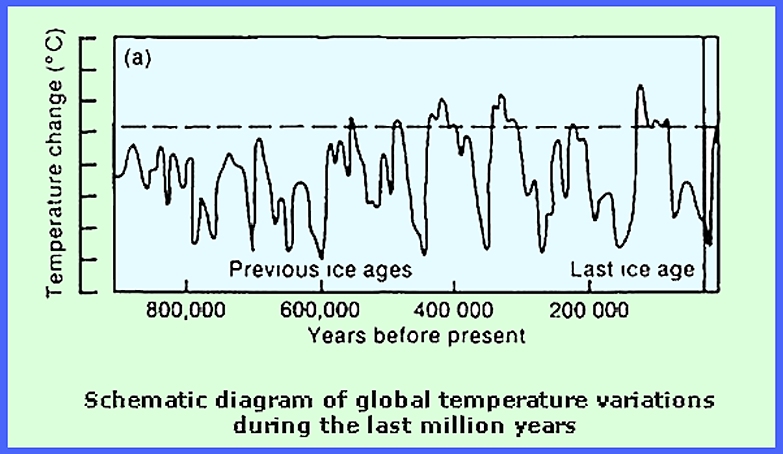
Ice ages are proven, so sooner or later we are due for the next one, unless global warming has flipped a switch somewhere. But now? 2,000 years? 10,000 years?
There’s a famous quote somewhere about medieval cities and sewage disposal, where the author complains that Romans were obsessed with good drainage and proper sewers, because they thought this was importanat to avoid “bad air” and disease, but the author says “..we know now that is not true.”
While there was some initial skepticism, scientists rapidly moved to investigate and confirm Marshall’s findings about H. pylori, and those conclusions were firmly established in gastroenterology within a few years - very rapid acceptance for a new medical paradigm.
It’s a myth promulgated by alties that Marshall was ostracized for his work.
That “we do not know what causes ulcers”??? yes, even today it is a fact that "stress and lifestyle makes them flare up”. So, ulcers do not fit what the OP is asking for, in fact i can not think of anything that really does fit, once the world entered into the Scientific age.
Where is that cite coming from.?
My statement had nothing whatsoever to do with the next ice age.
There was a time when it was thought that big bushy beards actually served to protect a man from disease, since they filtered the bad air.