Tan should be fine for the purposes of your recipe. You’re just not taking it to the point where it fries in the fat and gets crispy brown bits. It’s like when you brown meat for stew. If you move it around a lot, don’t give it enough space, don’t use high enough heat, you don’t get any browning. It just turns a grayish or perhaps tannish cooked color, rather than brown indicative of the Maillard reaction.
OK, here’s an example with chuck cubes that shows you the difference between browned and not browned. See the piece at 3 o’clock and near it that has the nice, dark brown bits. That’s browned meat. The piece in the center that is kind of by its lonesome is not really browned, and the pieces at 6 o’clock through 9 o’clock are mostly not browned. (Some have little flecks of browning, but for the most part, they are not browned. When a recipe is asking you to brown the meat, it’s looking for something along the lines of the meat at 3 o’clock.)
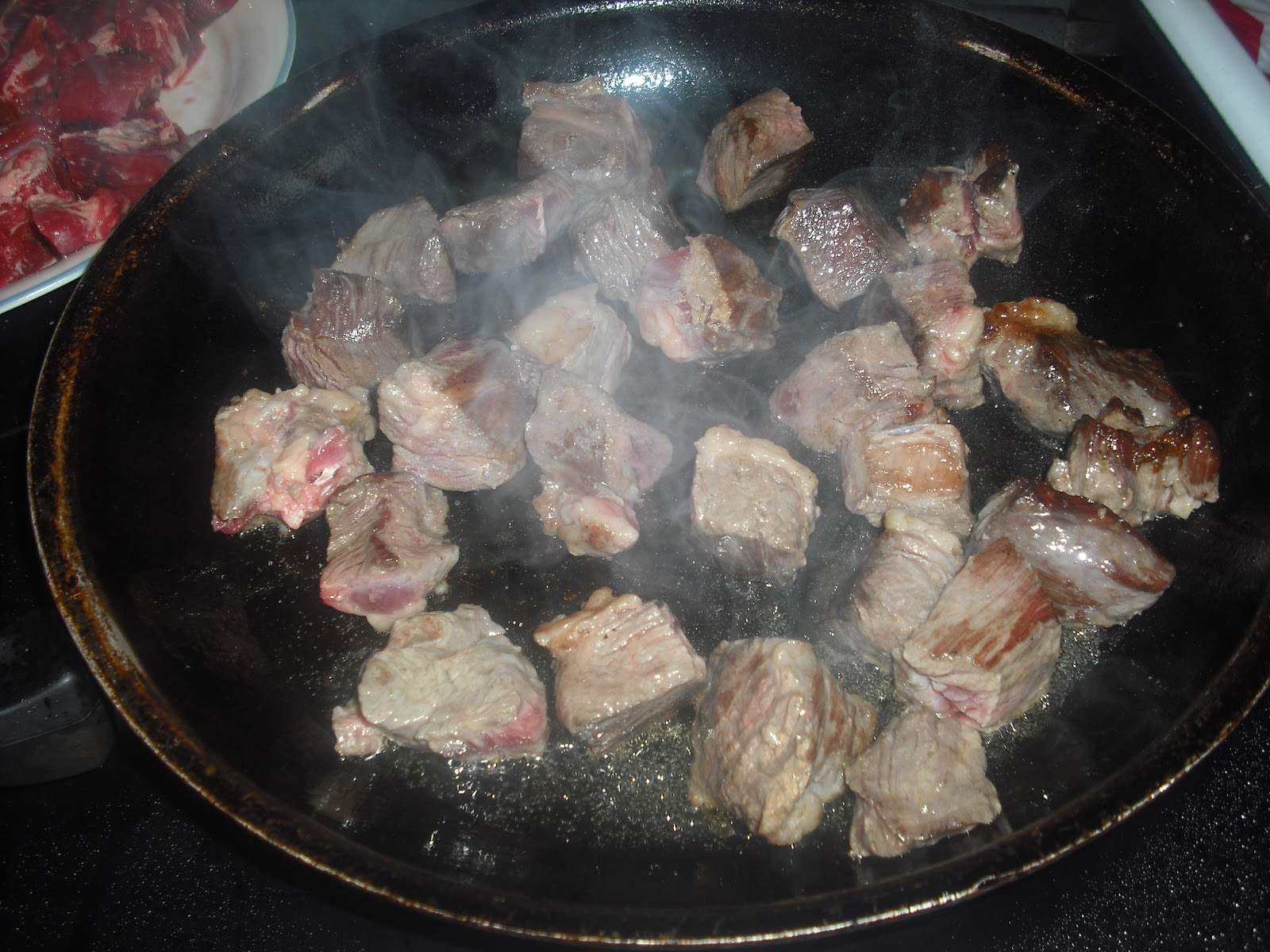
This stock photo of browned beef shows some good browning. You can see the darker brown, crispy bits in there. If you want to avoid browning, feel free to add a little water (which that Wikihow inexplicably adds in its instructions for browned ground beef)–it will keep the meat from browning, but will still cook the pink out.

ETA: Oh, and I agree with you. In those photos on the Wikihow, that does look more like pork than beef. But I do tend to call the color beef turns “gray” in relation to what “browned” beef looks like.
May I take a moment to express my amazement at the WikiHow page? I’m blown away! It shows how to precisely not do what the title says it will teach you to do.
“A 1/4 cup (59 ml) of water per 1 lb. (.45 kg) of beef is standard.”
Standard for whom? Who does this?
“This will help with the browning process.”
Yes, in the sense that it will prevent the meat from browning.