A couple of other cultural things that haven’t been mentioned yet:
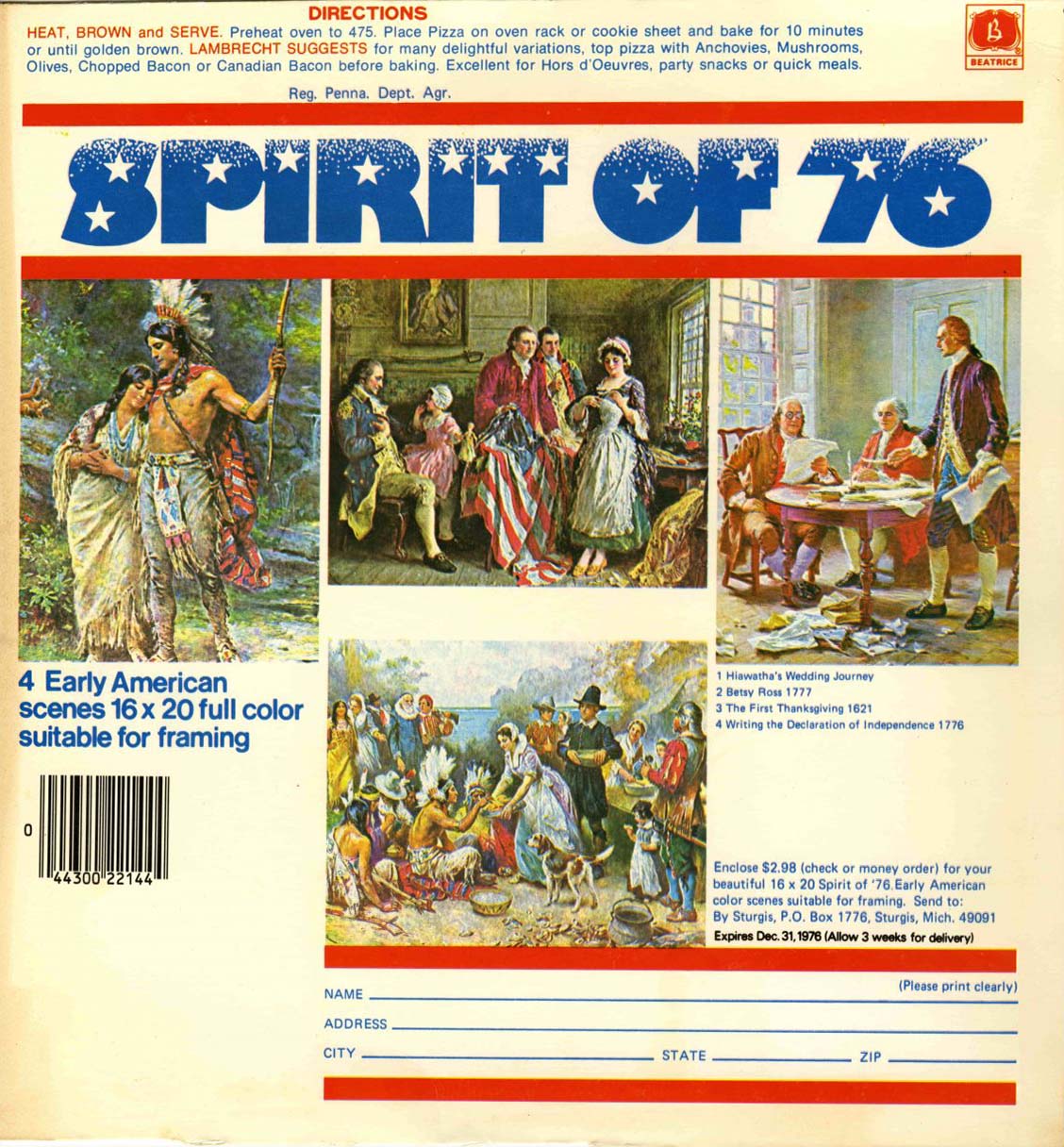
In '75, in the U.S., there was a lot of cultural focus (even obsession) about the Revolutionary War, and American Independence, because the Bicentennial would be the following year. There was commemorativebicentennialmerchandise everywhere, there was an American Freedom Train that toured the US with a mobile history museum, and throughout '75 and '76, CBS ran a daily “Bicentennial Minute” during prime time every night, with guest stars narrating what had happened 200 years ago that day. (By 1977, the bicentennial was over, of course, and interest in all of that quickly waned.)
By 1982, portable music had become a thing, but via two different types of products. Sony had introduced the Walkman in 1979, and by '82 (when I was a junior in high school), Walkmen (or knockoff versions) had become very popular. On the other end, boomboxes (which were often called “ghetto blasters” at that time) were also portable, but let you overshare your music with everyone around you.
Yeah, I remember growing up in the 1980s our kitchen still had very 1970s harvest gold kitchen appliances and yellow sunflower pattern linoleum, and my bedroom had yellow shag carpeting. But I’m also pretty that even in elementary school I was aware that those things were no longer in style and my parents simply hadn’t spent the money to change them. They did finally remodel the kitchen and replace the carpet circa 1990, but the yellow fixtures in the main bathroom remained right up to when they sold the house in the 2000s.
One difference seems to me is that starting in 1975, and really being cemented in 77-78 is the start of movies becoming easily digestible for mass popularity (Jaws, Star Wars, Halloween being examples of movies from 75, 77 and 78 which hold up to modern standards generally of pacing and style).
In 1975 I think Hollywood was still in the business mostly of thoughtful, slow paced character driven films. Not quite the gritty early 70s, but not quite the blockbuster era which defined the late 70s and entire 80s either.
The biggest difference I remember as a 12-19 year old was the explosion in TV entertainment thanks to cable TV and the VCR. In 1975 we had 3 networks and a handful of local channels. That was it, unless you went to the movies. In 1982 we had HBO, MTV, CNN and dozens Of other cable channels. If that wasn’t enough you could pick from hundreds (perhaps thousands) of titles at your local video rental outfit (usually a record store).
Indeed. My parents had beige/sad-green, huge flowers wallpaper in the living room that stayed well into the 80s. The brown shag carpet went away even later, possibly around 1990-1992.
Regarding the Bicentennial, an interesting thing is that, although I’m from Europe, I have a very strong emotional reaction when I see all the stars-and-stripes designs from that time. I was born in 1974, so really too young to remember them, but I may have taken them all in subconsciously.
Born in 60, so the range takes me from HS sophomore to graduating college. The biggest changes as I recall (all mentioned above) were cable TV and MTV, the advent of CDs.
In the mid-late 70s, there was more long hair and fros, big bell bottoms, silky shirts and such. By the early 80s, preppy dress was big (tho not in my group), w/ popped collars and members only jackets.
Mid 70s music was dominated by disco, funk, rock. By the early 80s, my group was listening to punk/new wave (however you define it) and dancing to electronic dance music.
Just wanted to co-sign kenobi 65’s and Elmer J. Fudd’s points above – wish I had thought to point them out
“… portable music had become a thing, but via two different types of products. Sony had introduced the Walkman in 1979 … On the other end, boomboxes …”
“… the explosion in TV entertainment thanks to cable TV and the VCR.”
Mine was probably the last generation who can recall watching the Big Three networks on an old black & white console television (Buck Godot?). Color TVs were around in 1975 to be sure, but I am not sure if they had quite achieved ubiquity by then. I even remember watching the 1980 Winter Olympics on a black & white set at my grandparents house – it was their second TV in a back bedroom, but still.
In 1975, there was free swinging party life. In 1982, the herpes epidemic and the AIDS epidemic had wrecked it.
TV and movies in the 1970s told me that adulthood would be one gigantic frenzy of debauchery. The AIDS epidemic hit right before I reached puberty. I’m still ticked off about that.
If you were lucky! My family moved from suburban Chicago to Green Bay in 1975, and I had gotten used to having a couple of independent TV stations in Chicago, which often carried kid-oriented programming in the morning, and after school.
In Green Bay, on the other hand, we only had the three networks, and PBS (and that signal was often iffy). Green Bay didn’t get an independent TV station until the early '80s.
Herpes, certainly, but AIDS wasn’t even known by that name until mid-1982 – it had previously been called “gay-related immune deficiency” (GRID), among other names, and it had only been known to exist, at all, for about a year (and, even then, the known “at-risk groups” were gay men, heroin users, Haitians, and hemophiliacs). I don’t think that it was yet on the radar for most people in '82, and I don’t think that it was generally known that it could be spread by heterosexual sex at that point, either (though that changed very quickly, probably by '83 or '84).
In 1975, as one of the cast members of NBC’s Saturday Night, (remember, back then “Saturday Night Live” was that godawful primetime variety show with – shudder – Howard Cosell), Belushi was coming into prominence as a new face on TV, the cutting edge of a new wave of entertainment that would affect television, movies and even music for decades to come.
“AIDS” was only coined as a term in September of 1982, and wasn’t even diagnosed in a woman until 1983. In 1982 AIDS was in the news, but hadn’t really made impact on heterosexual sex practices. It really wasn’t until the late 80s or early 90s that condoms became a standard precaution, and they’ve never been anywhere near universal. So I don’t think this is accurate for a difference between 1975 and 1982, AIDS was an odd news story and thing you’d worry about if you were being near gasp homosexuals, but it wasn’t a fundamental thing you’d encounter that early.
One of the problems with picking up ideas about the ‘free swinging party life’ from pop culture is that it doesn’t really reflect reality for most people. Were there people living a ‘free swinging party life’ in 1975? Sure. But there were a lot of people living a ‘boring tied-down married-with-kids life’ then. And there were a lot of people living a free swinging party life in 1982, 1995, 2005, and 2015 too - some of the drugs of choice waxed and waned in popularity (quaaludes went out, Ecstasy came in), but getting high and banging is still a hobby for many people that choose it, while many people also lead lives without it.