Not something that happened to me, but there was an article (paywalled) in The Economist a few months back about some Ivy League universities phasing out their traditional “swim 50 yards” requirement to obtain a degree.
A university probably isn’t the right place to teach (or test for) that, but having at least a little swimming ability is definitely a valuable skill. People mostly live near water, and so people sometimes end up in water, even people who don’t intend to end up in water.
Writing by hand is just writing by hand.  Cursive is a specific style with lots of extraneous squiggles and loops that joins letters together.
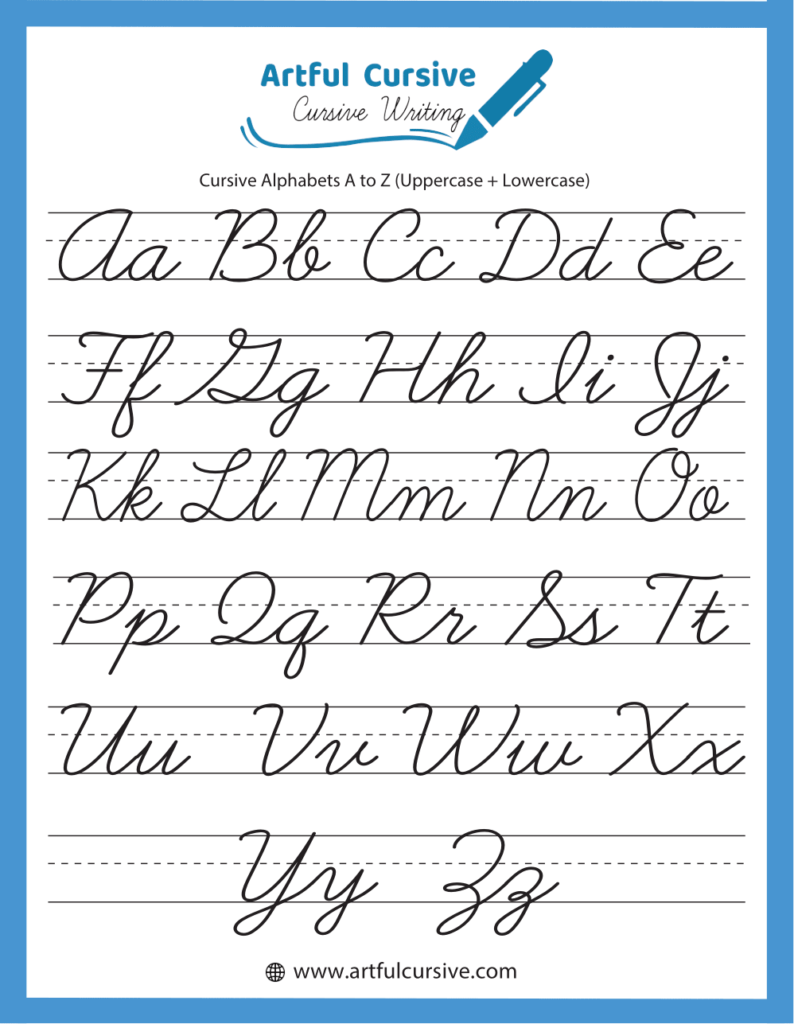
Yes, I sort of know that. I even started a thread about cursive to learn more about your (the USA’s) tribulations with it.
Thoughts and prayers, I guess.
Excuse the rather tenuous connection, but…
The step-mother of my ex-girlfriend only learned to swim as an adult (and she is a highly qualified professor and adventure tourist).
She’s not a good swimmer, by any means, but her children & husband went though a different school system in urban areas, whereas she spent her formative years in quite remote Zimbabwean villages, where water is not something you waste on a swimming pool, and the river has crocodiles.
As for useless skills: some people can wiggle their ears. I can wobble my chin. Not like the quintessential concept of a person about to cry wobbling their lip, I can wriggle the area between lips and chin, although, in fairness to the OP, that was not taught at school.
There is a style of writing that more-or-less resembles the letters you’d see in a book or on a computer screen. That style of writing is, in the US (and maybe other English-speaking countries) called “printing”. Is it etymologically accurate? No, but that’s what it’s called here.
One thing most people of my generation never found a use for: we were taught bases in mathematics in primary school. For instance, that it was possible to make a numbering system in base 6, where the only possible numbers are 0 through 5, and make addition, multiplication, etc. work within that system.
Years later, I got into computer science, where base 2 and base 16 (and base 8 on PDP-11) are often more important than the usual base 10. But, when they were teaching us those concepts in primary school in 1975, I don’t think they had computers in mind.
My handwriting was always poor, but I wouldn’t call it “traumatic”. It was how people communicated before computers took over and I wrote a lot of letters in my lifetime. I took a class in calligraphy as an adult and was fairly good at it.
I’ll agree about the uselessness of diagramming sentences. Even if it’s mainly just a pedagogical tool I can’t se that it helped any of us.
Most of the “useless” skills listed are ones I actually used, or voluntarily went out of my way to learn. I did learn to use a slide rule in high school, and I ended up using it for two years in colege until the price on scientific calculators came down to finally become affordable (that, and my professors were starting to demand 4-place accuracy). But I was faster with my slide rule that a lot of students were with their calculators. And besides, there really is value in knowing your slide rule. It makes explaining Benford Probabilities more straightforward.
I started studying Latin on my own, well before I attended high school and could take formal classes. I had been the last generation of altar boys that had to learn the Mass in Latin. And after that, it was easy to try to keep studying it.
I never thought of cursive as “useless” – it’s been far too useful to me (even though I hate reading those Babar books in cursive). My own handwriting is atrocious – I got my only “D” ever in “penmanship”. But I don’t mind having learned it.
I’ve been waiting for someone to mention using LSD (not, not that kind of LSD). I vividly remember a news broadcast from England where some oldtimer was complaining about decimalization. His quote: “If Jesus wanted us to use decimals, he would have had only ten apostles.” I guess that decides it, then.
I’m from the US, and once we were driving across Canada. Since as a programmer I know how to convert from hexadecimal to decimal, I would take the number of kilometers on a road sign, convert it from decimal to hexadecimal, and voila! You get miles!
In 8th grade, our school play was The Sound of Music, and the “nuns” were curious what they were chanting. Somehow, I was the one they’d asked, despite not starting my formal study of the language until the next year. Probably mostly from church, though I was fully post-Vatican II.
The Golden Ratio is also a good quick-and-dirty conversion, meaning that you just need to find a Fibonacci number that’s a factor of your number.
Nitpick- It’s GCE A level, GCSE is the level below that. It’s the standard exam system in England and Wales (Scotland has its own system)- the ‘General Certificate of Secondary Education’ being compulsory, and the optional ‘General Certificate of Education- Advanced Level’.
For some reason there are multiple exam boards which offer A levels within the UK, some of which are reputed to be easier than others, which never made any sense to me. My school mixed and matched, supposedly picking the most ‘prestigious’ option, but literally no-one has ever cared.
Arma virumque cano, Troiae qui primus ab oris
Italiam - was the extent of what I learned. I wish I had taken Spanish now but alas it was years and years ago…
In my case, that was the way I learned about the difference between Greek and Roman “perfection.” Which I think is very important concept; especially if you can apply it to other arguments and points of view. In negotiation, understanding the difference between Contract Officer’s, Engineer’s, Stockholder’s, and Program Manager’s, definition of a “perfect project” made all the difference in the world.
It has been a while, more than half my life back.
I don’t even know where my certificates are, though my mother probably does. Thanks for the correction, though. Nits should be picked.
That is one very specific style of cursive. This is cursive:

So is this:

etc.
One mile is four laps around the track!
After decades of teaching math and related subjects, I have yet to meet a student that I would describe as intrinsically “bad at” math, in the sense of simply not having the ability for it.
AFAICT I haven’t even ever met (although I would kind of like to, because I’m curious about the phenomenon) anybody I would describe as genuinely “dyscalculic”: that is, with a neurological learning difficulty that interferes with their basic quantitative perception/estimation/operations. Maybe some of my lower-performing students have actually been clinically dyscalculic, but not to an extent that my layperson non-clinician self has been able to detect. (I recommend the free online citizen-science Panamath Approximate Number Sense aptitude test for people who wonder if they maybe have a significant math disability, or just wonder how their elementary quantitative brain function stacks up against the rest of the world’s.)
What I do get is a sense that some people, at least a sizeable minority, have more anxiety and less enjoyment vis-a-vis math learning than those who are “good at” math. They don’t find it appealing, so they don’t voluntarily engage with it, so they are less familiar with its practices, so when they have to engage with it they find it more challenging and stressful, so they continue their pattern of math avoidance, so their familiarity with math practices continues to lag, and the cycle continues.
I don’t know how that cycle gets started, though. In my very limited experience of talking about math with small children, I’ve always found them intrigued by numbers and other mathematical concepts (never met a small child who didn’t like to count, for example, even if they’re at the stage of omitting some numbers). So at what point does “ooh, numbers are fun” become “ugh, I don’t like math” or “I’m bad at math”? I really have no clue.
Surely for track meets you need to tack on the ~9m at the end for any times to be official. Or is a track and field mile just 1600m?
Shows your good sense. Integral calculus (which is what most people encounter in Calc 2) is very important in a lot of applications, but it is indeed a lot more ad hoc and less coherent, procedurally, than the differential calculus of Calc 1.
Calc 2 is a few key deep insights about analysis fundamentals, a quite small algorithmic toolkit of antidifferentiation techniques, and a whole mess of algebra and function identification heuristics to enable wrassling a particular problem into a form that we can apply that small toolkit to. (Oh, and a variety of application contexts too. Mostly for finding out the same sort of information about areas, volumes, and other physical properties that you already learned about before calculus, only now upgraded to handle non-constant function behavior as well as constant.)
It all starts to pay off in differential equations and multivariable calculus when you begin to see all the powerful results you can get from applying these concepts to more complicated phenomena! But Calc 2 can often feel like just a yard-sale collection of different specialized hacks, which is frustrating for those with systematic minds (especially if some of their precalculus concepts of function classification etc. are a bit rusty).
I guess that’s why every nation on the planet now uses the metric system – known as the International System of Units, or SI, with the exception of Liberia, Myanmar, and the United States. And Liberia and Myanmar are in the process of converting to it.