Why are you continuing to pretend like this is confusing? Normal speakers of the English language know exactly what is meant by “cursive vs print.”
The issue with doctors’ handwriting is, if it is illegible, that could be genuinely dangerous for the patient if one cannot distinguish “b.i.d.” from “q.i.d.”, 20 mg from 90 mg…
Also if the pharmacist (or doctor!!!) does not know some rudimentary Latin, that is a problem right there
I am suggesting that nobody is imitating true print styles, and that most so-called “print” hands are at least semi-cursive.
I recall some bonus lessons attempting blackletter, copperplate, Cyrillic, and other miscellanea, but that was just for one-time enrichment/introduction, nothing to do with day-to-day assignments.
Yes, of course. Charts showing the letters, both upper and lower case, were posted at the front of the classroom.
Most, but not all of the students in my class knew how to print letters before entering first grade. None of us knew cursive; we learned that a couple of years later.
OK? I don’t think anyone has ever said that they were. Doesn’t change the fact that in English, the word for standard non-cursive handwriting is “print.”
BTW, I think this site is worth a look. It is by no means comprehensive, but, even so, searching for “America” turns up at least five different standards:
This chart was on the classroom wall and in the folder of nearly every fellow Gen-X I know in elementary school:

If you must associate it with a TYPEface (and why would you? This is handwriting, not typing or block printing), I suppose Arial Narrow is the closest.
The presentation differs, but a functionally identical chart was a nigh-universal feature of 1960s elementary schools too.
For good or ill, the US standard term for writing by hand in that script was then, and is now, “printing”. I wonder what other English-speaking nations call it?
I do not know about that— to my eye there are some glaring differences— however, really, you are right, and I should acknowledge that historically as well as recently there are close links and influences on the fundamental shapes of the letters between handwriting and typefaces.
Of course we had all those charts, but there was also a “cursive” or “script” chart.
Check out my link, by the way. In England, it says “print script” (/“block letters”/“manuscript”) for schoolchildren was introduced in the early 20th century, began receiving heavy criticism by the 1970s, and discarded as unsuitable in 1997.
I just took your advice. That was a great site / cite. Thanks for digging it up.
Thank you, that really was amazing!
Or just plain Arial. My hand-printing style is pretty much Arial and differs from the chart in some respects. My lower-case “f” has a flatter top, the lower-case “q” lacks the weird curl at the bottom, and the lower-case “t” has a small serif-like dash at the bottom. It is, in fact, pretty much classic Arial, much like the default font on this board (at least, in the Straight Dope Light theme).
Yes.
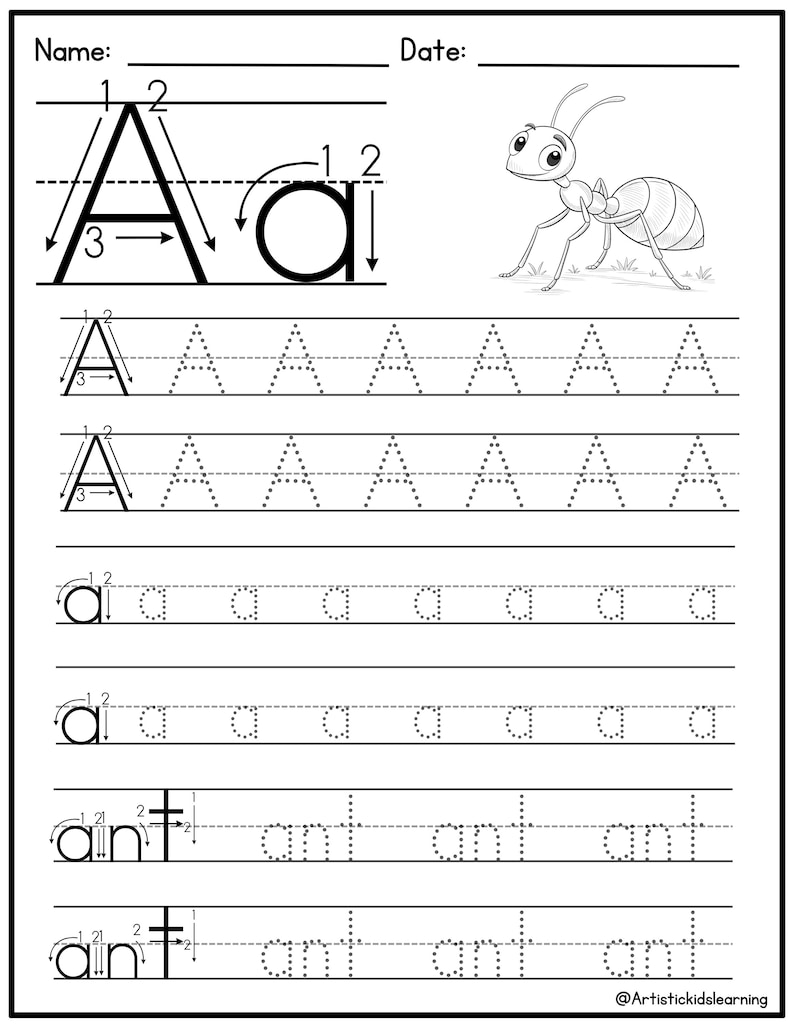

Absolutely (in the 1970’s). It was printing first, then cursive next. A progression laid out pretty much exactly like this:
https://i.ebayimg.com/images/g/S3UAAOSwLKpZiH02/s-l1600.jpg

Shorthand. Never mind that I never ‘got it’ and consequently failed the class, but not long after leaving school, hand-held tape recorders became the norm and shorthand, as a vital stenographic skill, fell by the wayside.
OK, thanks, fair enough. Your mention of a “progression” makes me think it may be splitting hairs (though perhaps pedagogically important) as to whether “print script” is taught as a formal distinct style in and of itself, or whether it is viewed as part of a “progression of related letterforms”.
We didn’t call it ‘cursive’ in my school in rural New Zealand. It was ‘joined up writing’. I kind of dislike even the word cursive, for some irrational reason.
Anyway, we were not taught it in my school in the 70s, it had already been considered unnecessary and antiquated, and was officially removed from the compulsory curriculum in my era.
In the context of my 1970’s third grade class I think it was pretty much a progression of related letter forms. What I vaguely recall is being introduced to printing and practicing it one day, then cursive lettering was introduced the next day (or however long it was) and the teacher and a teacher’s aide would walk around checking individual progress. Once one of them had signed off on your printing, you then moved on to practicing the cursive letters and they’d walk around checking until everybody could reasonably accurately do that. However long that took, which I really don’t recall.
The reason even that much still sticks in my head is I recall asking the aide (who was some flavor of European college student studying in the US) whether a particular curl to a lower-case “t” was a thing and she said she hadn’t seen it, but maybe someplace in Europe. She then showed me how some Europeans crossed the number “7”. I was fascinated by this and immediately adopted crossed sevens and have been writing them that way ever since. It is the one of the VERY FEW things I remember clearly from third grade  . Another was my first taste of a fried won ton as someone’s Chinese mom brought in some to share for the kids.
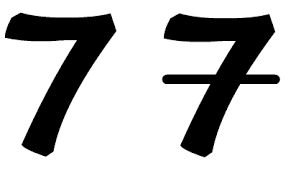
Crossed sevens and dim sum - the great revelations of youth.
In Aus, the two things that retained inch measurements for a long time were personal height, and bookshelves (I guess that says something about the people who buy bookshelves …). But a lot of things are still implicitly the old measurements: I buy timber at standard 3’, 4’ or 6’ lengths, it’s just now described in millimeters. I don’t know what a polytunnel is, but I would expect the actual length to be 6ft, regardless of how it is described.
Very few doctors write Rx by hand now, so the situation has changed, but I remember that in the 1970’s it was the case that any chemist (pharmacist) who got a clearly written script would be suspicious (and was expected to be suspicious), that it was a forgery (Australia). “Real Doctors don’t write legible scripts”