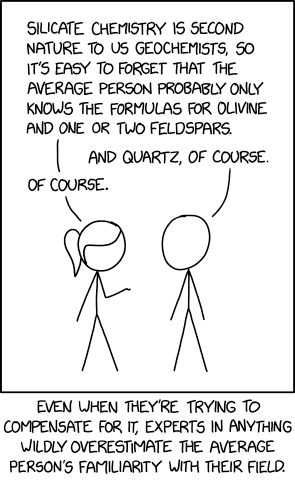
Probably German language. There was a foreign language requirement, and everyone else was choosing French or Spanish, so I thought I’d be a bit different. On rare occasions I’ve found it a minor convenience, but by and large, all the German people I’ve met speak much better English than I do.
Germans are also a little different from most nationalities in that they don’t really seem flattered or impressed that a foreigner is making the effort. They’re like, it’s very nice of you to try, but for efficiency’s sake let’s stick to English. I wish I’d invested in Spanish instead.
I did just as you did. In both high school and college. And now think just as you do.
Having later (unexpectedly) lived in LatAm, and now living in SoFL and traveling a lot in LatAm, had I chosen Spanish back then the results would have been paying dividends for 50+ years now.
No, but I have six times, and as Doreen said, no one examined my signature.
We do have this quaint thing called a paper check. I issue one or two of them a year. The signature on file at my bank is from the 1990s. I assure you it matters not at all that my signature on my check does not resemble the signature at the bank. My current signature is deliberately a squiggle. My signature in the 1990s was my full first and last name, quite legible.
My father writes checks. He can barely hold a pen for ten seconds, because of advanced Parkinson’s. His bank has never rejected a check of his either.
Maybe it’s time to give up on this idea that we must learn cursive to sign our names on These Important Documents. No one is writing in cursive in Japan and somehow they have schools, offices, banks, factories, shops and hospitals.
I am fairly sure engineers have to know at least some of the most common logarithms, like that a 3 dB increase = twice the power.
Someone must have pontificated that art is a useless skill…
Not my experience living in Germany, at all. More like, the national language is German, everybody speaks German, and if you don’t, you’d better learn fast. And, yes, I have seen someone get harangued for the sin of expecting people to speak English. In other words, you are correct that they are not flattered or impressed, but because it goes without saying that everyone speaks German, not because they prefer to speak English. (Do not get me wrong, if you are a tourist, you can probably get by with some English or possibly Russian.) An analogy might be, if you go to the USA, are people impressed that you are able to speak some English?
One that comes up a lot is ln(2) ~= 0.693. It shows up because the mathematically simplest way to describe an exponential growth or decay is base e, but the way that humans like to talk about those things is base 2 (half-lives or doubling times), and ln(2) is how you convert between them.
Yes, the experience that a very large fraction of the adult population doesn’t know cursive and yet the banking system somehow hasn’t collapsed. Do you have experience to suggest that they’re not OK with it?
The Quadratic Equation: after years of mathematics, Algebra, and Calculus to include Dif Eq., I have never seen a use for, or ever referred to, the equation one professor spent an entire hour rambling about. All I remember was that he called if “nifty.”
Dissecting animals in biology: all of the times I had to apply biological knowledge, it was about keeping parts or liquids inside a body (e,g. First Aid on a ‘bleeder’).
French & German: my middle school required students to take one semester of German, one of French, one of Spanish, and then pick one to study for the next year and a half. Because so many cognates are rooted in Latin, and the syntax so similar, even after taking Spanish for three years and using it intermittently here, I still confuse words into some sort of Germano-Frannish word salad.
Cursive writing: for all of the reasons already stated upthread, but my print often flows into some sort of hybrid ‘scrinting’.
Making apple sauce (Home Ec): it was more of a two-day assignment to keep us middle-schoolers busy when Mrs. Prendergrast had her foul mood and ‘headaches’ on the Mondays after payday.
Tripler
Mrs. Prendergrast often smelled of cigarettes and would sip on things hidden in the supply closet.
Yes, apologies. @Mighty_Mouse I should clarify that, non-digitally anyway, for an officially-registered seal you are not going to be scribbling your name any which way, it would be a carved stamp that does not use “cursive” script but rather “seal script” (for instance), so, for an analogue, picture some careful Old-English Blackletter calligraphy or something, and if you can’t do it yourself you would need to pay someone to make one for you.
Re. the digital signatures, do you mean a cryptographic signature? Or an SVG version of what would be on an actual vermilion seal? Or… (how is it authenticated)?
I’ve had a hanko for years, but only recently have I been using it. Not to supplant my sig, but as a little extra to share my culture. I use it on checks as well as on CC bills that still ask for a signature (pretty much limited to restaurants these days).
This is kind of different because English is, for better or worse, the world’s second language, so it’s not really remarkable that someone would speak it. But for what it’s worth, I do notice those who are struggling and appreciate the effort, because I know it’s hard and a lot of people can’t manage it.
Contrast with other languages that don’t get that much study. Millions upon millions of people learn Portuguese as a second language, it’s extremely unremarkable, yet somehow Brazilians always still manage to get excited about it. If you happen to speak Albanian to an Albanian they’ll pull all their friends into the room like ‘listen to this crazy shit, it’s called a “foreign accent”’
Anyway that’s a fair point about rural Germany not being big on English speaking, it does match my experience, but it’s not a situation that’s come up more than once or twice for me.
IIRC, Heinlein claimed that the ability to solve a Quadratic Equation should be the requirement to vote.
After taking German 2, Spanish 2, French1, and Latin 1, I do have the ability to puzzle out a newspaper headline in German, French or Spanish, and when I had to learn to speak better Spanish in my job, it came back to me, and I was able to speak poor conversational Spanish- with a really bad accent.
Germany is just big enough that it does not go without saying that anyone you meet will be fluent in four or five languages…
The very first time I ever visited Germany, I got out of the airport, took the train to the city, and walked into a restaurant to get something to eat. The waitress spoke not a word, and I mean not a word, of English, (the menu was in German, too), and I did not know any German yet, so it was interesting. This was central Berlin, by the way, not some village.
QFT. I studied EE, together with two friends who often met for that matter. For many tasks, solving quadratic equations was just a little trivial calculation on the side two of us solved in a heartbeat, but the third wasn’t good at math and always already failed at that. We tried many times to explain it to him, but it was useless, he just didn’t have the background or understanding. The two of us who could do this got a good degree, but the other guy had to quit college after 8 useless semesters.