Interesting to note that that map excludes Finns and Estonians from the Caucasian category.
I remember reading (probably here) about a court case in the USA where the question to be decided was whether Finns are white.
Interesting to note that that map excludes Finns and Estonians from the Caucasian category.
I remember reading (probably here) about a court case in the USA where the question to be decided was whether Finns are white.
Yes, all you have to do is assign every individual to one of the groups. But then the largest number of categories you need is human. I know this answer has already been given, but I’d like to ask the OP to start at the other end and suggest the rules we should use to subdivide humanity.
google google… Jesus H. Christ on a Popsicle Stick! Thank you, Stranger.
(Apologies to my ravishing Dravidian wife)
She’s related to Al Roper; what would you expect? 
google google… Heh.
Given the OP is based on a flawed premise, there is no real GQ answer. Let’s move this to IMHO.
Colibri
General Questions Moderator
I’m hoping the OP will return to the thread, because I really think he understands more about this whole thing than you gather by just reading his post. Something is not quite right.
OP here.
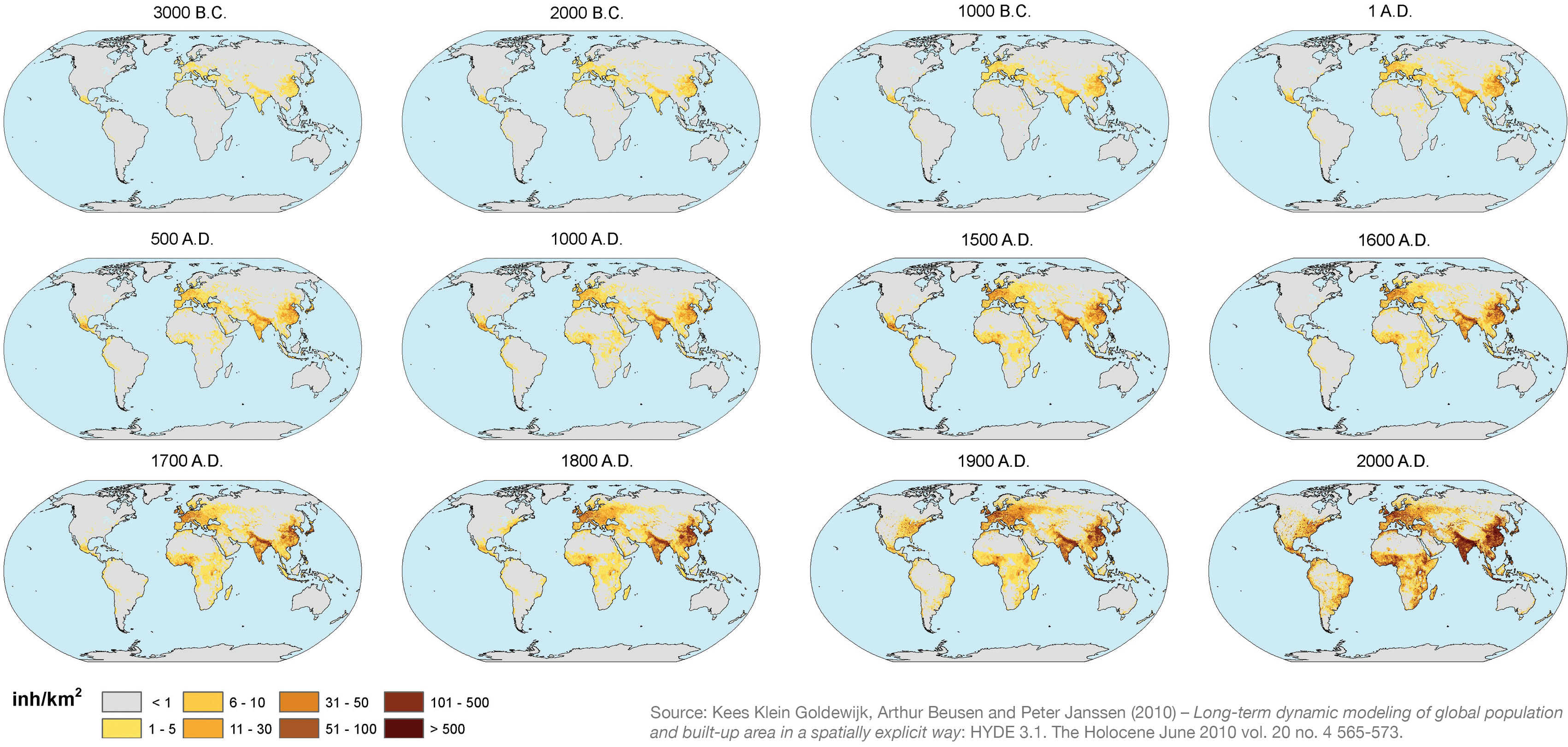
This more came about as I was trying to give my 5th grader a frame of reference for what the world was like in 1500 and where the major population centers were.
(Learning about Ponce De Leon coming from Spain and finding Florida doesn’t mean a whole lot unless he knows how desolate north america was.)
I wanted to be able to show him a world map and show where the population concentrations were and what kind of people lived there in the most broad generalizations.
OP: It’s not “amou[n]t”, it’s “number”.
Bolding added. It all depends on your definition of kind. Anything other than calling everyone human is pretty arbitrary and depends on what you are trying to show. You can tailor your definition of kind to come up with just about any number you want.
Here’s some world maps showing population densities through time, including 1500 AD.
At that time, major populations were found in Europe, India, East Asia, parts of Africa, Mesoamerica, and Andean South America. (North America was not “desolate,” although populations became severely reduced after contact with Europeans.
The problem with the premise of the OP is that human populations are not distinct but are a continuum. Different groups branched off at different times. Some populations represent a mixture of different lineages.
Among the oldest branches are the Pygmies and the San peoples of southern Africa. Although they are “African,” they are no more closely related to other Africans than they are to non-Africans.
All non (sub-Saharan) Africans are more closely related to each other than they are to Africans. Among other characters, they have Neanderthal (and sometimes Denisovian genes) lacking in Africans.
One of the earliest branches among non-Africans is that that lead to the Austronesians, including Australian Aborigines, Papuans, and Melanesians. But there are also small groups scattered across southern Asia that belong to this group, including “negritos” and Andaman Islanders.
I have seen various relationships postulated between Europeans (Caucasians) and Asians (North Asians, South Asians, and Southeast Asians all being somewhat distinct).
Native Americans are descended from Asians but are often considered distinct, as are Polynesians.
So how many groups you come up with would depend on where you draw the line.