I saw another video where a 40mm gun was shot at a dummy. There isn’t highspeed footage and you don’t really see what happens well, but you do see the dummy mostly disintegrate:
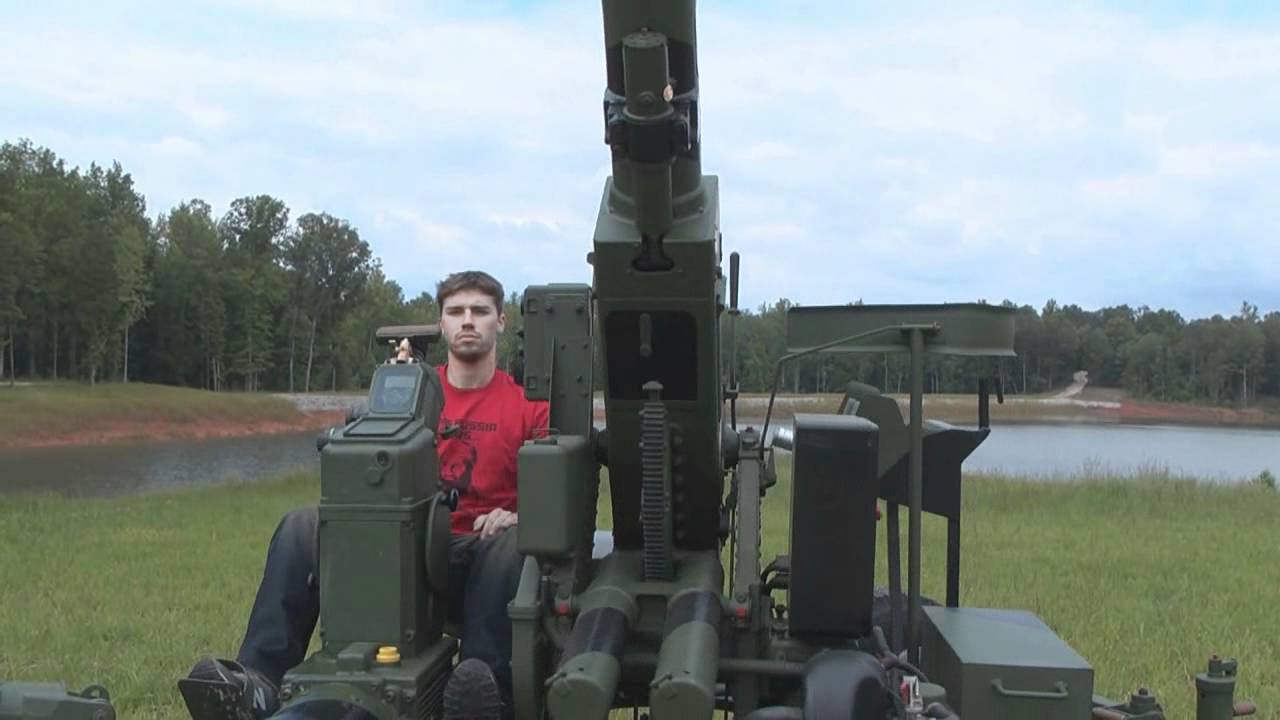
I saw another video where a 40mm gun was shot at a dummy. There isn’t highspeed footage and you don’t really see what happens well, but you do see the dummy mostly disintegrate:
Done blowed up gooood!
Like I said, the shock wave created by the watermelon, mayo, or meat target material trying to get out of the way faster than it physically can at the speed of sound in that medium, is essentially an explosion shock wave. Considering iron is 6 times as dense as water which itself is denser than baseball means that a weight at extreme velocity carries a lot of energy which can push the material out of the way creating a shock wave. The momentum loss of the projectile translates into that shock wave, so the more momentum the projectile has (i.e. steel not baseball) the more energy it impacts onto the target.
found it…recent news story of a French soldier’s armor after being hit w/ a cannonball at the Battle of Waterloo. He was ‘wounded’
Some what related, but this pic has been circulating on Reddit lately:
That is of course from the Painting by Vasily Vereshchagin. This was a piece of propaganda in the Great Game: the British Soldiers are in uniforms dated forty years after the actual event.
Vereshchagin later went along with the Tsar’s fleet to paint pictures of their expected smashing of the Japanese. Luckily his last work had not been done in watercolor.
It’s portraying the same event, but it doesn’t appear that the museum exhibit is directly referencing the painting. The British uniforms are different, for one, although I’ve no idea if they’re more or less accurate than the painting. The Indian fellow doesn’t look like any of the ones from the painting, either.
Are you contending that this sort of execution was never carried out by the British, and was purely the product of Russian propaganda?
Yes that painting is Russian anti-British propaganda. Those tunics are accurately scarlet; no idea why the museum has them in blue; but neither are 1857 British.
No of course I’m not contending that the British didn’t shoot victims from cannons on 1857, and thirty years after this they’d shoot them at Amristar with rifles. But Vereshchagin didn’t know that. He wanted the Indians in the 1880’s to see the British as cruel as ever (while he also made paintings of Russian soldiers bravely fighting Central Asians, devoid of the irony).
To be fair, it looks like execution by being blown from a cannon really was a thing, though the British weren’t the first to think of it:
The tunics for artillery regiments in that period were blue not scarlet.
