We have the judge elections in California and I leave them blank except for a couple of times when I learned that they were complete pricks.
It’s kind of fun to picture a judge at sentencing who instead of speaking, holds up a series of signs like Bob Dylan in the “Subterranean Homesick Blues” video.
Defendants are often in denial about what they did or the seriousness of it. I’m sure it’s helpful (marginally) for the sentencing judge to explain why they are going to prison for x months, so they can ponder that in their leisure. Other defendants have a lot of mitigating factors that the judge might want to acknowledge, so the defendants at least feel they have been heard. Family members are often present, it’s probably good for them to hear the judge’s rationale. It’s a very emotional time and I think it’s important for the parties to understand why a particular sentence is imposed. I’m sure in a lot of crimes, the victim benefits some from hearing the judge acknowledge the seriousness of the offense.
I would suggest people temper their cynicism a bit, and try to give our public servants the benefit of the doubt now and then.
That’s not why judges give their legal opinions on all factors relevant to the sentence they are imposing though. As @UDS1 noted indirectly in the first reply, and both @Aspenglow and I noted directly, judges do this because any factor that was raised by the prosecution or defense that the judge does not give his opinion on in sentencing is grounds for appeal on the basis that they failed to take said factor into consideration when imposing the sentence since they made no mention of it.
That may be true some places, but generally courts have pretty broad discretion about what sentence to impose, and if they’re in the “standard range” they don’t have to explain their reasoning. Yet they typically do, partially for the reasons I outlined.
I have probably attended more sentencing hearings than all but 3 or 4 of the people here in both state and federal courts. (@Aspensglow probably holds the record, due to her position.) I have also sentenced people to jail as a pro tem judge. Requirements probably vary widely across jurisdictions. I’m willing to agree that in some places the law requires an explanation, and in places where the law has no such requirements, it’s still done for other reasons.
In my state, the law doesn’t require the court to provide an explanation, it just requires that “the sentence” be pronounced in open court, with the defendant present. “The sentence” includes all parts of it, like fines and fees, conditions of probation, whether the defendant is eligible for certain kinds of programs or reductions in time, and any findings necessary to support those things.
I think some judges want to provide a bit of explanation for their choices, too, even if it’s not required.
In Canada, the judge on sentencing has to provide an outline of their reasons for the sentence given. This is part of due process: if the accused or the Crown want to appeal, there has to be sufficient basis for the appellate court to assess the fitness of the sentence. If a judge were just to say “six months” and walk out, that would be the basis for an appeal for failure to give reasons.
But, the judge doesn’t have to cross every t and dot every i the way some of the US posters have described. It’s enough if the reasons for judgment deal with all of the issues in play, but the judge doesn’t have to comment on every single detail, as long as they cover the general outline of the issues leading to their sentencing decision.
I strongly disagree with this statement. Reasons for the sentence are an important part of due process.
Perhaps its more of a federal thing. Federal Sentencing: The Basics (ussc.gov). From page 21, “V. APPELLATE REVIEW OF SENTENCES”, bolding mine.
As a part of its review for “procedural”
reasonableness, an appellate court engages in
de novo review of pure legal questions and
reviews the district court’s underlying
findings of fact for “clear error.”161 In order
for a sentence to be deemed procedurally
reasonable, the district court should have
properly calculated the applicable guideline
range (as the “starting point” in the Booker
three-step process) and addressed all of the
parties’ “non-frivolous arguments” about
why a sentence should have been imposed
outside the range
Sometimes they don’t even need the signs:
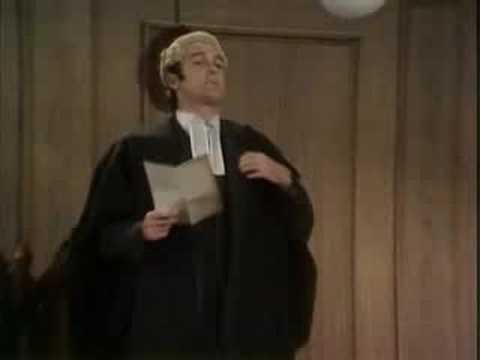
the “sentencing speech” feels like it’s mandatory although I haven’t seen any law… it also feels right that circumstances may allow written sentencing in which everything said in a “sentencing speech” would of course be written if a fully paper sentencing were done.
I do know a judge needs to justify the sentence. cannot say “you jay-walked so I’m sentencing you to death/natural life.” (or the obverse, “mass-murderer? … $100 fine”)
it also needs to acknowledge if mitigation elements are present (although I’ve found mitigating elements that a judge said “i give this no weight” and gave 200% sentence , later appeal said “can’t give that” so same resentencing judge gave max, thus shutting down fact they were obviously pre-disposed to every day possible )
frankly it seems defendants are at the whims of last night’s burritos & Hawaiian pizza
I recall an episode where the defendant was someone who had passed out at the bar, been put in a cab and sent home. When they got to his home, he had no money on him and so was charged with theft of services - something the town was cracking down on.
Prosecutor - “This case was not intentional, and the defendant was not actively trying to escape paying. We suggest a month of probation, particulalry as next week is Christmas.”
Judge: “I don’t give anyone a break just because it’s Christmas. Maybe he can get a good meal while he’s in jail. 2 weeks.”