That looks like…?
That looks like a chonmage, a shaved head which is exactly not what this thread is about and is enormously different in appearance to male pattern baldness. Sorry if you think otherwise, but you’re wrong.
To quote from the Wiki article Exapno linked to above,
It was originally a method of using hair to hold a samurai helmet steady atop the head in battle, and became a status symbol among Japanese society.
To expand upon that, the inside of the kabuto had a small leather pad on the inside of the crown. By shaving the head, the pad would not slip around on the warrior’s scalp holding the helmet more or less in place.
Consciously or unconsciously, deliberately or coincidentally, this mimicked male pattern baldness. You’d have to ask someone more steeped in Japanese culture to find out for sure but I’d bet there’s still be a a debate.
In any event, in our culture “real” men hide their baldness by shaving the head.
Heh. I made a claim about male pattern baldness. If doubters have to go to another culture, and another century, and a group that doesn’t have male pattern baldness to come up with one - count 'em - one lonely counterexample, I guess I made the best claim in the history of the internet.
The reason that some males develop male pattern baldness is because the genes for baldness occur ion all their body cells, but is activated in the presence of male hormones in just some of the cells - those that correspond to the pattern we see in this type of baldness.
That is why plugs of hair can be taken from low on the back of the head and transplanted into the bald area. Those cells from the back of the head have the baldness gene, but do not respond to male hormones in the same way. This really isn’t surprising, as we don’t grow head type hair in all the rest of our bodies.
Additionally, the amount of baldness is in fact variable, so not all men develop the same degree of baldness…that is because the area of cells responsive to male hormone hair suppression differs in different men. The same principle applies to many traits like eyebrow shape, body hair patterns, and so forth.
Note that some men do not develop male pattern baldness. They do not have the gene for male pattern baldness, and continue to keep a full head of hair all their lives.
Remember that all body cells (excluding sex cells and some special cells like red blood cells) have the full complement of genes. But clearly, as an example, we don’t grow fingernails on our eyelids. That is because the genes for fingernails is “turned off” in the cell of our eyelids.
Because our cells have a full complement of genes, we can find some cells where all of the genes are capable of being turned on - we call them stem cells - and with the proper chemical stimulation, these cells can become any type of cell. As the embryo grows, and cells multiply and migrate to different locations, the cells turn on some genes and turn off others. That is how muscle cells are created and bone cells, etc.
Please note that this is a very abbreviated answer to the baldness question; gene regulation in both developing fetuses and adult humans is just beginning to be understood.
Disclosure: I am a bald headed man and have been since my mid twenties. Never shave it, and have no problems either personally or with approval from women. Wear it proudly!
Speaking as a number 7 on the above chart since about 25, I can attest that shaving the head is way too much maintenance, but a number one buzz cut once a week is perfect. The thousands saved on haircuts over the decades is remarkable.
If you inherited male pattern baldness, every cell in you body has the genes. What matters is what genes are activated to determine what sort of cell it is. What wipes out head hair is not the hair cell’s behaviour, but the atrophy of blood supply to the cells. That is what is triggered by testosterone. (It is also why minoxidyl was a possible therapy, as it acts to slightly improve supply. Only slightly however.)
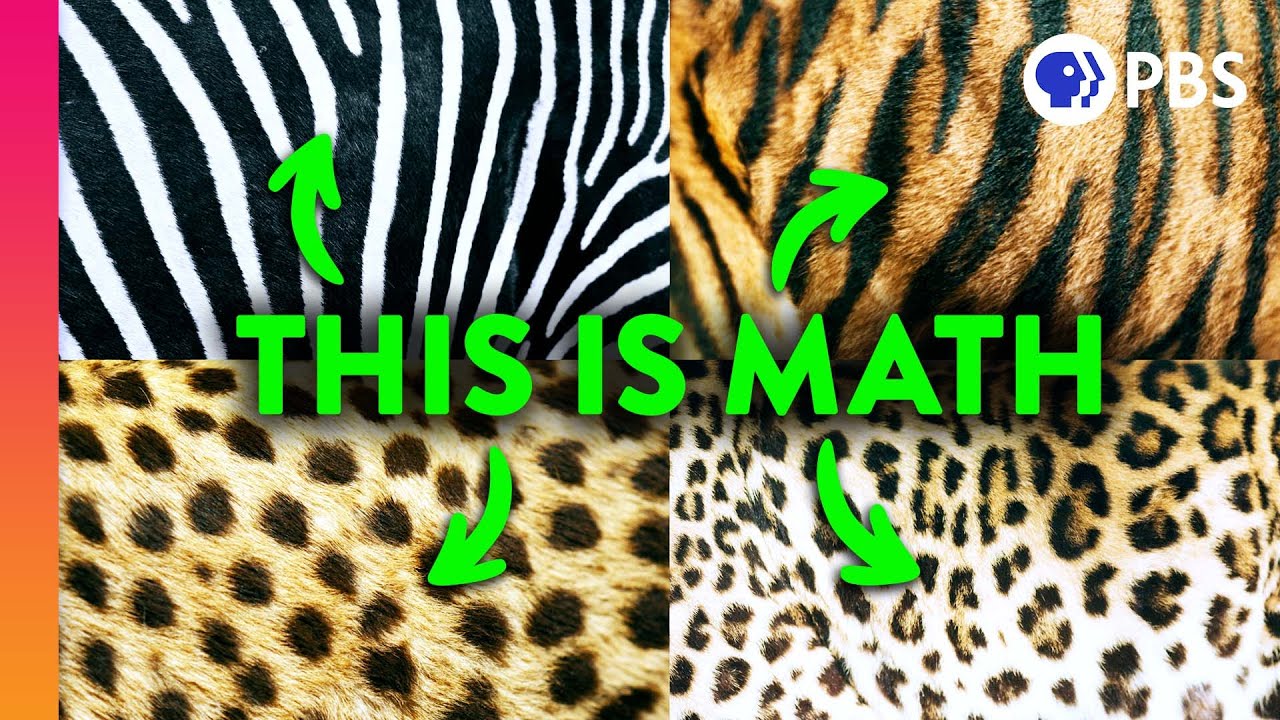
One’s entire skin is filled with hair follicles, and the various areas of skin grow different hair. The mistake with the male baldness pattern is to think that the entire head is a single defined hair type region. Most animals are striped. Very interestingly it was Turing who worked out the basic mathematics describing how different animal stripes and other patterns is controlled. Very few controls are needed to cover an apparently huge set of patterns. It is impossible to imagine we are not controlled by the same mechanisms.
Anyway, the answer to the OP is very likely that each individual has a hair distribution pattern programmed in, in much the same way as any animal has a colouring pattern, and the top of the head is programmed as a different area. Once the testosterone is running freely the blood supply to the follicles atrophies in that area, and the hair thins, recedes, and eventually the pre-programmed area is resplendent in its shiny glory.
Very interesting indeed!
This is a good answer to how, but I’m struggling to find a why out of it. The few other hairless areas of the body, like the palms, are hairless for practical reasons that go back before humanity. That male facial hair does not grow on the forehead or nose may be more closely related to an answer involving “striping” but we don’t lose that hair, we never grow it.
Since head hair loss usually happens later than prime reproductive age, it may be an accidental mutation that was not driven by an evolutionary purpose. Or it might not. I’m still wondering which.
My wife met my father and three of my uncles before we were married. She KNEW what she was getting. 
There doesn’t always have to be a why.
But here is one to depress all of us with chromed domes.
Maybe it serves to take older men out of the reproduction race and leave it for the younger ones. 


One notes that in the era this mutation would have occurred, mid-20s was well into old age, and most males would not have expected to live many more years. Nasty brutish and short and all that. So there is almost certainly no selection pressure on the mutation. It probably is just random.
That’s a typical misreading of average lifespan statistics.
The very term “average age at death” also contributes to the myth. High infant mortality brings down the average at one end of the age spectrum, and open-ended categories such as “40+” or “50+” years keep it low at the other. We know that in 2015 the average life expectancy at birth ranged from 50 years in Sierra Leone to 84 years in Japan, and these differences are related to early deaths rather than differences in total lifespan. A better method of estimating lifespan is to look at life expectancy only at adulthood, which takes infant mortality out of the equation; however, the inability to estimate age beyond about 50 years still keeps the average lower than it should be.
Good point.
That makes a pretty big assumption that bald males were not attractive to females. 
Nobody has a sense of humour anymore 
I am certainly not subscribing to the idea.