I’m overweight, and I love hiking. Or I used to, before developing painful knee and foot problems (I know, exacerbated by being overweight). One of the best vacations I ever took was 6 weeks of hiking through the National Parks of the Southwest.
Per the OP: More and more, young people don’t want to be bothered with anything involving physical effort. It’s much easier just to allow inertia to pile on the pounds, thinking that sometime in the future, the problem will resolve itself. The problem, though, is that older people have developed habits of eating too much and exercising too little. It takes a tremendous effort to break old habits and develop new ones.
I’m with monstro. To me, a hike doesn’t sound fun. I enjoy working out–on my own, at the gym. I may not go miles and miles, but I do my thing, and then it’s over. Hiking out in nature isn’t really my idea of a good time. Like monstro pointed out, we all have different paces. For me, a drink or a movie after work (or both…together!) would be my idea of a good time, but I’m not about to bemoan the breakdown of society if no one else wants to. (Well. Maybe the drinking. Don’t we want to match or parents and grandparents for alcoholism?! :))
I don’t agree with that. We are more educated, less accepting of misogyny, child abuse, racism, ignoring suffering overseas, etc. Where did you get the less empathetic part?
The fact that you are equating being fatter with being a morally inferior person is the crux of the issue. Everyone pretends it is about health, but that is the real reason people care so much about obesity (fat people are considered morally and sexually defective). If so, why can’t people just admit it rather than hiding that behind health scares?
I assumed his post was sarcastic, but maybe not. I think we fail to reach the bar of social responsibility now as then, but our bar is set much higher so we are in many ways more tolerant of the differences in people and far more concerned with the social ills that affect others and not ourselves. But your final point is the one to note, it’s no different now than it was then, so many people seem to find the need to pass judgment on others while hiding behind artificial concerns such as health when they are really displaying their own superficiality and lack of character.
You do realize, don’t you, that what you’re talking about is obesity in the U.S., not the world as a whole? Although obesity has gotten greater in recent times in much of the developed world, it’s worse in the U.S. than in any other OECD country. (The other OECD countries are Australia, Austria, Belgium, Canada, the Czech Republic, Denmark, Finland, France, Germany, Greece, Hungary, Iceland, Ireland, Italy, Japan, Korea, Luxembourg, Mexico, the Netherlands, New Zealand, Norway, Poland, Portugal, the Slovak Republic, Spain, Sweden, Switzerland, Turkey, and the United Kingdom.) See page 50 of this paper:
I am not disagreeing with you per se, but what would you consider a better proxy for “health” than “fitness” (accepting that many will disagree about how to define each of them independently).
A lack of fitness is minimally highly correlated with poor health outcomes, more than obesity is.
Not when health care cost, lost productivity, etc., are born by the entire society. If the community has a legitimate intrest in your carbon footprint, seatbelt use and smoking habits, it damn sure has an interest in your waist line.
By contrast, a single Wendy’s triple cheeseburger gives you 145% of the saturated fat RDA, without all the inconvenience of that extra bun to get through.
That’s an interesting counter argument, but I reject it. Carbon footprint is a natural resource, so acceptably regulated. Smoking regulation should be limited to it’s public usage as it actually affects others. Seat belts required to be in cars, OK. But my waistline and whether or not I have a seatbelt around it is still none of your business. Otherwise your reasoning could be used to control any aspect of my life. The community has a far greater legitimate interest in guaranteeing individual freedom and liberty.
Here is my perspective. Some background, I am overweight but I lost over 100 pounds in the last year through changing my behaviors.
Maybe they just don’t like hiking. That is fun for some people but sounds like a chore for many.
It’s a shitty attitude, expressed by some in this thread, to assume a fat person is a lesser person than you. Lazy, morally inferior. There are a lot of reasons people get fat and many of them are outside of a person’s control without a great deal of effort.
You know how you can open up a bag of chips and eat them all without realizing it? That’s not an accident. There is an entire industry filled with scientists and engineers that design foot to be eaten rapidly and not make you feel full because that makes you buy more and that is what makes them money. They design flavors and textures that hit our brains in ways that were evolved to help us survive in the wild. It is literally out of many people’s control.
Every fat person knows very well what they look like and probably hates them self for it on some level. Or at least is aware how other people perceive them. There is no real “fat acceptance” movement. That’s an internet construction of a handful of people with web sites. That said, everyone has something about themselves they hate so people who turn there nose up at fat people should get off their High Horse.
In summary, hiking sucks and be nice to each other.
Education level, income, social status, etc. all affect health as well. Where is the line drawn? Castrationprobably increases life expectancy and health.
In theory, if I got a graduate degree, earned more money, got castrated and got married my health and life expectancy would go up. However that doesn’t mean I am required to do any of those things if I don’t want to.
The line between public health and individual choice is blurry, and not too consistent.
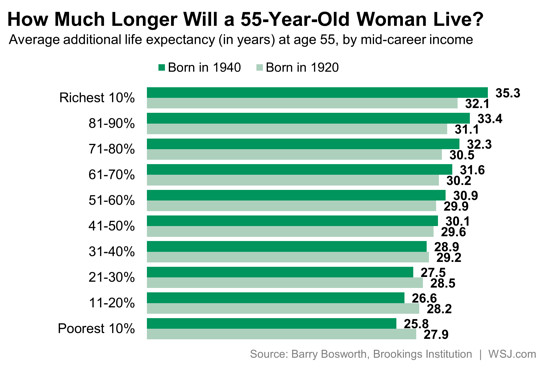
The life expectancy gap between the wealthiest 10% and the poorest 10% in a wealthy nation is about 10 years.
As far as obesity, I think you need a BMI of 50+ before the life expectancy gap hits 8 years.
Either way, until medicine comes up with a solution that consistently works in the real world using real people, there isn’t much we can do about it.
The evidence that diet affects one’s weight, health, or life expectancy is weaker and more confused than one might think:
And, incidentally, I didn’t say that obesity was just a problem in the U.S. I said that it was more of a problem in the U.S. than other developed countries.
I certainly agree that lots of effort goes into making easy-to-gobble food. And darn near anyone can be suckered once.
But once you (any you) have fallen for Cheezey Poofs the first time, the decision to buy another package the next time you’re at the store is 100% on you. It takes an act of commission to buy it. Not an act of omission. IOW, the path of least resistance is to leave the package on the shelf. You have to go out of your way to buy it and to pay for it.