I can find you threads that are years and years old where I’ve said this. I’ve never denied it. Shall I admit that fire burns and iron is harder than Jell-O while I’m at it?
Very well- I’m fighting a war on several fronts here and you must admit that calling me essentially a Lost Cause apologist (if not in those words then certainly that sentiment) lends itself to this interpretation, but if not I retract with all due apology that one.
You should consider changing your username to Otto to honor Kevin Kline’s character from A Fish Called Wanda.
And I never said it did. Read it in context. Break it into morsels with lots of power words and perhaps somebody tossing you treats when you understand a full sentence. Read the context of the “bloodless capture of a Federal fort is the equivalent of killing thousands of people” quote you cited- it was specific to an argument villa and I were having and was not about the war in general.
I went back and waded through a number of posts in this thread to see if somehow I’d misread you as promoting the usual “War of Northern Aggression” nonsense. And I found this gem.
How you can twist your cerebral cortex into knots so as to believe that the South acted in self-defense is a mystery.
But as you’ve said, we Northerners just can’t understand (sob).
That’s not what the quote says. It doesn’t say “the South” acted in self defense, it says individual Southern soldiers acted in self defense. Very different things.
Jeff Davis and the other aristocratic yahoos launched a war against the North. Billy Bob from Tennessee fought for different reasons, some of which included a desire to stop Union troops running over his dirt farm.
But it’s not Billy Bob who is being revered by Jackson Lee holidays and highway names, so it is disingenuous to portray the Confederates as a band of rascally land-protectors who had a legitimate reason for fighting.
The fact is Billy Bob was a victim of Confederate officials who provoked the Union into his backyard. He was killed because the aristocracy wanted to keep slavery at all costs. Sampiro says it’s hard to condemn one’s ancestors and that’s why the Confederacy isn’t roundly reviled in the South. This defense is only understandable in a rational way if the majority of people in the South descend from slaveowning planters. But as is frequently pointed out on this board, slaveowners represented a minority in the 19th century South.
This means, assuming Sampiro’s theory is correct, that rose-colored Confederate nostaligia is a product of southerners aligning their familial past with the slave-owning establishment…not to the demographic in which they most likely originated from. Which leads to the disturbing question: Why would they do that? If they truly saw the war through the eyes of their poor, disenfranchised ancestors who were used as pawns in a bloody chess game (or through the eyes of slaves…like blacks folks do without even thinking about it), they would spit on anything even vaguely celebratory that is associated with Robert E Lee or Jefferson Davis.
And that’s the problem; they don’t. They do the opposite. The descendants of poor, slave-less, illiterate Billy Bob are the main ones flying that stupid flag and coming up with tortured explanations as to why the war wasn’t about slavery.
If I name a highway the Charles Manson Express and Causeway how the hell does that affect anybody’s happiness, freedom, liberty, or well being in any way?
There’s an army of 160,000 men aimed towards your state is not a legitimate reason?
I said that’s A reason, and I also said I can’t speak for all people. I’ve yet to understand exactly who these people who revere the Confederacy so are- so far it seems to be people who own rebel flags and people who name highways.
A large minority. About 1:9 white southerners owned slaves but about 1:3 came from an immediate family that owned slaves. All were directly affected by slavery and had reason to fear the end of slavery. The large planters already owned most of the small farmers; without slavery there was more reason to believe that would get worse and not better.
I think you grossly overestimate the amount of time most southerners spend considering their familial past one way or the other. Most are doing good to know the names of all their great-grandparents.
Like people spit on anything vaguely celebratory of Andrew Jackson- demanding his face be removed from the $20 bill and his statues taken down in D.C. and Nashville and all? Or like most people go all pig eyed and apoplectic when Teddy Roosevelt is mentioned because of his involvement in a war with Spain that was of arguable cause and then his imperialism? I really don’t think most people give that much thought to the issue one way or the other. We should denounce Lincoln as a white surpremacist relocationist, Grant as a butcher who got 50,000 of his men killed or seriously wounded in a single month after taking the AoP, Babe Ruth as a racist and misogynist, Martin Luther King as a womanizing plagiarist, the Kennedy brothers as womanizing silver-spoon lawbreakers… who else shall we throw in there?
That’s a pregnant statement.
Cite? How do you know who their ancestors were when I seriously doubt they knew? Most of us would have had at least about 64 ancestors alive during the time of the war and they probably ran the gamut.
And why on earth would you believe that if you know the war was about slaves then the privates fighting it didn’t know? I don’t believe you’ve ever read a single book about the soldiers from cover to cover have you?
Goddamn piker. Haig managed 60,000 in a day. (And they were both great Generals.)
There are certainly famous Confederates I admire. Not Lee, who I think is overrated, but Jackson was a genius. He also illegally taught a relative’s slave to read, IIRC. He was fighting for what I consider and evil cause (and, had he survived the war I think should have been arrested for treason, having gone to West Point and all), but I can still admire his genius and his devotion to his troops. Much like I can admire Rommel, a seemingly good man who fought for an evil regime, and even Guderian, a Nazi pig who was a freaking magician militarily.
Wait a second. Or you implying that any action which falls short of violating civil liberties is above criticism and reproach? For the life of me I can’t imagine how anyone would post this and expect to be taken seriously.
Joseph Johnston- graduate of West Point, spoke fluent French and Latin (used them with his wife and educated comrades and subordinates when he did not want to be eavesdropped upon), outranked Robert E. Lee in both armies for a time (he was a brigadier general in the U.S. Army in 1860), well read and widely traveled in the north and the rest of the country- owned no slaves. Was, in fact, an early advocate of arming slaves, long before Claiborne. Johnston was not rich but he was certainly not a poor white; he did not know what the war was about even though he lived in the south and read the papers and was familiar with all aspects of the military and knew the near impossibility of southern victory- he did not know what the war was about, but you do? Because… you’re so danged special how exactly?
Robert E. Lee- he owned no slaves and was in the process of freeing every slave on his father-in-law’s plantation- a task he didn’t relish but had agreed to do- his sons and daughters and wife would have owned no slaves (his mother-in-law had in fact been an abolitionist as was his favorite sister in Maryland)- the war was completely about keeping the slaves he had already legally agreed to free by January 1, 1863 how exactly?
Could it be that in addition to slavery there were other incentives? Or that like Marion Kirkpatrick in Alabama who used the phrase “this is to be a rich man’s war but a poor man’s fight” when, as with many other southerners, he railed against secession (that secession did not pass unanimously is forgotten) as did many newspapers, speeches, essays and pamphlets that even poor southerners had access to hearing, he could not morally take up arms against his home state once the war began? That like John Dickinson he preferred to fight in the cause of a war he believed to be in vain rather than serve the other side? (Kirkpatrick led the 51st Alabama Cavalry in spite of being one of the most outspoken of antisecessionists; many other antisecessionists became military leaders- Davis had been Secretary of War and knew secession was a bad idea, never sought to be made president of the Confederacy (he assumed he would be appointed a brigadier general- probably would have been a good one- how he was as president is a good debate) and his wife was militant on the stupidity of it as late as April 1861.
I don’t think that anybody will deny that every aspect of the southern economy was linked to slavery. This would seem to mean that ending slavery would topple the southern economy. Do people honestly not realize that the small farmers and non-slaveowners knew that if the planter class was destroyed economically then they were damned as well? Rather like the dingy when a battleship goes down- it might stay afloat or it might well get swamped, but either way it’s going to be very hard sailing.
The small farmers were indebted financially and lived in the shadows of the planters. They were dependent upon them: they ginned and baled their cotton on the planters’ place, shipped it from their wharf usually, he advanced them money when times were bad [not from the goodness of his heart]- it was akin to feudalism. It’s why Lincoln grew up in Indiana in fact- his father was tired of the big planters, and that was before cotton was huge. The fact they did not themselves own slaves did not mean that the abolition of slavery would not affect them.
I should imagine you would be stressed in imagining many things, but to date nobody has- in spite of repeated requests- defined what should be meant by
‘contempt’. You have the right to criticize and be reproachful of breastfeeding, the flag, kittens and Woody Guthrie music if you so desire and nobody’s taking that away from you.
If you’re talking about the character, not at all. If you’re talking about the shorts absolutely. Damned thing nearly cost me my left leg in 9th grade and then again 18 years later.
That’s not necessarily inconsistent - an individual can support the social order that slavery brought and choose not to own slaves themself. I don’t know if that was the case with Lee, but it is perfectly possible the man could have fought to preserve slavery, yet not want slaves on a personal level.
Alternatively, he could have fought to protect Virginia’s right to be a slave state even if he thought Virginia ought to end slavery.
So you’re saying the privates were fighting for slavery? But we can’t condemn them, because they were Our Ancestors, and besides, it’s not like we ourselves don’t go around naming schools and bridges after Charles Manson to this very day.
This is not part of an argument but just some interesting biographical bits about Lee and slavery. His views on slavery were, of course, complex, but general-lee romanticized; for example his letter to his wife is much quoted by his admirers when he said
but the same people ignore the very next lines in the letter
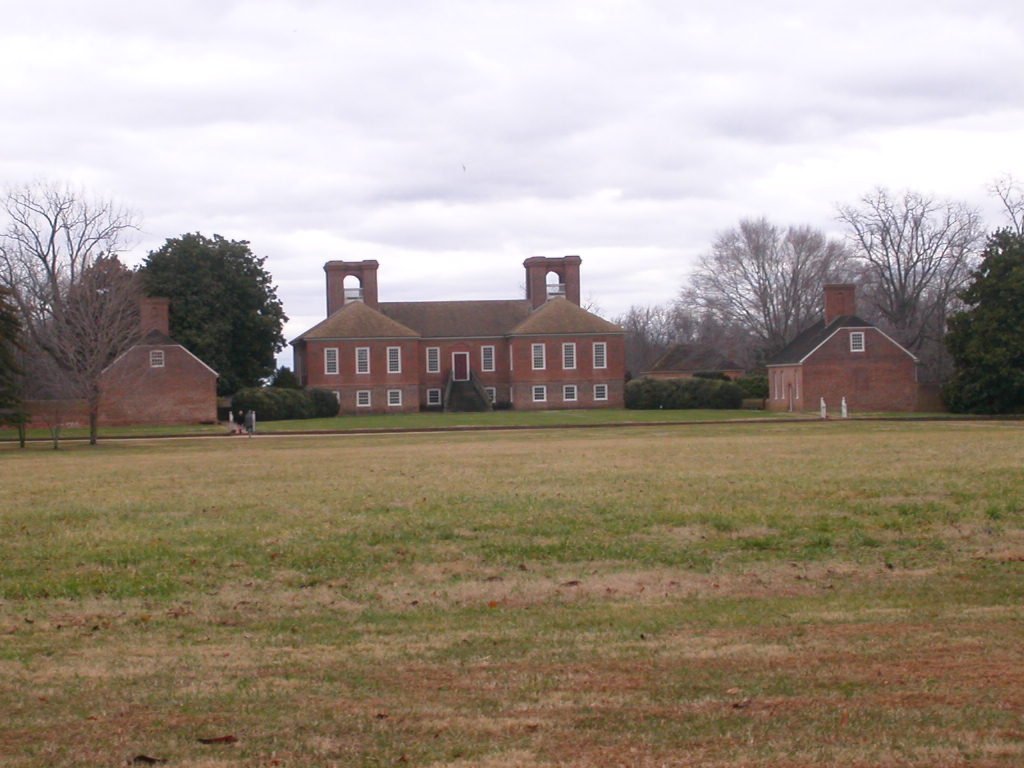
While it’s not only impossible to psychoanalyze the dead but also rude, I can’t help but wonder if some of Lee’s feelings on slavery had something to do with his childhood. He was a member of course of two of the great aristocratic rich slaveowning/landowning households of the Tidewater- his father was “Lighthorse Harry” Lee, Revolutionary War hero and holder of many offices consecutively and simultaneously and master of the Lee seat Stratford Hall (beautiful place, one of my favorite historic houses in the east- the house I grew up in was a miniature of it [Monticello being too expensive due to the dome]) and his mother was Ann(e) Carter of Shirley (home of one of the country’s loveliest staircases), daughter of the richest man in Virginia and by extension one of the richest in America. His childhood however was anything but idyllic; his father squandered his own inheritance, then squandered the inheritance of his first wife (who actually owned Stratford Hall- she was a Lee as well and inherited from her father) and then his second wife’s dowry through high living, bad investments (especially in land deals that went awry), gambling, and (almost a requirement it seems of wealthy southerners) signing notes with friends and relatives who defaulted. Stratford was saved because it went to his oldest son (Robert E.'s half brother) who first kicked his father and stepmother and half siblings out of the house and then lost it himself due to his own bad investments.
So… the family goes to live in Alexandria, a short walk from a postcard perfect view of Arlington, in a small house Anne’s brother owned (more than deceptive pictureas it’s about twice the size now that it was then), a place still nicer than most people live in but 1) it’s not theirs 2) it’s not Stratford Hall and 3) his squandering is not over. Harry does time in debtors prison and then skips town to avoid creditors and try to rebuild his fortune in the Caribbean though he ends up just living in genteel poverty and drinking himself to death. Anne’s father’s estate, in limbo until his widow’s death, is meanwhile distributed. Ann was as mentioned the child of the richest man in Virginia (or on the very short list at any rate) but unfortunately for Anne so were a lot of people- he had at least 23 children of whom about 15 or their heirs inherited in his will and per custom the oldest inherited the bulk and the sons inherited more than the daughters so her share was relatively paltry: a small trust fund and about 18 slaves.
The good news was that it was set up in such a way that her husband’s creditors couldn’t touch it any more than the house she lived in (which was not hers, though she would later buy it). The bad news was that the income from her trust was not enough to live on- less than most shopkeepers earned- good money for just having been born certainly but not the money of a Carter or a Lee. So she took her remaining assets- the slaves- kept a few for domestic use- and leased the rest. The money from the rent of the slaves (slaves generally leased for about 10% of their value per year minus expense for clothes) was what fed and clothed Robert and his siblings and it wasn’t that much. There was enough to send Robert’s brother to Harvard when added to a scholarship and a stipend from her relatives, but not enough for Robert.
Robert was a very religious boy and man, and though Episcopalian rather than Catholic very proud of his descent from St./Sir Thomas More, and he never particularly wanted to be a soldier. He wanted to be a [del]lumberjack[/del] priest. Unfortunately the Episcopalian priesthood requires education- preferably in England at this time though there were stateside seminaries- and the family just flat out did not have the money, so like many families that did not have the money to send their sons to college they secured his appointment to Westpoint (where famously he graduated without a demerit [though it’s untrue that he was the only person to do this- he wasn’t even the first or the only one in his class]).
Of course when he goes courting he hits paydirt: the only surviving legitimate child of one of the richest men in Virginia and a great-granddaughter of Martha Washington besides. It is rumored that his father-in-law, George Washington Parke Custis, fathered many children with his slaves; certainly there was an unusally high number of mulattoes on his plantation, and he freed several of them over the years.
When Lee’s mother’s died he was executor of the estate and inherited slaves in his own right; accounts vary between 8 and 10. It is known that he freed or “gave their time” to two of them but what became of the others is a mystery; it is believed he gave or sold them below value to his sisters but this is not for certain. (Many women in Lee’s family were invalids- his mother, his wife, one of his sisters and one of his daughters among them, and they all had slave nursemaids.)
So it is interesting to speculate on his attitude to slavery from his childhood and young adulthood: he’s a member of two of the greatest houses in Virginia but a poor relation to each and his father abandoned the family under ignoble circumstances, and the clothes on his back were paid for from the rent of slaves. While it can be said the clothes on every rich planter’s back were the result of slave labor there’s something more immediate about it when the money is actually pressed into your hand each season for the slave labor- there’s no selling a crop and communicating with factors and all that which can be pretended to be noble. Then if the rumors are true Arlington was filled brimming with cafe au lait variants on his wife and his father-in-law and every bit as much descendants of Lady Washington as his wife and his own children.
He had to have felt in some way beholden, and in some way ashamed, and because he was by all accounts a classist and snobbish person this could well have been translated into antipathy. To admit that they were his wife’s relatives and the sole source of his sustenance in youth would process into a combination of incredible injustice and hypocrisy and a life debt, unless it turns out you’re doing them a favor by letting them be your slaves.
You can watch Thomas Jefferson’s views on slavery take a similar downward turn from the more idealistic young man who thought abolition was possible to the man who accepted they’d never be free to the man who had to accept even if abolition was decreed he’d be financially ruined and in squalor due to his debts.
Or maybe Lee just didn’t like them.
*Give their time= manumitted without the paperwork. If officially manumitted they had to leave the state or else resume slavery, ‘giving time’ allowed them to stay but it was generally accepted they were free and if they chose to leave they could get their paperwork. This is what was done with Sally Hemings who was not provided for or even mentioned in Jefferson’s will (and in fact she was inventoried at $50 by the first appraisers of his slaves).
You can say that some privates were certainly fighting for slavery. You can also say that the privates were fighting (among other reasons) to avoid a complete social and economic collapse that would threaten their livelihoods. Would you fight to stop a total economic collapse that would see your family starve or your property destroyed or seized?
We don’t name high schools and bridges after Charles Manson but we name them after any number of explorers, politicians, religious and civil leaders, presidents, military figures, and others who caused more deaths and suffering than Manson ever did. Either start a revolution (which doesn’t involve secession obviously) and Americanize the French Republican Calendar perhaps and rename every school after some trappist monk or Jainist, or get the hell over it. In America as in Middle Earth names of places reflect their history and their heritage.
Slavery was an evil system that is rightly denounced today and was to some extent at the time. It was also legal and something that everybody who was alive accepted as such as had their grandparents as had their grandparents’ grandparents as had their grandparents’ grandparents’ grandparents and that before that had existed in one form or another since the dawn of civilization and in every land that had ever been and that was justified in the Bible that was the basis for most people’s moral codes. Like the Truman Show most people accept the reality into which they’re born, and if you can honestly say that had you been born 180 years ago and inherited slaves you would have freed them or that had you been a poor farmer in north Georgia you would have said “this is bogus and I’m not fighting for plutocrats, I conscientiously object” then it can only mean you have a time machine which still puts you a step ahead of people who had no idea what was coming (on either side). To think it was unreasonable of people to not view it with eyes that moisten 5 generations after it was abolished is somewhere between ignorantly naive and willfully stupid.