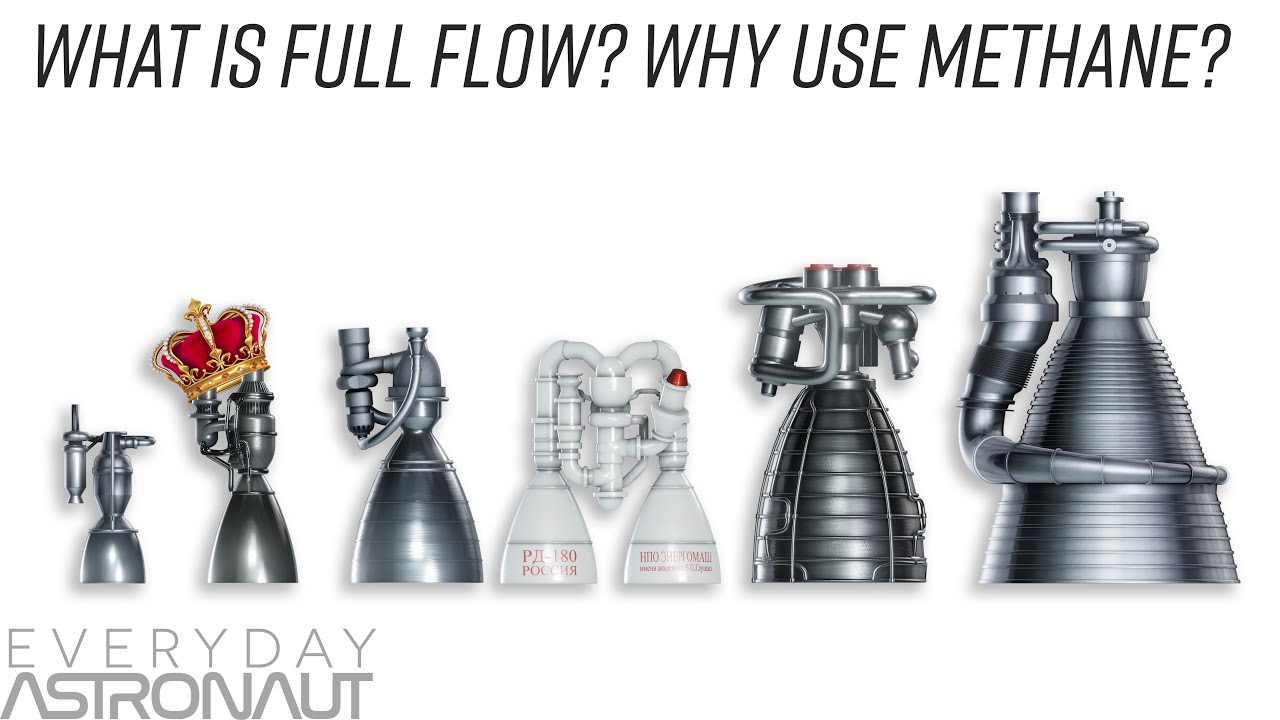
Yes, it is a pain in the ass. Hence why so many rockets are moving to methane. Although the performance on paper is substantially less (closer to kerosene than hydrogen), if you consider the other advantages it’s generally a win. Hydrogen:
Causes hydrogen embrittlement, where the atoms move into the metal of the container, making it brittle
Has extremely low density (about 7% the density of water), making the tanks very large
The low density also reduces engine thrust-to-weight ratio, since pumping those volumes becomes difficult
Is much more expensive than methane
Requires extra insulation on the tanks since it’s so cold
Requires insulation between the oxygen and hydrogen tanks since the oxygen will freeze solid if brought to liquid hydrogen temperatures. Heavy and also prone to flaking off.
Methane on the other hand has nice density, a good performance boost over kerosene, is cheap, and has similar temperatures to liquid oxygen (so the tanks can be in thermal contact).
Hydrogen can still make sense for upper stages since the thrust-to-weight requirements are less, and the total propellant requirements are less so the fuel/tank costs aren’t as big a deal, but it’s still pretty lame.
Somewhere I read that water in the stratosphere is not the best thing. Something about ice crystals and the ozone layer, but I can’t remember the details. Airliners put lots more water into the stratosphere, so I’m not worrying too much about the little bit that New Shepard added.
The YouTube channel Everyday Astronaut does a great job explaining a lot of this stuff.
Here is a good start. If you like that he has plenty of other videos which help take you down the rabbit hole of rocket science. These are long videos but if you like this stuff well worth a watch. While it is only Rocket Science-101 (if that) it is a good start:
Yeah, EA’s vids are quite good. Layman level but more accurate and detailed than most videos I’ve seen (there are some channels out there with pretty glaring errors).
This has been discussed by @Absolute but there are a couple of points I want to elaborate. They were not at zero gravity. You would have to be really damn far away from Earthy for it’s gravitational pull on you to be zero. The Moon is in orbit because it is affected by Earth’s gravitational pull at about a quarter of a million miles away. I think your comment suggests that if you get up to 50 miles high (where Bezos peaked), you are free of Earth’s gravity and can just go jetting off in any direction you want.
It is very popular to talk about “zero gravity” or “weightlessness” as a shorthand for freefall. All that really happened to Bezos was that he was falling to Earth as the same rate as his spacecraft, still very much under the influence of gravity. If you are in an elevator and the cable broke, you would have a sense of zero gravity because you would be floating around inside the car, but I assure you that you are still affected by gravity, and will still have weight, which will you discover rather suddenly at the bottom of the elevator shaft.
When a craft is in orbit, it is effectively in a constant state of freefall, so you see these videos of the astronauts floating around. This is not really zero gravity, it’s just that everything is falling at the same rate. It looks and feels like zero gravity because the astronauts and the viewers are using the spacecraft as the frame of reference, but it’s a kind of illusion.
It’s popular because there’s no coherent notion of “zero g” that isn’t exactly the same as “freefall”. In general relativity, there is no local experiment that can distinguish between freefall around a planet vs. sitting in deep space.
If one built a giant tower up to the altitude of the ISS, you’d experience ~85% of Earth’s gravity on top of that tower. But that’s picking out Earth as a preferred reference frame.
Even if you accept non-local measurements (i.e., tidal forces), no experiment will tell you if you’re deep in the gravity well of a sufficiently large object (such that there’s no local curvature) vs. somewhere else. Is that zero g? General relativity has no answer.
Better so just say that zero g, weightlessness, and freefall are the same thing. And if tidal forces are relevant (as they are in Earth’s orbit), call it microgravity instead. The residual accelerations on the ISS are very roughly a millionth of one Earth gravity, so it’s a useful label.
What makes suborbital flight less interesting than orbital is that the lateral velocity isn’t enough to miss the Earth as it falls. But that’s just the bulk of the Earth getting in the way, not some fundamental difference between zero g and freefall.
Yes, I agree with your point from a physics standpoint. But the language used in popular press gives the mistaken impression to the layperson (well, I’m a layperson) that if you are in zero g as experienced within your frame of reference then you are so far from Earth that you are free of it’s gravity.
I’m with Cooking on this one. “Zero g” implies — no, it straight-up means — “gravity does not exist here (or, at least, Earth’s gravity doesn’t affect me here)” for most people, and rightly so.
They are wrong, but it’s such an understandable mistake, it’s clearly a poorly worded phrase, and I think any popular media should avoid it.
On the non-technical level, it’s zero gravity, because look, everything’s floating around!.
On the technical level, it’s zero gravity, because everything’s traveling along a geodesic.
You only get to “it’s not zero gravity” by using an unholy mix of “well, technically…” and “but who cares about the technicalities?”. “Zero g” maybe isn’t the most informative term, but there’s no sense in which it’s wrong.
True. But if you want the average person to understand it, “unobservable gravity” would work better than “zero g,” I think — if you insist on something other than simply “weightless.”
OK, so help me out here. How do you explain to the general public that, all right, this is zero gravity, but not because they have gotten so far from Earth that they have escaped the Earth’s gravity?
There’s no one-size-fits-all answer to that question. It depends on who my audience is, and what misconceptions they already have. If, say, I were writing an article about it (and hence my explanation was the first contact between me and my audience), I wouldn’t use the term “zero g” at all, but just talk about orbits.
Lewis Carroll said that you can’t pour tea in a falling house.
Re: zero g. I’m surprised that nobody has mentioned “Lagrange Points” (being at best the exception that proves the rule). You are still in an orbit, free-falling, of course, although not the one you’d expect.