# Words that are their own antonym
**URL:** https://boards.straightdope.com/t/words-that-are-their-own-antonym/1005402
**Category:** Miscellaneous and Personal Stuff I Must Share
**Created:** [August 8, 2024, 2:14am UTC](https://boards.straightdope.com/t/words-that-are-their-own-antonym/1005402 "2024-08-08T02:14:21Z")
**Posts on this page:** 20
**Page:** 1
### Author:  [@John\_DiFool](https://boards.straightdope.com/u/John_DiFool)
#### Post date: [August 8, 2024, 2:14am UTC](https://boards.straightdope.com/t/words-that-are-their-own-antonym/1005402/1 "2024-08-08T02:14:21Z")
Saw the use of the term “sanctioned” in a quoting of our official rules just now in ATMB, in terms of dissuading hijacks, but the first definition that came to mind when I first saw it was “to give effective or authoritative approval or consent to.” I was thus rather confused until I made note of the context and recalled the _alternate_ definition: “the detriment, loss of reward, or coercive intervention annexed to a violation of a law as a means of enforcing the law.” [Merriam-Webster website](https://www.merriam-webster.com/dictionary/sanction)
It then struck me that these two definitions are basically antonymic, and one indeed must rely on context clues to divine which of the two was actually intended.
Any other examples out there?
---
### Author:  [@Whack-a-Mole](https://boards.straightdope.com/u/Whack-a-Mole)
#### Post date: [August 8, 2024, 2:20am UTC](https://boards.straightdope.com/t/words-that-are-their-own-antonym/1005402/2 "2024-08-08T02:20:30Z")
_Left_: Can mean either leave or stay.
---
### Author:  [@Quondam\_Mechanic](https://boards.straightdope.com/u/Quondam_Mechanic)
#### Post date: [August 8, 2024, 2:22am UTC](https://boards.straightdope.com/t/words-that-are-their-own-antonym/1005402/3 "2024-08-08T02:22:48Z")
_Ravel_ – to tangle or to untangle.
---
### Author:  [@Smapti](https://boards.straightdope.com/u/Smapti)
#### Post date: [August 8, 2024, 2:29am UTC](https://boards.straightdope.com/t/words-that-are-their-own-antonym/1005402/4 "2024-08-08T02:29:04Z")
_Cleave_ - to split in two or to join together.
_Table_ - to propose, or to dismiss.
---
### Author:  [@Little\_Nemo](https://boards.straightdope.com/u/Little_Nemo)
#### Post date: [August 8, 2024, 3:01am UTC](https://boards.straightdope.com/t/words-that-are-their-own-antonym/1005402/5 "2024-08-08T03:01:45Z")
The term is contronym.
Oversight: the act of watching over something or something missed through lack of attention.
Fast: to move rapidly or to bind something in place.
---
### Author:  [@markn\_1](https://boards.straightdope.com/u/markn_1)
#### Post date: [August 8, 2024, 3:14am UTC](https://boards.straightdope.com/t/words-that-are-their-own-antonym/1005402/6 "2024-08-08T03:14:36Z")
**Dust** : to remove the dust from something, or to add dust to something.
**Shelled** : something that has a shell, or something from which the shell has been removed.
**Lease** : to allow someone to use something in exchange for money, or to be the person who uses something in exchange for money.
**Consult** : to seek advice, or to provide advice.
---
### Author:  [@GuanoLad](https://boards.straightdope.com/u/GuanoLad)
#### Post date: [August 8, 2024, 3:16am UTC](https://boards.straightdope.com/t/words-that-are-their-own-antonym/1005402/7 "2024-08-08T03:16:11Z")
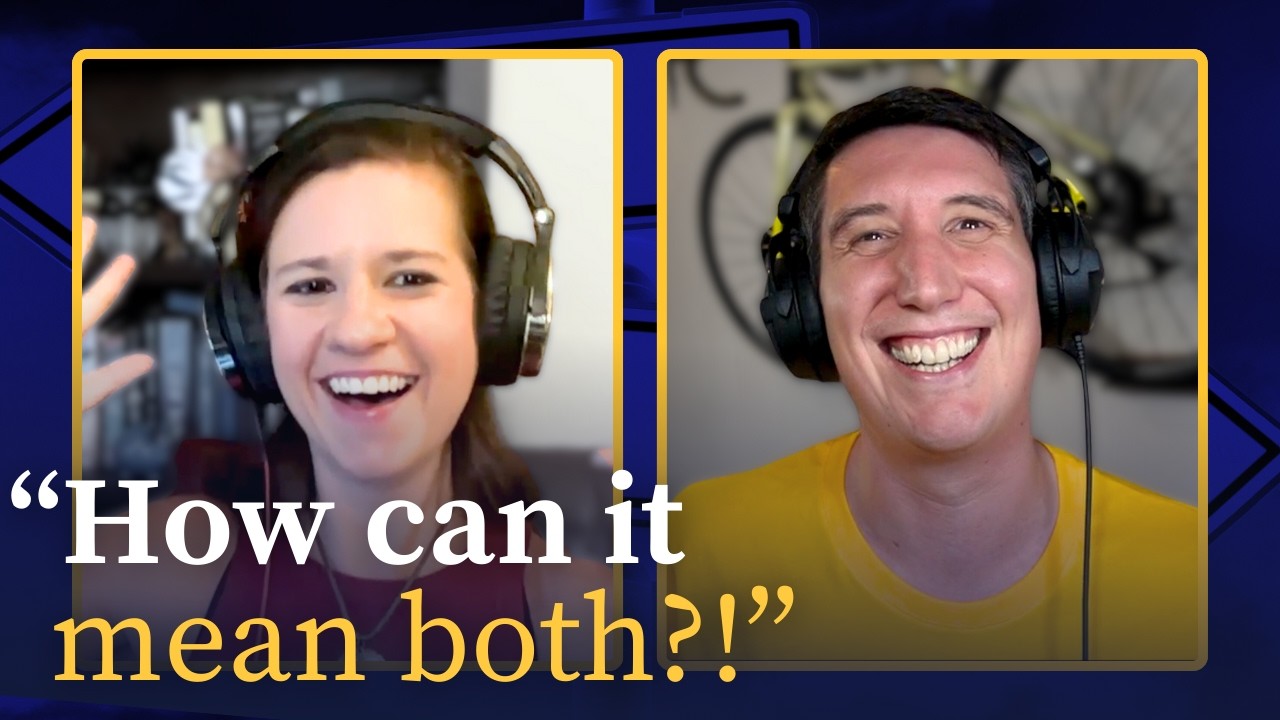
I watched a video on contronyms just yesterday.
[ ](https://www.youtube.com/watch?v=Lwj_xBTNJ4I)
---
### Author:  [@Kron](https://boards.straightdope.com/u/Kron)
#### Post date: [August 8, 2024, 4:27am UTC](https://boards.straightdope.com/t/words-that-are-their-own-antonym/1005402/8 "2024-08-08T04:27:23Z")
> [@markn\_1](#):
>
> **Lease** : to allow someone to use something in exchange for money, or to be the person who uses something in exchange for money.
This is a new one to me; I’ve only ever seen _lessee_ as the one to whom a lease is granted (by the _lessor_).
---
### Author:  [@Robot\_Arm](https://boards.straightdope.com/u/Robot_Arm)
#### Post date: [August 8, 2024, 4:38am UTC](https://boards.straightdope.com/t/words-that-are-their-own-antonym/1005402/9 "2024-08-08T04:38:31Z")
It’s a bit of a stretch, but I think **scale** is a double contronym. It can mean a range of values (a musical scale) or a specific value (to be paid scale). It can also be to put on top of something (scale a mountain) or remove from something (scale a fish).
---
### Author:  [@markn\_1](https://boards.straightdope.com/u/markn_1)
#### Post date: [August 8, 2024, 5:23am UTC](https://boards.straightdope.com/t/words-that-are-their-own-antonym/1005402/10 "2024-08-08T05:23:06Z")
I’m talking about lease as a verb. A landlord leases an apartment to his renter, and the renter leases the apartment from the landlord.
---
### Author:  [@Kron](https://boards.straightdope.com/u/Kron)
#### Post date: [August 8, 2024, 5:24am UTC](https://boards.straightdope.com/t/words-that-are-their-own-antonym/1005402/11 "2024-08-08T05:24:09Z")
And now I feel stupid!
---
### Author:  [@wolfpup](https://boards.straightdope.com/u/wolfpup)
#### Post date: [August 8, 2024, 5:33am UTC](https://boards.straightdope.com/t/words-that-are-their-own-antonym/1005402/12 "2024-08-08T05:33:00Z")
> [@Little\_Nemo](#):
>
> Fast: to move rapidly or to bind something in place.
Not really a contronym. It comes from Old English fæst ‘firmly fixed, steadfast’ and fæste ‘firmly’, of Germanic origin; related to Dutch vast and German fest ‘firm, solid’ and fast ‘almost’. In Middle English the adverb developed the senses ‘strongly, vigorously’ (compare with run hard), and ‘close, immediate’ (just surviving in the archaic fast by; compare with hard by, both meaning “very near”), hence ‘closely, immediately’ and ‘quickly’; the idea of rapid movement was then reflected in adjectival use (from the _Oxford Dictionary of English_, Oxford University Press).
FTR, I looked this up when I became pissed off with John McWhorter citing all sorts of alleged contronyms that really weren’t, in support of bullshit like “I could care less”.
But there are legitimate contronyms, some of which have already been mentioned. When you “bone” a chicken, you’re not building a chicken by supplying it with a new skeleton. It’s just an evolved short form of “de-bone”. In loose parlance, you’re preparing a chicken by dealing with the bones.
---
### Author:  [@Pitchmeister](https://boards.straightdope.com/u/Pitchmeister)
#### Post date: [August 8, 2024, 12:03pm UTC](https://boards.straightdope.com/t/words-that-are-their-own-antonym/1005402/13 "2024-08-08T12:03:48Z")
In German, there‘s the verb „umfahren“, which can mean both „to drive around something“ (a detour), and „to drive over something“. Which can lead to the sentence: „Den Fußgänger bitte umFAHRen, nicht UMfahren!“ („Please drive around, not over the pedestrian.“)
---
### Author:  [@veryfrank](https://boards.straightdope.com/u/veryfrank)
#### Post date: [August 8, 2024, 12:17pm UTC](https://boards.straightdope.com/t/words-that-are-their-own-antonym/1005402/14 "2024-08-08T12:17:02Z")
Welsh has a handful.
_Siopwr_ (n) is both “shopper” and “shopkeeper”
_Dysgu_ (v) means both “to teach” and “to learn”
_Amau_ (v) means both “to doubt” and “to suspect”
I’m sure there are more but those spring to mind.
---
### Author:  [@Treppenwitz](https://boards.straightdope.com/u/Treppenwitz)
#### Post date: [August 8, 2024, 12:49pm UTC](https://boards.straightdope.com/t/words-that-are-their-own-antonym/1005402/15 "2024-08-08T12:49:35Z")
> [@veryfrank](#):
>
> _Dysgu_ (v) means both “to teach” and “to learn”
The same is true of some (well, at least one) regional English dialects. Where I grew up (Cumbria) “I’ll larn ya!” was a threat (“I’ll teach you!”)
j
ETA: in French _personne_ can mean nobody or anybody.
---
### Author:  [@phs3](https://boards.straightdope.com/u/phs3)
#### Post date: [August 9, 2024, 3:15am UTC](https://boards.straightdope.com/t/words-that-are-their-own-antonym/1005402/16 "2024-08-09T03:15:11Z")
Let: to allow or (in tennis) to block.
My parents collected these, long before the Interwebs made it easy.
---
### Author:  [@Robot\_Arm](https://boards.straightdope.com/u/Robot_Arm)
#### Post date: [August 9, 2024, 4:12am UTC](https://boards.straightdope.com/t/words-that-are-their-own-antonym/1005402/17 "2024-08-09T04:12:28Z")
> [@Pitchmeister](#):
>
> In German, there‘s the verb „umfahren“, which can mean both „to drive around something“ (a detour), and „to drive over something“. Which can lead to the sentence: „Den Fußgänger bitte umFAHRen, nicht UMfahren!“ („Please drive around, not over the pedestrian.“)
I took a German class once, and the teacher explained that the German use of “an” isn’t quite the same as the English equivalent “on”. She said that a phrase like “the picture is on the wall” would be confusing in German; that “an” is only used for something that is resting on top of something else. I don’t know what preposition they would use for something that is affixed onto a vertical surface, like a picture hanging on a wall.
I wonder if something similar is at work with “umfahren”. Going around something (over the top or around the side) is equivalent in a certain sense; after all, you’re not going through it. It only becomes an issue when you’re dealing with things like cars and pedestrians.
---
### Author:  [@Eyebrows\_0f\_Doom](https://boards.straightdope.com/u/Eyebrows_0f_Doom)
#### Post date: [August 9, 2024, 4:22am UTC](https://boards.straightdope.com/t/words-that-are-their-own-antonym/1005402/18 "2024-08-09T04:22:49Z")
**Resign** : to quit something, or to continue on in a job
---
### Author:  [@wolfpup](https://boards.straightdope.com/u/wolfpup)
#### Post date: [August 9, 2024, 5:21am UTC](https://boards.straightdope.com/t/words-that-are-their-own-antonym/1005402/19 "2024-08-09T05:21:57Z")
> [@Eyebrows\_0f\_Doom](#):
>
> **Resign** : to quit something, or to continue on in a job
I would argue that this is again an example of words that are not legitimate contronyms. “Resign” in the sense of quitting a job or giving oneself up to some fate goes back to the 14th century and comes from the Old French _resigner_, which in turn comes from the original Latin. When a sports athlete signs a contract renewal, he is being “re-signed” which is an entirely different word consisting of the prefix “re” appended to the verb “sign”, and which IMHO definitely needs the hyphen (most dictionaries agree). In most dialects it’s not even pronounced the same.
---
### Author:  [@Peter\_Morris](https://boards.straightdope.com/u/Peter_Morris)
#### Post date: [August 9, 2024, 6:14am UTC](https://boards.straightdope.com/t/words-that-are-their-own-antonym/1005402/20 "2024-08-09T06:14:13Z")
**Boned**.
Sometimes used to describe meat served on the bone. Sometimes used to describe meat with bones removed, or filleted.
[Next page](https://boards.straightdope.com/t/words-that-are-their-own-antonym/1005402.md?page=2)