Yeah. “Oh my God, this artist managed to hold up some truths in this complicated thing” is a much more appealing hook to me than, “this artist found new ways of interacting with dishonesty and making you question what you know.”
But i guess I’ll offer some sort of reaction after i see the movie.
I get this, and your whole post. And not to argue against it, but I think what works for me is that as much as the movie is about Elizabeth Holmes, it’s also really about us (woooah, dude!). It’s not that she’s lying, or not lying, or Fielder is lying or not lying or objective or not, or whatever, but maybe more about the ways we are complicit in the lies of others, or we invite lies, or find comfort in fictions that we weave around and about ourselves.
And, in some ways, Theranos is a red herring. This movie conspicuously does not attempt to re-litigate Holmes’ guilt or innocence. The ‘truth’ about what happened with Theranos is a bit of a backdrop, but is not what the movie is interested in.
Anyway, I think I’m definitely at the point where the more words I use to explain something the more unclear my opinions are, so I’ll probably bow out.
Loved the movie, it felt very fresh and insightful about humanity, totally appreciate that it’s not for everyone, and if you’re worried that its quality hinges upon being surprised by a gimmick or twist, don’t worry, it doesn’t. You’ll like it or hate it regardless
Is that really an issue in this? Evidence was presented in court, she testified in her own defense, she was convicted despite her testimomy, and now she’s in prison. She’s now simply trying to convince a new group of people, people who are willing to spend their money to hear her lie again.
I suppose there might be something interesting in how she and Fielder are manipulating the people who pay to watch the movie. Then we can get really meta. But I’m not a person who enjoys being manipulated. Especially when I’m going in knowing the manipulation is the whole point.
To add to this, I think the tension between “Am I doing this because it’s the right thing or because I am making a documentary?” is one of the more interesting things about it. I find it relatable even as a fiction writer, where I’ve grappled with the reality behind what I’m trying to depict. For one of my books I had to read a lot about real-life prison rape and the abuses at Guantanamo. These are real people experiencing real things and I’m using the raw materials of their suffering to manufacturer pain in order to entertain others.
Bo Burnham wrestled with the same thing in Art is dead - which he wrote when he was 19 years old.
What to do with unexpected truths - and what to make of those truths - is a major theme in this film.
It’s not really about Theranos. It’s arguably not even about Elizabeth Holmes, although she’s the ostensible focal point. She’s just the person whose existence raises the questions.
Is there really any doubt that that she’s a liar, manipulator, and unreliable narrator of her own life? Is the fact she continues to play the victim and, is, in part, a victim, a big surprise?
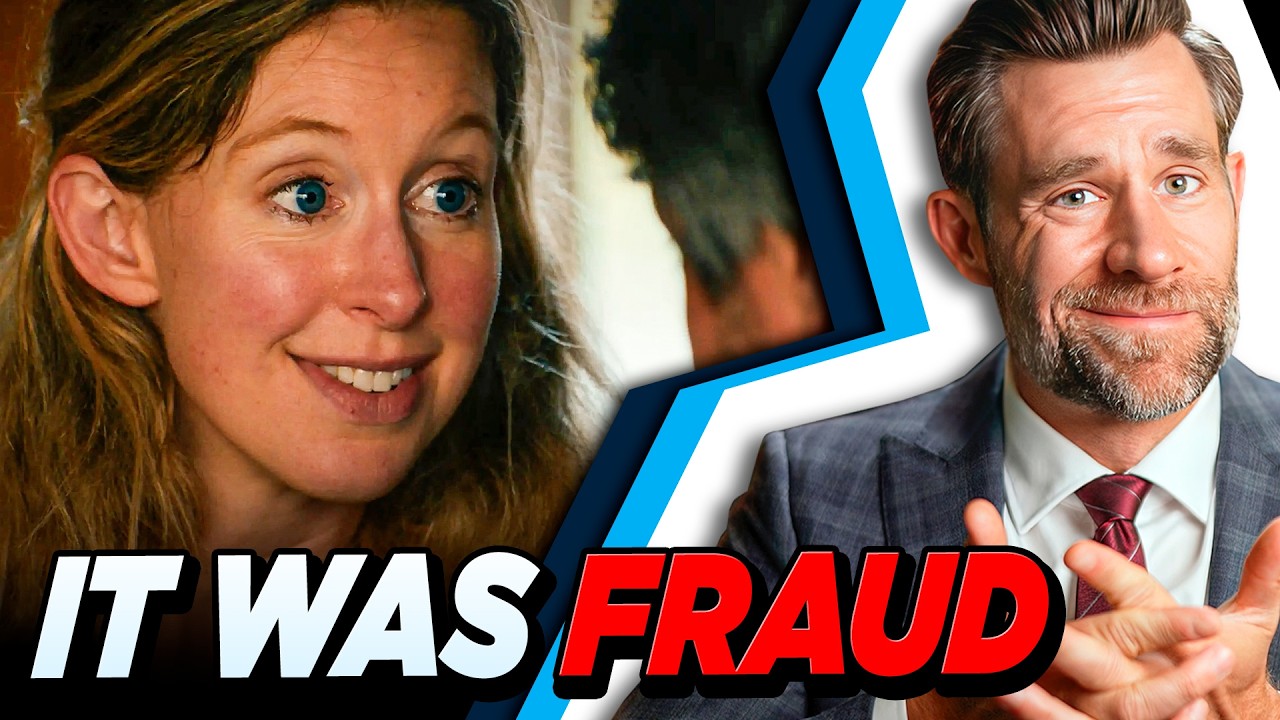
Anyhow, circling back to the discussion, Legal Eagle loved the movie and titled his video “Nathan Fielder Should Be a Laywer.”
My goddaughter lives in Texas and saw the movie with her mom, and told her “you need to call and talk to him [me] about it NOW” and so we just had a wide-ranging discussion of it. Again, we had different perspectives on a lot of individual scenes, but are probably 85% aligned overall on what was real and what wasn’t. She also had some thoughts about how women who build their lives around male approval/deference are in a weird middle ground all the time.
My grandmother and my mother were both like this. It seems like victimization, and it may be in part, but I think it’s a lot about dodging accountability, too, which tracks. “I’m just a woman. I have no power in this situation” can be true but it can also be an excuse to ignore hard truths that you might otherwise have to do something about.
To use a minor example, my grandmother has been about thirty different people depending on the man she was dating. When I was 11 she married a flaming racist - like, was in the KKK, possibly murdered someone racist - and there were times I saw something racist fly out of her mouth when I knew she didn’t believe it. Not really. And when we would later call her on it, it was all, “well, you know Ron.”
After Ron died she seems to have settled into a sense of herself. She is now 86, not dating anyone, and I have a much better sense of who she authentically is - but I’ve still seen her pretend to agree politically with friends when I know she doesn’t. She is a pathological people pleaser.
I think it has something to do with her being an orphan, but she has never breathed a negative word about the orphanage she grew up in. She talks about it like it was summer vacation.
I think that dynamic is a piece of the film and it would explain Sunny, but it was also a convenient legal defense when they both got caught.
So maybe this is really who she is with Billy Evans because she has no moral center. And she was really that other person with Sunny because she has no moral center.
I appreciated your whole post, but wanted to pull this section out particularly because it resonated so much with a handful of people I’ve known, including one in my family. Well summarized.
I had a big long reply to this, but it seemed pointless. You may experience it completely differently than I did. I know since the film came out, I’ve seen about a billion different takes. So who knows what you would really think? I don’t have a clue.
For me it was about the experience of watching it. It just totally sucked me in, took me places I didn’t expect, and left me with lots of good questions about what the hell I just saw.
I was watching an interview with Tyler Shultz, one of the poor guys who tried to raise the alarm on Theranos, and he had an interesting perspective on Fielder’s magic story. At one point in the film, Fielder said to Elizabeth, there’s a magician who has this crazy trick where he sticks a pencil through his hand. But it’s not an illusion. He put an actual hole into his hand to perform the trick.
From Shultz’ POV, in that moment, Fielder was considering that Holmes was actually in an abusive relationship, and that was how she did the trick.
I actually recommend people to never watch a documentary.
Documentaries are, functionally, reality TV. And, if you watch any random reality TV show and have some functioning skepticism, you’ll pretty quickly figure out that the producers are using a variety of techniques from coaching to misleading to prompting, during filming, followed by using deliberately malicious and dishonest film editing after the fact, all to produce some predetermined outcome. And, pretty often, the people who wanted and were willing to participate aren’t the sort to be trusted either.
The problem is: People don’t interpret documentaries as reality TV. They interpret them more like journalistic presentations, upholden to some minimum of integrity.
But if you look at the stories that have come out from Pumping Iron of everyone effectively treating production as an acting gig, The King of Kong having the exact same story arc as Pumping Iron - complete with a cartoon villain character - everything by Morgan Spurlock and the outcomes thereof, comparisons of “Battle in Seattle” to eye witness reports, etc. there’s really nothing preventing a documentary from being just as much a “reality” show except that you don’t have weekly repetition to drive in just how much force is being applied to force an outcome.
If everyone watched documentaries with the understanding that they’re “reality TV” then, perhaps there wouldn’t be an issue. But, once you understand what they are and actually want to watch them, that’s probably already a signal of a problem. You’re still better to skip.
I don’t, really. I watch documentaries because I’m interested in the filmmaker’s perspective.
I used to think of them more as true but I saw a really bad one (The Business of Being Born) followed by a detailed written takedown of said film, and that pretty much closed the lid on thinking documentaries were objective truth.
Going back to Fielder’s comment on the magic trick, he could also be referring to the trick he was doing himself, actually getting emotionally involved to be convincingly emotionally involved.
I’d pay good money to spend a day inside that man’s brain.
A columnist in Slate read that anecdote as Fielder’s commentary on Holmes’ act and the movie as a whole. She presents herself as this inscrutable mystery, and the movie raises lots of questions about what’s really going on. But it’s exactly what it looks like. “Nothing particularly nuanced or complex happened in that house: A liar lied and lied and lied and lied. And ouchy ouch, it hurts.”
Having read about half of Bad Blood now, I will say she apparently acted completely differently at Theranos than she does in this movie. But her ability to suck people in and confuse them seems to hold pretty well.
The thing that bothers me is that her play doesn’t make sense. Sociopaths are good at spinning bullshit. At Theranos she lied all day long, in increasingly inventive ways. And was generally a nasty person. Greedy and ruthless.
In court she played the victim card. It didn’t work.
So why do it again? Why have no bullshit story ready to go? Billy Evans tried to give the directors a bullshit story. Holmes offered nothing, which is practically begging people to mistrust her. And they did.
I feel like her actions at Theranos indicate she’s smarter than this.
That’s where I really got stuck, in the film.
Also a lot of viewers attribute manipulation to her on a scale that just isn’t realistic. It can’t all be faked. Even her smartest takes at Theranos weren’t that smart. If she were posting her bullshit here, we’d wipe the floor with her. As would have anyone with any knowledge in that field. This isn’t exactly Machiavelli we’re dealing with.
If it were, more people would have bought this lie. Right?