I completely agree with all of this. I would never deny a black American the right to feel connected to blacks of the past. It’s completely reasonable, and i’m sure that the persistence of Jim Crow laws and racism in more recent American history make the connection even more tangible.
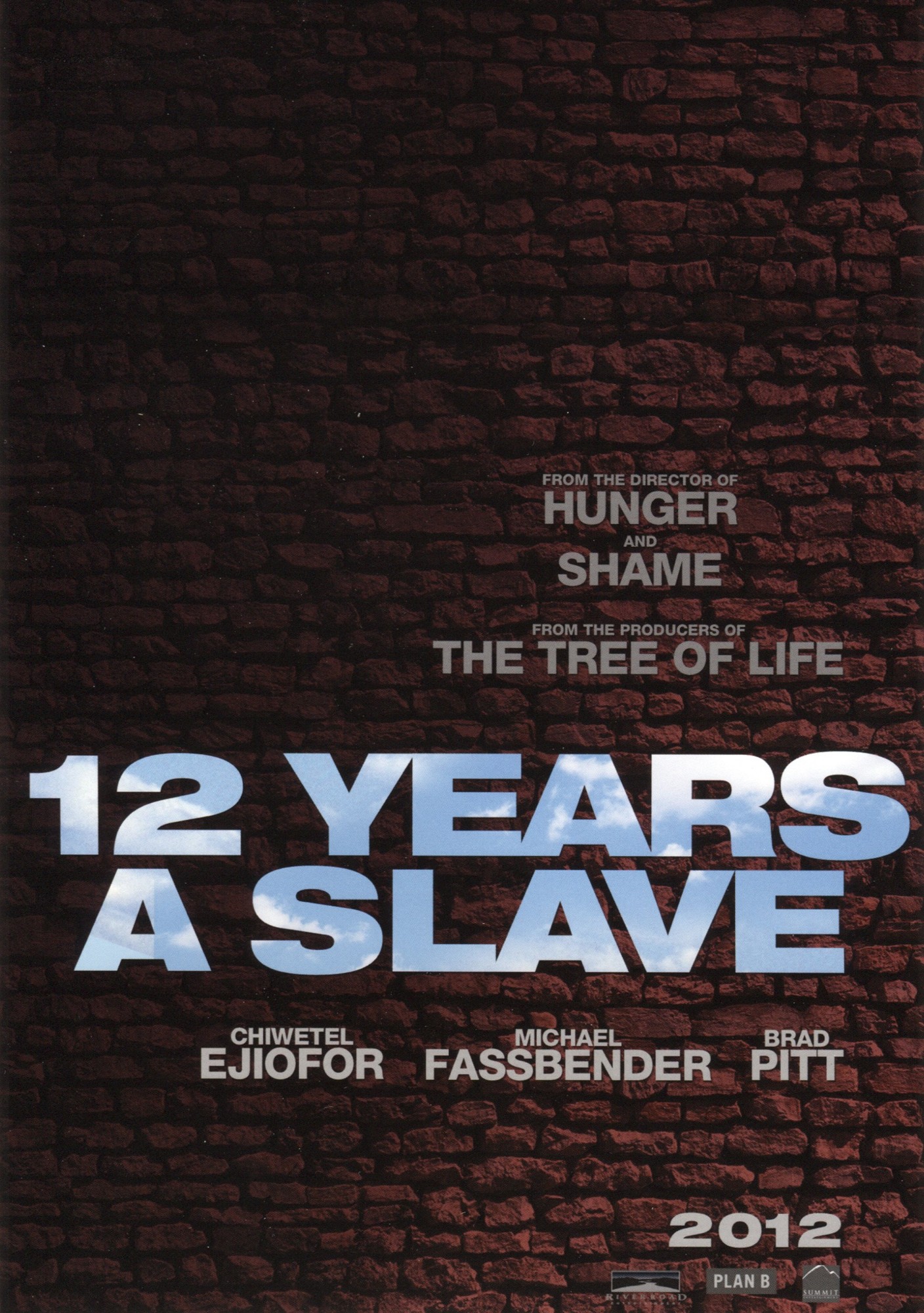
Well, aesthetics and artistic evaluation are inherently personal, but i really didn’t see any of that myself. My wife is a historian who works on American visual culture, and teaches a college history course on representations of race, including lessons on minstrelsy and the use of blackface in American history. When i showed her your observations, she was quite surprised, and said that she really didn’t perceive any minstrel-type mannerisms in Ejiofor’s portrayal of Northup.
That doesn’t invalidate your perceptions, of course, but i think that you might want to think about whether you’re reading a bit too much into the performance.
Sure, exceptional people exist in all time periods. I guess my point about Amistad is that not to argue that the type of people portrayed in Amistad could never have existed, but to argue that Spielberg’s portrayal of the ways in which whites treated Joadson in the movie was, as a whole, a contrast to the way that historians understand the time period.
Even if there were some exceptional people who would have treated Joadson in the completely respectful way portrayed in the film, the overall impression given by the film misrepresents the extent to which free blacks were accepted in the North in the middle of the nineteenth century. If you make clear that your exceptional character was historically exceptional, that’s one thing. But you shouldn’t imply that exceptional actions were the norm, which is what Spielberg does with his portrayal of the white Northerners and their treatment of Joadson.
You say that “If a story stands out in history, like the Amistad story, I am not surprised to see exceptional people being a part of it.” That might be true, but Spielberg seems to have gone out of his way to portray some of his exceptional characters inaccurately. John Quincy Adams was far less committed to the cause of abolitionism than is portrayed in the movie, especially when he first took on the case. Renowned abolitionist Lewis Tappan did not, as suggested by Spielberg, argue that the slaves of the Amistad should be sacrificed as martyrs to the abolitionist cause. And, perhaps most significantly, if “exceptional people” were indeed part of the Amistad story (and i agree they were), then why did Spielberg feel the need to create a fictional black abolitionist instead of using a real one, when most of his other main characters were actual historical figures?
I’m not arguing that Amistad is a bad movie. I think, in many ways, that its strengths at least balance out (if not outweigh) its weaknesses. But it does have historical problems, and those problems are particularly troubling because they were, in my opinion, so unnecessary to the historical recreation Spielberg was trying to undertake.
Some historians pointed out that Americans of the 1840s didn’t wear beards, as portrayed in the movie. I don’t care too much about that stuff. What i’m arguing here, though, is that some of the more substantive historical alterations made by Spielberg were problematic precisely because they misrepresented central historical characters, and did so in a way that was completely unnecessary. Spielberg did something similar with his more recent movie, Lincoln, where (using Tony Kushner’s script) he had the movie portray two Connecticut congressmen as voting against the 13th Amendment, something that never happened.
Anyway, that’s all something of a hijack from the topic of this thread. When 12 Years a Slave comes out on DVD, i’ll be buying a copy, and i’ll look closely for the instances of minstrel-like acting that you are alleging here.