But I expect footage too gruesome for 1958 will have little effect on the 2026 movie viewer.
Anyone familiar with the movie? There is a good chance I have seen it (probably late night TV) but I don’t remember it.
But I expect footage too gruesome for 1958 will have little effect on the 2026 movie viewer.
Anyone familiar with the movie? There is a good chance I have seen it (probably late night TV) but I don’t remember it.
I’ve seen the movie and it is pretty intense in some parts for 1958.
I had no idea there was anything cut. I’m curious to see the footage.
It was released in the U.S. as “Horror of Dracula,” if that helps anyone.
I remember when I was a kid, and reading books about horror movies that were aimed at kids, they always talked about how intense and gory the Hammer films were. When I finally saw them, they weren’t all that much. Compared to modern slasher movies, they’re almost quaint.
I’ve always heard that there were parts that were cut out because they were just “too horrific!” It will be interesting to see that lost footage, but I doubt that it will be all that shocking to today’s audiences.
I mean, it’s 1958. By the 1970s, movies and gore effects had come a long way.
The effects may have been quaint but Christopher Lee was pretty terrifying.
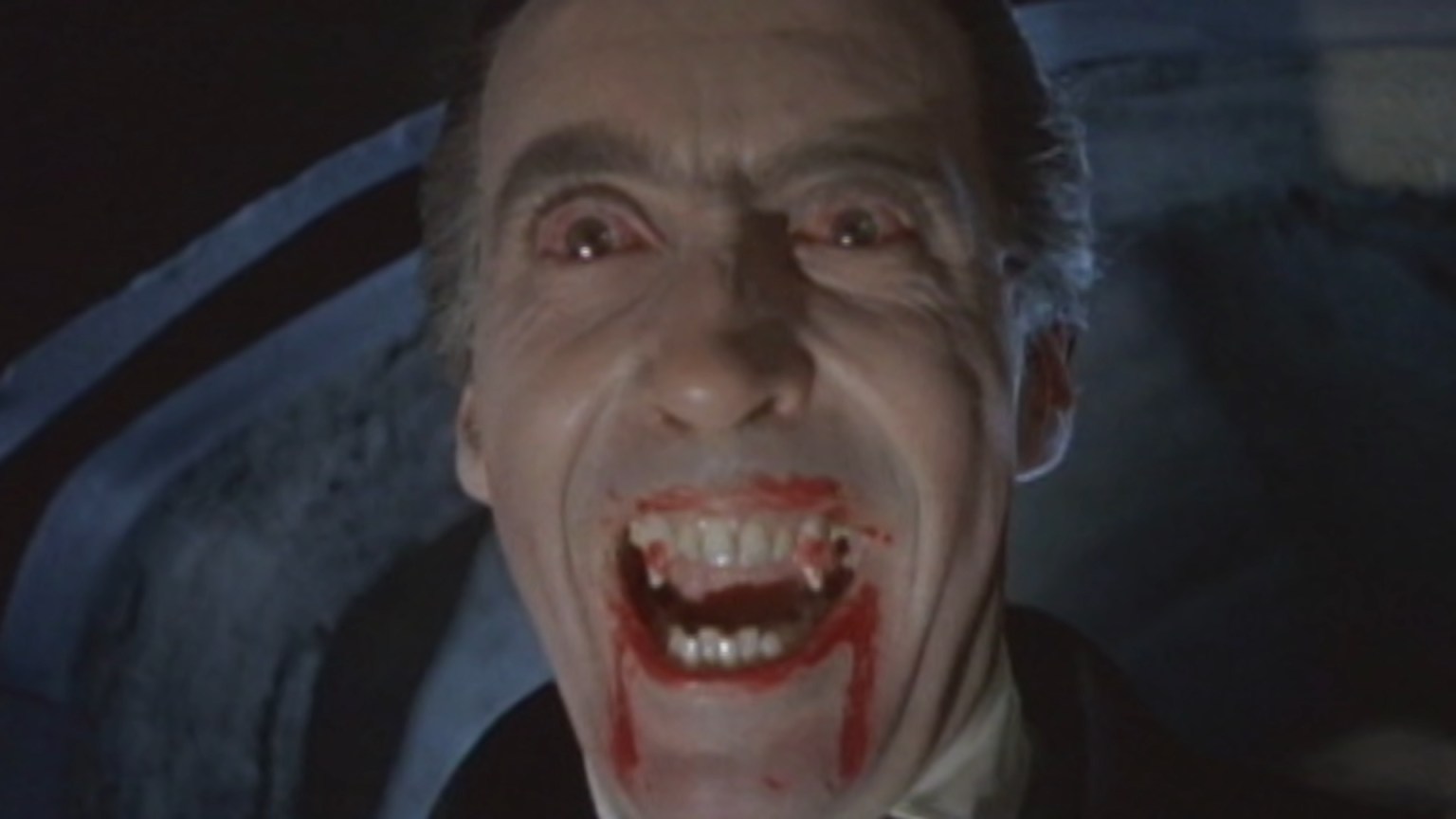
Getting a 404 on that.
I can see it without a problem.
I went back and found another image to link.
Those Hammer films were more transgressive with nudity than they were with gore. I think the first boobs I ever saw on a TV screen was thanks to Hammer.
I’ve never seen it, but I’m looking forward to it. The only role I’ve seen Peter Cushing in is Grand Moff Tarkin. It’ll be interesting to see him play a hero.
Then don’t watch any of the Hammer Frankenstein films. His Dr. Frankenstein is truly vile.
Must be a mirror site.
A lot of them are more than half exploitation film with the bouts of gore, sadism and boobs. Hammer films feel like a very singular genre to me. Often (not always) interesting stories with decent acting, that nonetheless would make sure to spend some time pandering to the prurient.
I guess it worked. Even non-Hammer British films in the horror genre felt kind of Hammery in that period. Like Vincent Price’s pretty brutal Witchfinder General or the original 1973 version of The Wicker Man.
It was almost certainly the first Dracula movie I ever saw and have since seen it numerous times. I considered it the definitive Dracula, and though someone once pointed out that strayed quite far from the original novel, I still think in the film world it’s pretty definitive and perhaps the best old-school Dracula movie, unless you count either the silent 1922 Nosferatu or the 2024 remake.
I, too, am curious to see the lost footage, though I’m not expecting much.
I think the best word to describe the Hammer oeuvre is ‘lurid’.
I tend to think of Cushing as a good guy more often than a bad guy. He is the classic Van Helsing.
Also look for Michael Gough, who would go on the play Alfred in the Tim Burton Batman movies, and Dr. Flammond in Top Secret.
Speaking of the release of long-lost footage from a version of Dracula, the lost epilogue from the 1931 Universal version, spoken by Edward van Sloan, has apparently been found and restored:
It’s interesting how our collective perception changes through the decades. As a wee lad, my family was watching the Wizard of Oz and my father said, “When I was your age, those flying monkeys scared the hell out of me.” And I couldn’t help but ask why because nothing about that movie was the least bit frightening to me. When I saw Night of the Living Dead in the 1980s I wasn’t the least bit frightened but kids my age less than twenty years earlier were shocked by it.
I would quibble with that a bit. Cushing’s Van Helsing is a bit too much of an action hero for my taste, rather than the wise and somewhat eccentric professor of the novel. The final battle between Van Helsing and Dracula is exciting, but it’s certainly not Stoker. Not to mention that Cushing’s Van Helsing seems quintessentially English, whereas the novel’s Van Helsing was very conspicuously “the Dutchman.” A good foreigner to oppose Dracula’s threatening foreigner.
Hammer was very much an exploitation studio, in the sense of giving the audience sensational content, lots of gore and nudity. Some of the stories and performances were quite good, but the sensation was always there. Their Dracula made several changes from the source novel (some of them for the better), but it is a neat little presentation of the basic story. I regret the loss of Dracula’s sea voyage, a highlight of the novel, but that was almost certainly beyond their budget. Hammer’s Dracula travels by coach wherever he goes.
Actually, they changed a huge amount, as they did with all the horror films they redid – Frankenstein, The Mummy, Phantom of the Opera. They didn’t want to be accused to duplicating the Universal versions.