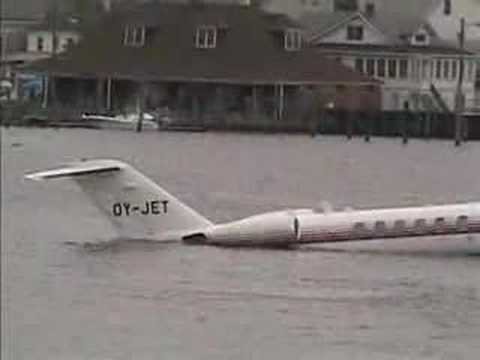
You’re spot-on here. EMAS is installed only where there isn’t an extra half-mile or so of relatively flat almost entirely vacant land to finish the deceleration at a survivable rate.
Absent EMAS, once you run off the concrete into the weeds, grass, or mud beyond the gear will sink into the surface at least somewhat and things slow down pretty quickly. EMAS just turns that up to 11 in a more tightly controlled fashion.
To put some perspective on it, at typical landing weights a 767 weighs almost as much as 3 max-loaded semi truck/trailer combos. But instead of distributing the weight across 3 x 18 = 54 tires it’s distributed across 10. Of which 8 are carrying 80% of the load. Those 8 are ~10% bigger than typical 18-wheeler tractor tires.
Bottom line, the weight per unit tire contact area is a bunch bigger than a truck’s. It’ll punch through the surface of ordinary roads easily, and all but the hardest desert hardpan. Once they dig in and start plowing a furrow you’re gonna slow down aggressively. In wet ground maybe so aggressively the gear shear off. Oops.
All in all, EMAS is a very nice addition to the safety toolkit. It’s also an example of smart conceptual thinking. It will never prevent a single incident. But it will reduce the harm of those that happen.
To keep av-gas out of the delicate Bay ecosystem … San Francisco International has BIG cement walls at the end of their runways … all about trade-offs …
Actually, the seawall that Asiana so memorably tried unsuccessfully to modify is there because years ago the runway was extended out into the bay on landfill. The artificial land is 30ish feet above the level of the bay floor there.
Asiana was approaching from the upper right going towards the lower left. Substantially everything upwards to both left and right from the crossing of the four runways (heavy dark lines) is landfill edged with seawall and a pile of big rocks. A quick look at Google maps, etc., will show the artificiality of the land/water edge.
Interestingly, the diagram also shows EMAS installed at both ends of both short runways that run more or less left/right = North/South. The longer runways that run more or less up/down = East/West are long enough they don’t need it. Nor is there much room to install any; the runway end is very close to the edge of the landfill.
EMAS was installed at Chicago Midway Airport (which is completely surrounded by neighborhood, and, thus, lacks that extra safe space) after a 2005 accident in which a Southwest 737, landing in snowy conditions, slid past the end of the runway, crashed through the wall at the northwest corner of the airport, and onto Central Avenue. The plane hit several cars on the street, killing a boy in a car, and injuring several others.
From the pictures, it looks like the plane doesn’t sink in terribly deep (in most cases; in this case it was on its belly, but the alternative was tumbling down a 270-foot embankment, so it looks to me like a big win for EMAS). In any EMAS incident, the airport crash response crew will be on the scene within a few minutes; if a fire does spread to the fuselage before they arrive, evacuation of an intact and upright aircraft is much easier/safer than one that’s mangled by sliding into trees/buildings/cliffs at high speed.
Related question: what is the typical decel rate for EMAS? AIUI, heavier aircraft sink in more deeply and develop greater stopping force…but they’re also heavier, so is the decel rate fairly constant over a wide range of aircraft weights?
Here’s an aerial view of Midway, illustrating the lack of extra space at the ends of the runways. West is at the top of the picture, so the Southwest crash I noted above occurred in the upper right hand corner of the picture.
My mother was an airline stewardess in the early 1960s (for Capital Airlines, which then merged with United). Midway was her least-favorite airport to land at, because she describes the approach as “houses-houses-houses-street-RUNWAY!”
We’ve been told to expect aggressive but non-violent slowing. The pix I’ve seen seem to be about like 60-80 mph to zero in 200ish feet.
I agree that the basic physics supports the idea that the system should produce about the same decel forces over the range of aircraft weights it’s designed to protect.
Aircraft beyond either end of that range will get less decel. At the light end they’ll not break through and just roll along the surface whereas at the heavy end they’ll punch all the way down to the hard surface below. A tradeoff there is aircraft type. E.g. a 777 has two gear legs while a 747 of the same general weight class has 4. So if they both ran into an EMAS designed for a max aircraft weight lighter than they are, I’d expect the 747 plowing 4 furrows to have ~2x the decel of the 777 plowing two.
All this is semi-informed speculation, not cited fact.
By way of comparison, this PDF document from the National Association of City Transportation Officials says
By the description which follows in the next paragraphs, the assumption is a maximum-effort stop with good traction, dry roads, and no serious risk of loss of control. Pretty much, your typical near-panic stop on a level dry road.
I hadn’t bothered to watch that vid before. Good one.
Ref the later convo w gotpasswords & Machine Elf: So that’s how a homebrew EMAS works. At least they stayed dry.
And back to the OP’s questions: When you touch down 2/3rds of the way down the runway, that’s your cue to quit taking selfies and assume the brace position.
Since the OP was concerned over something like this, the question arises how could this happen? The pilot was trying to land on a 2,948 ft runway that is normally closed to jet traffic.
The plane was a Cessna Citation CJ2 which required 2,930 ft in no wind conditions, and he landed with a 10 knot tailwind, which increased the required runway length to 3,500 ft. The CJ2 does not have thrust reversers, and he touched down part way down the runway, so he didn’t even have the full 2,948 ft available.
 now there’s some fine color commentary.
 At least they stayed dry.