I vote not jerk. Once people brought out the Mythbusters episode in favor of their argument, it would be on like Pac-man. It’s a prime example of people who have already made up their mind not being influenced by exposure to facts, but the facts actually make their opinion of the facts stronger. If you had shown that their memories of the episode were wrong then they may have learned to not always trust them.
Thanks to all the responses so far.
Why do the people who are wrong not get a reputation for being a jerk? Only the people who point out that they are wrong.
Let me ask this: If the situation were slightly reversed, and I had made the assertion that daddy long legs were not poisonous, someone disagreed with me, and I then pulled out my phone and proved my point… it seems to me that no one would consider that I was a jerk in that case. It is only when I disagree with something that someone else said first. Is there some sort of unwritten/unspoken rule that what is said first is sacrosanct/not to be questioned, lest you be considered rude?
I think for the next family movie night you show Idiocracy.
Not a jerk in my opinion. If you really wanted to be a jerk, you could have said “Listen you little shit, you should retake biology because dadddy-longlegs aren’t even spiders!”. You would have been correct too unlike most people in this thread. That’s probably the way I would have handled it or maybe not. My 13 year old daughter and I get into fact wars all the time and she is always more than happy to provide cites. No feelings are hurt even if I show her that she is mistaken or one of her sources is wrong.
The creatures most correctly called daddy-longlegs are in their own separate Order which is Opiliones. Common names for this Order are 1) daddy-longlegs, 2) harvestmen and 3) opilionids. They are characterized by having one basic body segment which shows segmentation on the posterior portion, at most 2 eyes and all 8 legs attach to the pill-like body segment. .
I just wanted to point out that turtles cannot fly. Look it up if you don’t believe me.
I think it’s because humans have developed a social expectation to not disagree with others, to make relationships flow more smoothly. When it’s an opinion, this is probably accurate “Batman is the coolest superhero” “No he’s not, it’s definitely Superman!” - here there’s no resolution, just a disagreement. Unfortunately human brains are not well wired for either admitting they’re wrong or distinguishing fact from opinion (present company excluded of course).
Consider as an outside observer if you didn’t know the topic being discussed. “Widgets support the foo protocol” “No they don’t, they support the bar protocol”. You don’t know which is right, but you do know who decided to start an argument and disagree.
Personally I think this is a bug in the human psyche, but I’m not immune to it either.
Nuh Uh! They’re spiders! I saw it on Mythbusters, you jerk!
*not REALLY calling him a jerk 
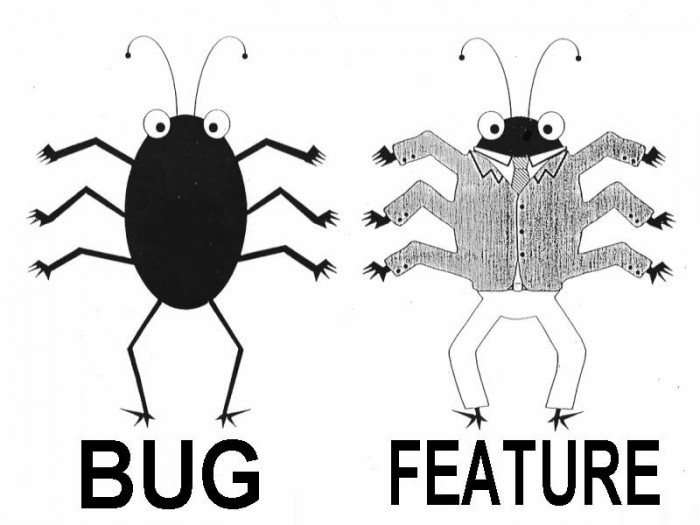
It started as a feature, back when disagreements were settled with rocks to the forehead.
too many people want to run and hide behind “Well it’s just my opinion!” as though that means they can have their own facts.
This says a lot about your character…
Ah, that modifier ‘simply’. It makes you sound so ‘reasonable’.
Could we replace that ‘simply’ with ‘arrogantly’?
How about any of these:
- “Yes, I could be wrong!”
- “I might look that up later”

- “it’s certainly interesting”

- “Mythbusters is a great program”

You are coming across as someone who doesn’t hold relaxed conversations, but instead always looks to triumphantly correct others. (And it’s that ‘always’ that makes you a bit of a jerk.)
As Johnny Bravo wisely said:
“Next time, try letting the kids take more of a role in the discussion other than being proved wrong.”
Look, I’m a retired teacher and spent years correcting pupils and encouraging them to do research. That was part of my job.
But in social situations I’m reluctant to correct people (especially on every conceivable occasion.)
As a teacher I’ve done that acting role twice (as William the Conquerer and Martin Luther.)
It’s extremely difficult because you’re ‘live’ and the focus of attention. The success of the lesson depends on you.
I think your stepson did brilliantly when he got a question he couldn’t answer. There’s no point in saying “I don’t know” - for goodness sake you are supposed to be the character!
You want to create an atmosphere where the pupils are drawn in to the history and will remember the lesson forever. You don’t want to break the spell in any way.
If any pupil had actually looked up Leonardo’s death afterwards, that would have been good.
To err is human, pointing out those errors is being a jerk.
Anyway, there’s something underlying this. The kids already have an idea that being mistaken is ‘wrong’. Hurting people is wrong, stealing is wrong, mistakes are just mistakes and the most important knowledge is how to correct you mistakes and move on.
Amen brother.
I don’t tolerate ignorance in my presence. It sounds like your wife and her kids love being ignorant. If I were you I would divorce her and throw her and her ignorant loving kids out of my home.
I’d say you could still be a jerk in that case, it’s depending on tone and if it sounds more like whether you are wanting to share information or if you are more just wanting to be right and prove everyone else wrong. I’m very much the person who wants to know the real facts and I will pull out my phone and check on something if there’s some fact in dispute, but I try not to be obnoxious about it, and try to share it as “this is what the fact is, isn’t that interesting?” rather than “here’s what the fact is, I was right and y’all are fools for thinking it was something else.”
Also, it’s a case of picking your battles. I’ve been part of conversations when a know-it-all says X, and everyone else says X isn’t right, and know-it-all insists that X is right, and everyone is getting kinda bored or annoyed by the topic and wants to move on to another topic, and know-it-all doesn’t want to move on until everyone acknowledges that X is correct and he is correct in saying it. The know-it-all could be 100% correct on the topic and everyone else could be complete dummies for thinking he’s wrong, but the know-it-all is still socially tone-deaf at best for being so insistent on a topic. If it’s something inconsequential, like what happened on an episode of Doctor Who then he is a over the top for being so insistent. And even if it’s a more important topic like regarding vaccines, then he being so insistent will just likely make everyone else more defensive and not convince anyone.
I think you’re on to something here, the kids have the idea that being mistaken is the worst thing, so they do what they can to avoid that being found out. Being mistaken or ignorant isn’t a sin, everyone is ignorant about so many things, and wrong about a lot of things too, but we should do our best to try to correct our own ignorance and mistakes when we find them.
If I was in the OP’s situation, I think I would so something like Johnny Bravo’s scenario, and say something wrong and try to lead them into finding out for themselves. If they looked up whatever fact and excitedly told me then it’s a good lesson learned. If they looked up whatever fact and triumphantly told me and said something like “haha you were WRONG!” then I would see that I had probably not been setting the example that I’d been hoping to.
Killed in his sleep with a pillow by Count Francesco Melzi so he could gain control over his entire estate… or he passed away of unknown causes after declining health leaving everything to Count Francesco Melzi?
History doesn’t definitively say.
I tried to ask Count Francesco Melzi, but so far there has been no reply…
But make sure its noted on Wikipedia so hundreds of years from now people know why.
I had (perhaps most people who know me would say “have” :o) something of a reputation for being a “know it all.” I think that’s because of what Lowdown alludes to. People are different in how they approach things.
I have always enjoyed learning new facts, finding out things that I didn’t know before. If I was mistaken about something, I always regarded it as a cool experience when I found out the truth. Acquiring some new bit of knowledge has always been, to me, one of the most exciting things that could ever happen.
My mistake has been in assuming that everyone else regarded it the same way. I figured that everybody would appreciate it when I told them some fact that they didn’t know, or corrected some minor misperception that they had picked up. I took it for granted that they would be as thrilled and excited to learn the truth as I was. But for many people, that turns out not to be the case. When they toss off a statement like “Daddy long legs are the most poisonous spider of all,” they’re not really attempting to share some great scientific truth so that we might all learn and grow. They’re just making conversation, contributing something cool that they heard somewhere to keep things going. And then some bozo not only contradicts them in front of everybody (how rude!), but even pulls out his smart phone just to demonstrate to everybody how very wrong they were (sure, just rub it in, you jerk!).
What I’m trying to get myself to accept, and I hope that I’ve succeeded to some degree, is that in casual conversations, getting some minor fact wrong, or repeating some well-known but inaccurate myth, is just not that important. People are not trying to give a science lecture, they’re just shooting the breeze, and maybe being 100% accurate is less important than keeping social interactions smooth and pleasant for everyone.
One thing I was particularly struck by was this part of your OP:
Here is a perfect illustration, I think, of those differences in the approach to learning new facts that I was talking about. You say that you would have looked it up to satisfy your own curiosity. I probably would have, as well. But clearly your stepson didn’t, and I doubt it even occurred to him. Looking at it from his point of view, the assignment was over. He delivered his report, and did a pretty good job of it, apart from that one question he didn’t know the answer to. He’s gotten the grade, it’s all over, on to the next assignment. But now you’re expecting him to have done further research, without telling him you expected it. Essentially you’re criticizing him (and he’s going to hear it as criticism, even if you didn’t intend it that way) for not doing additional homework that he was never assigned to do.
I suspect this may be why your wife reacted as she did, as well. To you, you were giving him a chance to show that he had done his research, and discovered the real answer, like you and I would have done. To your stepson, you were bringing up his mistake yet again just so you could remind him of that time when he was wrong. I’m not surprised that your wife’s maternal instincts might have kicked in to take his side.
If it makes you feel any better, my wife and my stepson (now 22) both like to do imitations of me correcting people’s minor errors. Friends for whom they have performed these little imitations almost immediately exclaim, “Yes! That’s MrAtoz exactly!” So I suspect I have not improved this behavior as much as I would like to think. :o At any rate, know that you’re not alone in this, but it may be something you just have to learn to live with.
CairoCarol:
Aeschylus begs to differ.
A guy on my team has a habit of sometimes challenging things that he is actually too ill-informed about to challenge authoritatively. He’s pulled this a couple times with me and it’s hella annoying. Rather than doing his homework for him, I’ve started to put the onus on him to show me that I’m wrong using reputable sources. But his pursuit of being right (even when it comes at the expense of his credibility) sometimes makes him cherry pick evidence so that someone only half paying attention might think he proved his point. So then I have to drop what I’m doing, pull up enough cites and support to squash him and silliness without mercy, and then wait for him to begrudgingly admit he was wrong (which at least he does…some people can’t even bring themselves to do that.)
My colleague’s behavior is an example jerkishness; I don’t see it in the OP’s examples. That said, phrasing makes a big difference in how something comes across.
“Daddy long legs are poisonous!”
“That’s not true; the idea is a total myth.”
vs.
“Daddy long legs are poisonous!”
“Are you sure about that? I’m pretty sure learning a long time ago they are harmless and that it’s a myth that they are poisonous.”
The former is apt to get you called a know-it-all prick quicker than the latter, even though both are communicating the same message. If my colleague expressed his doubt as a questioner rather than asserter, he would probably grate on me less.