Yeah, fair enough. I was just so surprised to hear someone suggest that the (slower IME) method was faster that I wanted to see if I was missing something. Different (key)strokes and all!
But it’s human nature to want to enlighten the unenlightened!
I remember many years ago when I was chatting with a friend at work and he was telling me the benefits of NJ Manufacturer’s insurance. Apparently it’s some exclusive “gotta work for a member company” kind of insurance and it’s supposedly cheaper.
I couldn’t get him to stop pestering me about it. “No, I’ll stick with my current insurance. It’s a pain to change. Lots of forms to fill out. blah blah blah”
But he would still say things like “I don’t understand why you wouldn’t want to switch!”
Well yeah. Quality bandsaw blades are very inexpensive these days.
It’s less important than which way the toilet paper hangs.
…which was resolved even earlier with the same recommendation.
That’s what we wound up doing. Rather than have the UUID as the clickable identifier in a list of orders, we used an order or invoice number that the user would recognize. Click on that and it would take you to a page that had detailed information for the order, including the UUID in small text. I don’t know if that ever came in handy though; I don’t think we did any debugging by screenshots. It could have also been written to a log file, where our support team would have access to it, but the users wouldn’t routinely see it.
My technique starts before opening the bottle. With the cap on, shake the bottle very vigoursly to loosen up the ketchup. Then open it, then pour it.
Heinz stopped using glass bottles a while ago. The new plastic bottles are terrible in much the same way the old glass ones were. There’s a little constriction in the opening. Squeeze the bottle, nothing. Squeeze a little harder, still nothing. Squeeze a little harder, and too much ketchup comes squirting out. I can’t see any reason for the constriction; I almost think Heinz deliberately wants their bottles to suck at delivering ketchup.
My solution was to buy another, normal squeeze bottle for ketchup. Buy a bottle of Heinz at the store, and then transfer the ketchup to the other bottle that does what it’s supposed to.
Exhibit A:
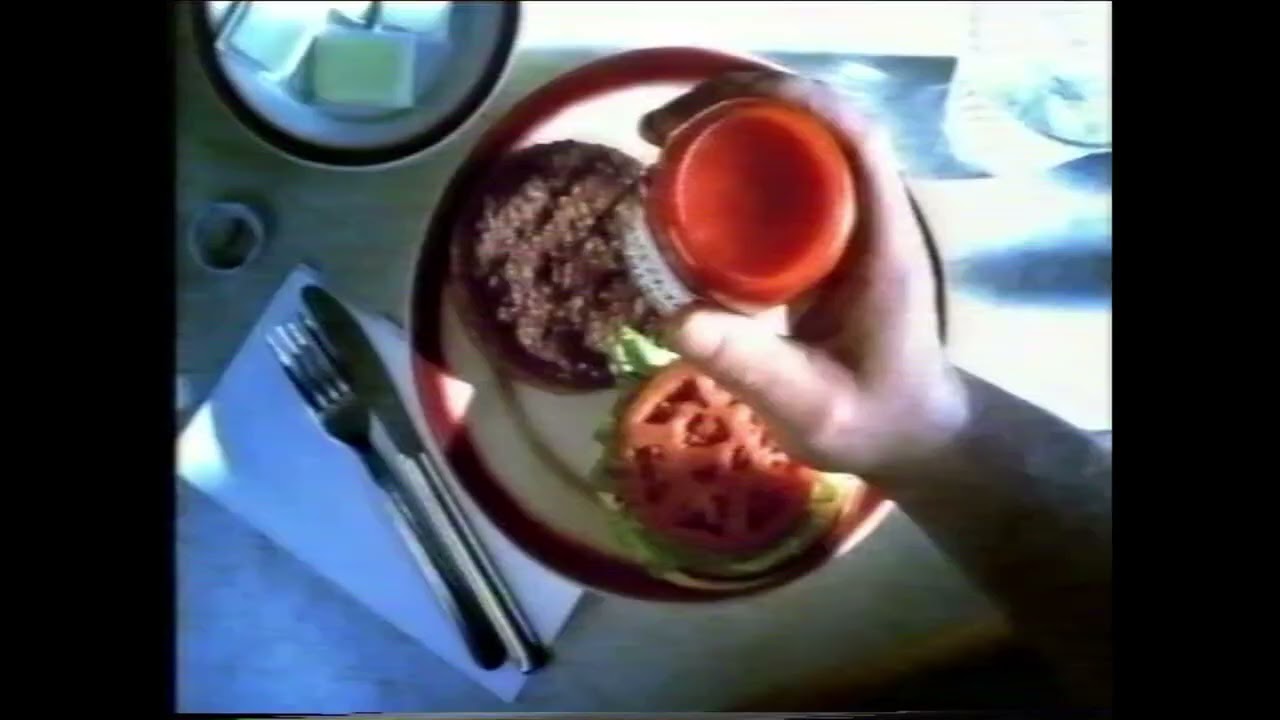
I remember Heinz’s “anticipation” commercials. I figured they were just trying to make a joke out of the difficulty of pouring ketchup. Then they switched to plastic bottles, and they’re still terrible at delivering the right amount of ketchup. That’s when I started to think they might be doing it on purpose.
I see both kinds of squeeze bottles. Wife and I buy bigger bottles at Costco, and they have a simple orifice in the cap that provides total control over the flow rate. These bottles are designed to be stored with the opening at the top, as I don’t believe they provide a perfect seal against leakage once the tamper-proof seal is removed.
They make other bottles that are as you describe: the opening in the cap is fitted with a tiny silicone sphincter that provides a perfect seal against leakage when the pressure against it is below a certain threshold, but evert and allow ketchup out when you squeeze hard enough. These are designed to be stored with the opening downward, I guess so that the ketchup is right there when you pick it up, saving you from the agony of having to shake the ketchup from the other end of the bottle to the opening. And yes, I hate these, as the minimum non-zero volumetric flow rate of ketchup is inconveniently large, and the associated ketchup velocity is high enough so that splattering adjacent objects is a serious concern.
PEMDAS is one of the worst things ever to happen in mathematics instruction. Many teachers get it wrong. Most students get it wrong. And it does not show the interrelationships in operations. Instead I teach the students this chart
Powers Roots
Multiplication Division
Addition Subtraction
I use this to teach how to solve arithmetic and algebra problems, inverse operations and distribution rules. Yet sadly I still need to help students undo their PEMDAS mislearning As an example, answer this question:
You have a calculation that involves both multiplication and division. Which one do you first?
NOT multiplication! You do both at the same time working left to right.
When you shake the ketchup bottle,
none’ll come, but then a lot’ll.
Anon.
I just learned about this from my favorite YouTube chef, chef Jean-Pierre. I’m just now at 47 getting into serious home cooking, and I will adopt this technique.
That would be Richard Armour.
Not sure what technique is being described here, please elucidate.
I think this is describing how my wife cuts onions as well (the wrong way). I know nothing about cooking, but saw one video that explained how to dice onions and I suddenly realized that her technique was unnecessary and complicated.
She chops the end off and cuts the onion in half on a meridian, lays one half face down, then cuts a series of horizontal slices from the South Pole (the cut end) to the North Pole (where the layers meet). This is scary to watch because she is holding the slippery onion and slicing with the knife parallel to the cutting board, under her hand.
Then she makes a series of vertical cuts with the knife parallel to the axis and perpendicular to the cutting board. These are safe and easy cuts.
Then she cuts along the lines of latitude, getting the chopped onions.
The thing is, all you need is the vertical cuts–the horizonal ones are redundant and dangerous.
Not entirely. What they do is allow the first set of vertical cuts to be truly vertical. If you skip the horizontal cuts, the “vertical” cuts have to be radial cuts, going from the surface towards the center. That is more difficult than vertical cuts, especially since on the near side you’re cutting away from yourself which is clumsy.
The real trick for the horizontal is to only do like 2 of them, close to the cutting board. You don’t need the horizontal cuts near the top of the onion, because the verticals will do just fine there, it’s along the side where the onion itself is vertical that needs the extra help.
I think you’re describing something like what I do. I always cut the onion in half at the equator so it will sit flat on the cutting board. Then I can do longitudinal cuts straight down or at an angle near the sides.
Or you could just get a vegetable chopper and do away with knife work almost entirely.
That onions should only be cut vertically, never horizontally, unless one is making onion rings.
Ah yes. I told you I know nothing about this other than that my wife’s technique is wanting.