My problem is there is a sign posted by the Park dating this building to 1930.
I dispute this date because 1930 was the end of the steam era where the entire mine was electrified. This building has high ceilings with louvered windows the entire length on both sides, high overhead door for steam engine stack, and most importantly, this repair shop is reported in a 1915 news paper feature article that I have, HERE
Now there is a discrepancy is the article where the building dimensions are not accurate.
So is there any way I can be helped determine a 15 year building age discrepancy?
I do include in my tour that I dispute the age, but I also prefer to be as correct as I possibly can.
If more pictures are needed I will gladly post or otherwise provide them.
I’m guessing this is the part of the article you’re citing?
Is the current size of the building larger or smaller than what the article says? Is it possible the building was enlarged or rebuilt in 1930? All the article really says is that there WAS a building for locomotive repair, not a specific building in a specific spot.
Despite the mine being electrified in 1930, I wouldn’t be surprised if they kept one or all of the old steam locomotives around as long as they remained useful. It would be more logical to me to design the building for the largest piece of equipment they were currently using than to say “You know what? We’re planning to get rid of this in a year or so, so we don’t need to design a building that tall.”
Oddly enough, steam powered locomotives were used for freight up until the 1960’s in some cases. It’s more likely that the mine began converting to electric in the 1930’s but kept its steam equipment in use for much longer. The current shop seems longer than the 130 feet described in the article. Perhaps they expanded existing shop, or build a larger one to service both steam and electric equipment.
Railroads are not known for innovation; they tend to do have deep seated traditions and ways of doing things due to generations of fathers passing skills onto sons. Railroad equipment is immensely expensive, and is maintained to last indefinitely. When a railroad has ten thousand employees that know how to take apart, clean and rebuild a multi-million-dollar steam engine (today’s value), and a handful that can work on diesel or electric, they are going to take their time phasing in the new equipment.
As an example of the railroad mindset (a bit of tangent), MetroNorth railroad in Connecticut is refurbishing a 100 year old drawbridge using a mechanical locking mechanism to keep the bridge closed (replacing in kind a convoluted set of gears that open and close the latches that hold the bridge and rails in place). For much less money, they could use a hydraulically actuated actuated mechanism, but they don’t have any institutional experience maintaining such a system. The railway just has its own way of doing things.
I’m not sure how much good it would do here, but in general a great source for researching build dates is the www.city-data.com website. There’s a huge amount of data there, including census summaries and forums specific to individual cities and towns throughout the U.S. You can also look up current assessed property values, which are imported from the databases of the county assessors’ offices, and this is where it gets interesting, because these records usually include the build dates. These dates are not 100% accurate, for a couple of reasons. First, the Year Built and Effective Year Built can be decades apart, and sometimes there’s only the Effective Year Built; secondly, one occasionally comes across a date that’s flat out, preposterously wrong. By and large, though, it’s quite accurate, from what I’ve been able to check on locally.
Yes it is the building physical dimensions that are not matching.
This Iron Ore mine was entirely electrified by 1930, so no hold over steam would have been kept. I guess I feel the 1915 news paper quote could be wrong and was looking for a possible clue as to what one might look for to tell the difference.
I have looked long and hard for any indication, but yes this could be a different building from the one described but until I find proof of that I will still dispute the 1930 sign.
Thanks so much for the comments, and yes the panoramic tour is “WHOO-ing”:)
Check your nearest state, county, or university library for Sanborn Fire Insurance maps. There’s at least a chance that you’ll find detailed information on the construction date, as well as specifics about the building itself.
I’m pretty experienced at dating buildings, and a lot of things about this structure seem like 1930 much more than 1915. The long strip of continuous clerestory windows, the lack of brick headers over the ground-floor windows, the minimal eaves, the thin steel windowframes, the big interior steel columns and beams—all are consistent with 1930 but would be unusual in 1915.
Thanks, this is the very kind of thing i was looking for as I have no knowledge in this area. Now its hard to see in the internal picture of the Repair shop but there is a large overhead crane that I would have to climb up and look at to verify the capacity but in the area of 40 ton. As a new inexperienced Millwright (Starter) i worked with that crane when assigned to the shop.
Twoflower, Thanks for the tip. I have a inquiry in to the research center Here
Spectre of Pithecanthropus, I have not as of yet found anything on that site.
I will continue to look though. I believe one of the issues is the City Records are still in an old building in that town and when I asked about them I have gotten some interest in donating all those records to the research center at Iron World.
One interesting example is El Morro in San Juan. Construction started in the 1530’s and the building was, at first, a single watchtower, but it was expanded over the centuries by the Spanish and then the US government. There is one section that dates from the 1530’s and another part that was added in the 1940’s as part of the US’s WW2 buildup. That’s almost 400 years. When was the building “built”?
Does the overhead crane have a date stamp on the motor? What about the exposed steel beams? Railroad track rails have a date of manufacture and mill name in raised relief on the side. Can you see the side of any of the rails in the floor? Of course those could have been replaced later, but if they say “US Steel 7-29” that would be even more support for 1930.
I am sorry, but I just am not getting anywhere on this site.
Being as i do not know if I should be entering the extra characters like < and > AND what spacing is and isn’t used, So for example,
This House in the address i am providing is an original Hill Annex Superintendent or Mine engineer home that was moved away with 13 other Management family dwellings in the 1940’s <> for pit expansion.
The present address is;
229 2nd Ave Calumet Minnesota 55716
What would the exact character string be to enter this into the search box??
Dr. Strangelove;
And I didn’t catch that probable error, but it certainly gives me more reason to question the accuracy of the building dimensions.
Mr. downtown;
I am planning on climbing up on the crane tomorrow for a closer look-see. I will include a couple pictures also.
As for markings on the steel, well i will look at the rails but i don’t see anything on the steel I can view from the ground.
City-Data is not going to help you. The property tax info—even if available for Itasca County—is going to be for the whole mine property, not one building. And since the database has probably been compiled since it became a state park, it’s just going to show as EXEMPT. Here’s the Itasca County Assessor Online Map Viewer.
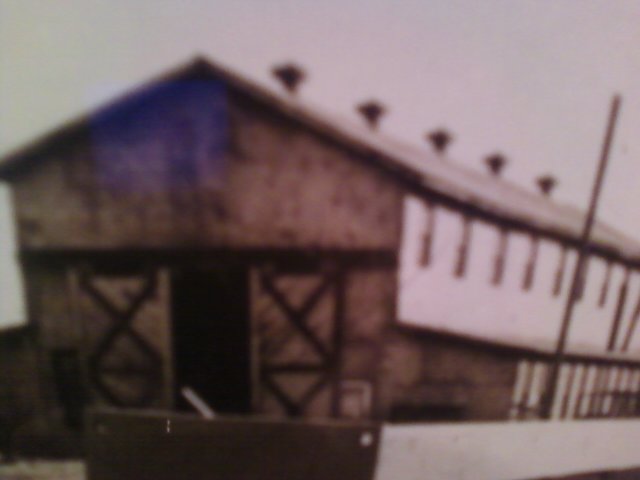
Ok I found pictures of the old shop with the new shop also i the picture from 1951.
The old shop was removed for the large float reject pile created by the Heavy Media Benification plant.
Here is a very poor picture of the old shop, HERE
Interestingly i also see in the 1951 areal photo that is just to poor to post that the 1930 shop had a 60 ft. addition. I can see it in the change in the roofing. Then inside I can see the change in the floor as long as I new where to look, and in the windows only that the new section didn’t have mechanisms to open them from the ground with hand chains.
Thank you all for the input, I was wrong and the sign is correct or correct enough.