So … I’m about to buy an electric car. Which means i will need to charge it. And I’d like to have a level 2 charger in my garage. I have a suitable outlet.
Where’s does one buy the charger? What should i be looking for? What do people like?
So … I’m about to buy an electric car. Which means i will need to charge it. And I’d like to have a level 2 charger in my garage. I have a suitable outlet.
Where’s does one buy the charger? What should i be looking for? What do people like?
My buddy in Panama city has one. He paid an electrician to install an extension from his electrical panel to a new 220V outlet in his garage. Both the panel and the new outlet are in his garage which saved him some $$
All the usual suspects have the chargers for sale - Home Depot, Amazon, the manufacturers themselves, etc.
Things to look for: the connection at both ends. This will be less of an issue as we’ve just about hit standardization, but make sure the connector to the wall and the connector to the car are both compatible with your house and car. On the car side, the ones you’ll most likely see will be J1772 or the NACS connectors.
If you happen to buy a unit that doesn’t actually work with your garage outlet, it’s entirely possible to replace the cable and plug, but why bother with that when you can buy a suitable unit up front?
Things to look for - is the outlet on a dedicated or near-dedicated circuit? Does it supply sufficient power? Just because the outlet looks like it will work does not mean it is actually suitable for the purpose. I have a neighbor who had an appropriate 220V outlet but it was on a 15 Amp circuit for some reason. You can figure that out from your breaker panel, assuming the circuits are appropriately labeled.
I went with a ChargePoint Homeflex unit a couple years ago that works fine. There’s a phone app, the charger can connect to your home wi-fi, and it sets you up on their charging network for when you travel but as 95% of my driving has been within the city, I don’t really use those features and it’s almost exclusively just “plug into car to charge / disconnect when done”
Get it from wherever you want. I got mine on Amazon. One piece of advice I’ll give you is not to waste money on features you either don’t need and/or the car can do for you. My charger can give me energy use stats, it can schedule charging times and has a bunch of other features as well. It was, I think, about $600+ dollars. I use exactly zero of it’s extra features, literally zero. It has wifi problems and doesn’t connect to my network very well (known issue, lots of problems, not just me), so I don’t even have access to it. I found that not only did I really not care how much energy it was using, at least after the novelty wore off, if I want to know, I have other ways of finding out. Both my car and an IOT device I have can monitor that. It can schedule charging, but I don’t have cheaper rates during off-peak hours and, even if I did, the car can schedule the charging time as well. And the list goes on.
In the end, the only thing I really need is for it to deliver power to the car. If/when I have to replace it, I’ll get a much cheaper one without all the bells and whistles.
My advice is to wait until you actually buy the car.
I have Ford E-Transit at work. We ended up getting a charger installed, but only because there wasn’t a suitable 2-phase outlet nearby. In practice, the charger is more nuisance than help. The van came with a cable allowing it to plug directly into any 220V outlet. And Ford app has the same functionality as the charger, but is more reliable.
So, i guess i should give some background info.
I’m planning to put down a deposit on a car today. We’ll be getting the Kia Niro. I’ll need a charger to use it regularly.
Two years ago we did a big home renovation project, and we replaced the retaining wall that all the utilities run under. That seemed like the right time to upgrade the power supply, and as part of that project i asked the electrician to install a dedicated EV outlet on the garage. I asked for a 50 amp circuit, and I’m pretty sure he gave me a 60 amp circuit, because they came multiples of 20, or that’s what the Tesla charger wants, or something. It’s a NEMA 14-50 outlet, which seems pretty standard.
I think if i buy a plug-in charger, I’m limited to 40 amps, which i expect will be fine. We are thinking we’ll start with a plug in model, and if we decide we want to upgrade to 50 amps we’ll hire an electrician to hardwire something in then.
I was going to ask about this and it looks like you did the exact right thing. (They don’t come in multiples of 20. A 50A breaker is more standard than a 60A. Having a 60A will give you faster charging. Tesla chargers and other brands can use any amperage up to 60A but your flow is limited to 80% of the breaker so 48A in that case. The charger will automatically take care of this).
If your plan with your utility has peak and off peak rates, you want to make sure that you have the ability to schedule your charging. You may be able to do this on the car side rather than the charger side. You should also check with your utility if they have a time of use type plan so you can charge off peak. Your electric bills are going to increase a lot but it should be much more than offset by gasoline savings.
As you’re aware, don’t cheap out on this and be sure it can charge at 48A to match your 60A at the panel. Any highly rated brand will do just as well and cost in the $400-$500 range. Does the car manufacturer have a recommendation?
As always, technology connections has great primers on this subject:
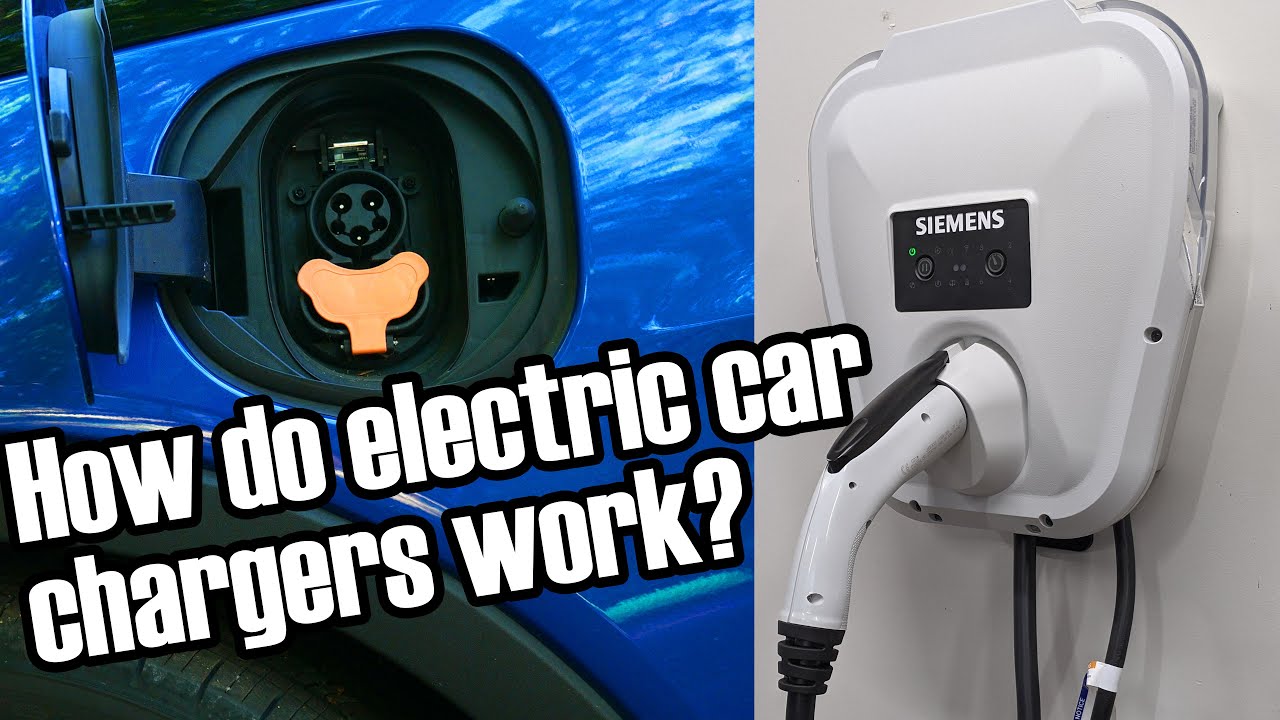
The TL;DR is that EV “Chargers” aren’t really chargers, they’re actually far simpler than they look. They’re basically a big relay switch with a tiny bit of intelligence in them that communicates between the car and the wall to find a mutually agreeable charging standard. If your outlet can only supply 15A, then you set a series of dip switches in the EVSE to negotiate up to 15 amps and it makes sure the car never demands more than 15A from the wall. Once it does that communication and flips the relay, it’s basically done its job. There’s not much more complexity or things that justify the price than that.
They do not have a recommendation. The salesman says that the feedback he’s gotten is that they will work fine.
It turns out that all the highly rated chargers are limited to 40A in the plug-in version, but honestly, that’s probably plenty. So i ordered the Grizzl-E mini. It fits nicely where we used to put the level one charger for the plug-in electric cmax, and if we decide to attempt a road trip, it’s small enough to pack up and bring as a mobile charger. (It even comes with a case and various adapters for different outlets, and a way to restrict it to not overload an outlet that can’t feed it it’s full load.)
If 40A ever seems limiting, we can buy something else and get an electrician to hardwire it in. It can’t be terribly hard to take the wire to an existing outlet and repurpose it.
Other highly rated chargers are a duplex from the same brand (cheapest way to charge two electric cars), ChargePoint’s consumer model (user-friendly app), and the Emporia base model, which is a little cheaper, has an extremely feature-full (maybe over full) app.
Plug-in chargers do max out lower typically. The wall mount Tesla that I have will go to 48A. Regardless, 40A is almost certainly plenty for regular use. It will go from near depleted to full overnight.
Yes, i think the electrician spec’d it for the Tesla. He was surprised i wanted it in the back of the garage. But this car, like the plug in hybrid i had before, has its charging point in the nose, not the tail.
There are a lot of other chargers that can do 48-50 A with a hardwired connection. But i think 40A will be plenty.
Looks like you did pretty much exactly the right thing. I was going to recommend getting a charger that plugs into the wall, instead of hard wired, because then you can take it with you when necessary.
My remaining advice is that you get a plug-in one that can use multiple different types of receptacles. It wasn’t clear to me if the Grizzl-E mini can do that. After 7+ years with an EV I have an assortment of adapters and charger cords so I can handle about half of what you see on a NEMA receptacle chart.
40 amps of charging is plenty. If it really is a 60amp circuit, then if you ever do get a hardwired charger you may as well get one that does 48 amps, but it’s really an unnecessary luxury.
It will be a useful if you ever have two EVs, and for new construction (or remodel) I would recommend doing 60 over 50, just because the cost difference may be negligible. On my big panel replacement project, going from 50 to 60 was a zero dollar upgrade.
Yes, it comes with a bag to hold it and all its adapters. It can even do level 1 charging from a regular 120v outlet.
Just piling on here. You are charging overnight. Either every night timed to stop at 80% ish as some do, or with what I suspect are your driving habits, once every several days when you get somewhere below 50% charge. No rush to do it in a hurry.
We have the Leaf and the Prius Prime on one wired 40 amp circuit with a split system from Clipper Creek. My wife plugs in every several days when she is under 50%. Never a problem with both cars fully charged by morning.
Getting anxious about the charger not having made it as far as UPS. On the other hand, i guess i know a dozen people with electric cars. I can probably hit up a friend if need be.
Depending on your driving habits, it’s generally not an issue to use a regular wall outlet. It definitely takes longer, but unless you drive a lot every day, it just means you should remember to plug in as soon as you get home each time. Or not, if you aren’t anticipating much driving over the holidays.
This. If you are driving less than 40 miles a day and you plug in each night you will be more than fine with a regular wall charger. It won’t do for going from 10% to 90% overnight so well, but that is not your use case.
I don’t have any way to plug in at the moment. This car doesn’t come with a level 1 charger, and I’m certainly not going to spring for one, when I’ve already ordered a charger that can do that in a pinch.
I mean, i can drive to a place that sells charging. Or to a friend who has a charger. But at the moment, i have no charger at all.
Wow, did not come with a charger at all? That’s wild. I hope that doesn’t become a general trend to save the manufacturers a few bucks. At least until public chargers become more ubiquitous.