Just watched a documentary on the 1986 disaster. It ended with several countries having built and installed a huge “cover” for it. But it also said this “cover” will only buy more time. What’s the current status of the reactor building? It it true the problem won’t resolve itself for hundreds of years?
As it turns out, in recent weeks, there’s been discussion about evidence of an ongoing, “smoldering” reaction in an inaccesible room in the plant. Scientists and engineers are trying to determine how much of a threat it is, and whether any possible mitigation could be done.
I’ve read hypotheses that this “new” reaction has been exacerbated by the improved containment building that was installed some years ago – the old structure was leaky, and probably let in rainwater, which may have helped keep that reaction under control. The new containment structure doesn’t leak like that.
More like thousands. Maybe tens of thousands.
It is definitely a long term hazard.
Here is a better article from AAAS Science:
https://www.sciencemag.org/news/2021/05/nuclear-reactions-reawaken-chernobyl-reactor
The specter of self-sustaining fission, or criticality, in the nuclear ruins has long haunted Chernobyl. When part of the Unit Four reactor’s core melted down on 26 April 1986, uranium fuel rods, their zirconium cladding, graphite control rods, and sand dumped on the core to try to extinguish the fire melted together into a lava. It flowed into the reactor hall’s basement rooms and hardened into formations called fuel-containing materials (FCMs), which are laden with about 170 tons of irradiated uranium—95% of the original fuel.
The concrete-and-steel sarcophagus called the Shelter, erected 1 year after the accident to house Unit Four’s remains, allowed rainwater to seep in. Because water slows, or moderates, neutrons and thus enhances their odds of striking and splitting uranium nuclei, heavy rains would sometimes send neutron counts soaring. After a downpour in June 1990, a “stalker”—a scientist at Chernobyl who risks radiation exposure to venture into the damaged reactor hall—dashed in and sprayed gadolinium nitrate solution, which absorbs neutrons, on an FCM that he and his colleagues feared might go critical. Several years later, the plant installed gadolinium nitrate sprinklers in the Shelter’s roof. But the spray can’t effectively penetrate some basement rooms.
Chernobyl officials presumed any criticality risk would fade when the massive New Safe Confinement (NSC) was slid over the Shelter in November 2016. The €1.5 billion structure was meant to seal off the Shelter so it could be stabilized and eventually dismantled. The NSC also keeps out the rain, and ever since its emplacement, neutron counts in most areas in the Shelter have been stable or are declining.
Uncritical nuclear fission power advocates still insist that “nuclear (power) is extremely safe”, that an INES Level 7 event is “virtually impossible” (despite two having occurred within a twenty-five year period), and that the technology of nuclear fission power production does not require improvement. And yes, nuclear fission can be safe(r), is responsible for fewer deaths, pollution, and has a lesser carbon footprint than fossil fuels (although if you add in all of impacts of mining, milling, enriching and processing uranium, and the costs of remediating ‘spent’ fuel and facilities over the entire life cycle instead of just the power production phase it looks significantly less favorable), but bear in mind that the Chernobyl incident essentially precipitated the failure of the Soviet Union, and Japan will be dealing with the ever-growing costs of dealing with Fukushima Daiichi for the foreseeable future as well as numerous serious problems with other nuclear fission power facilities that Japan.
Barring some innovation in inexpensive storage of solar-generated energy, nuclear fission is necessary as a baseload power production migration away from hydrocarbon fuels. But we need to put some serious development effort into Generation IV reactor technologies that provide more complete utilization, have less residual waste from processing and spent fuel products, and are failsafe under all plausible conditions however unlikely they may seem. Even if the likelihood of a nuclear accident is low, the criticality of a serious accident will have impacts lasting for thousands of years, and even a handful of accidents would cost more than the value of all of the energy produced worldwide.
Stranger
Thank you, @Stranger_On_A_Train – I’d clearly misunderstood the role that leaking rainwater had played, when I’d heard a story on the BBC World Service about it recently.
Ukrainian Foreign Minister Dmytro Kuleba on Wednesday demanded a cease-fire with Russia to allow repairs.
“Because of military actions of Russian occupiers the nuclear power plant in Chornobyl was fully disconnected from the power grid. Nuclear station has no power supply,” Ukrenergo said in a statement on its official Telegram page, using Ukraine’s spelling for the plant.
He warned that after reserve diesel generators run out of fuel, “cooling systems of the storage facility for spent nuclear fuel will stop, making radiation leaks imminent. Putin’s barbaric war puts entire Europe in danger.”
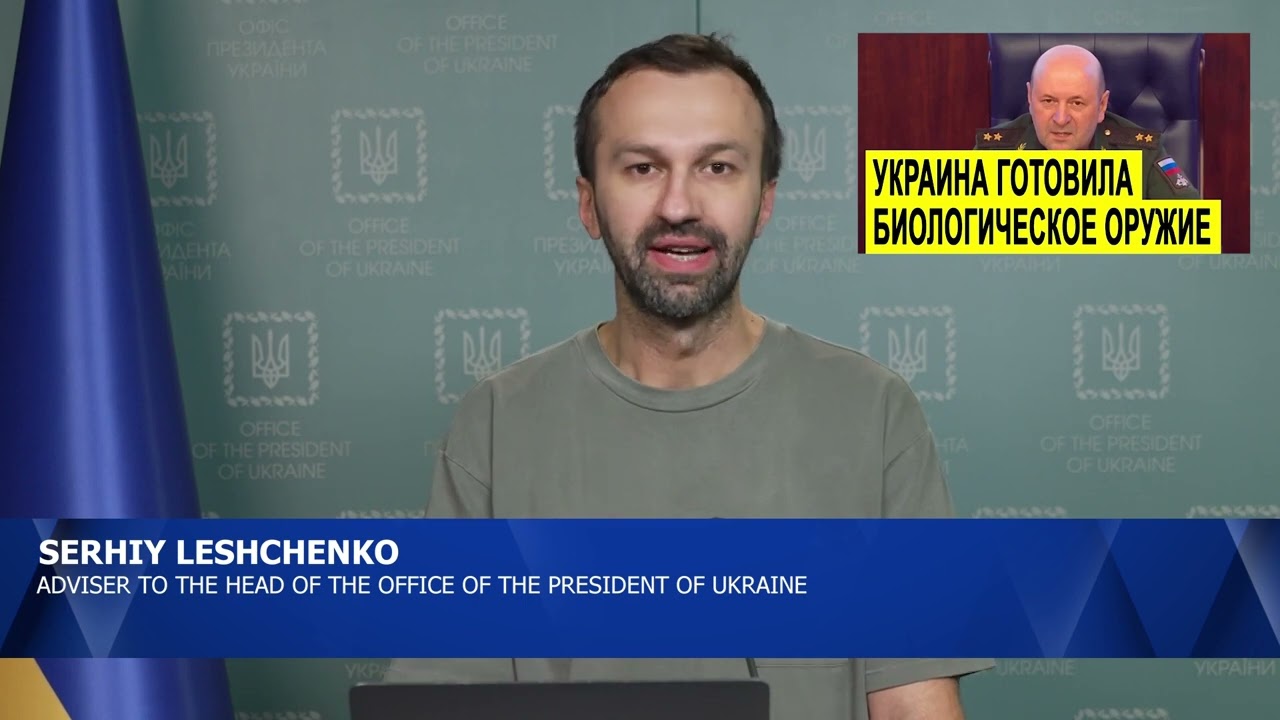
Stranger
Russia attempts to create radiocactive supersoldiers?
I’ll wait on the outrage until I see this verifed by a more reliable source than The Daily Beast but if true that is some real Soviet era negligence.
Stranger
IFL Science?
From Reuters:
Ukraine’s state power company, Energoatom, said the pullout at Chernobyl came after soldiers received “significant doses” of radiation from digging trenches in the forest in the exclusion zone around the closed plant. But there was no independent confirmation of that.
I think it’s also been reported that the Russians drove vehicles through the red forest exclusion zone kicking dust up. And that I can certainly believe.
There is certainly some surface contamination left.
Bionerd23 has a series of YouTube videos exploring the reactor building and surrounds. In one video a grain of reactor fuel is found on the ground with a Geiger counter.
Whereas the areas of serious surface contamination were dug up and buried safely, there is a diffuse spray of contamination over the whole exclusion area. So it might not be too hard for some ill advised activities to lead to at least a few people getting exposed. I suspect there was a lot of unhappiness in the troops sent there, and it would only take a few cases of poisoning to result in a general panic.