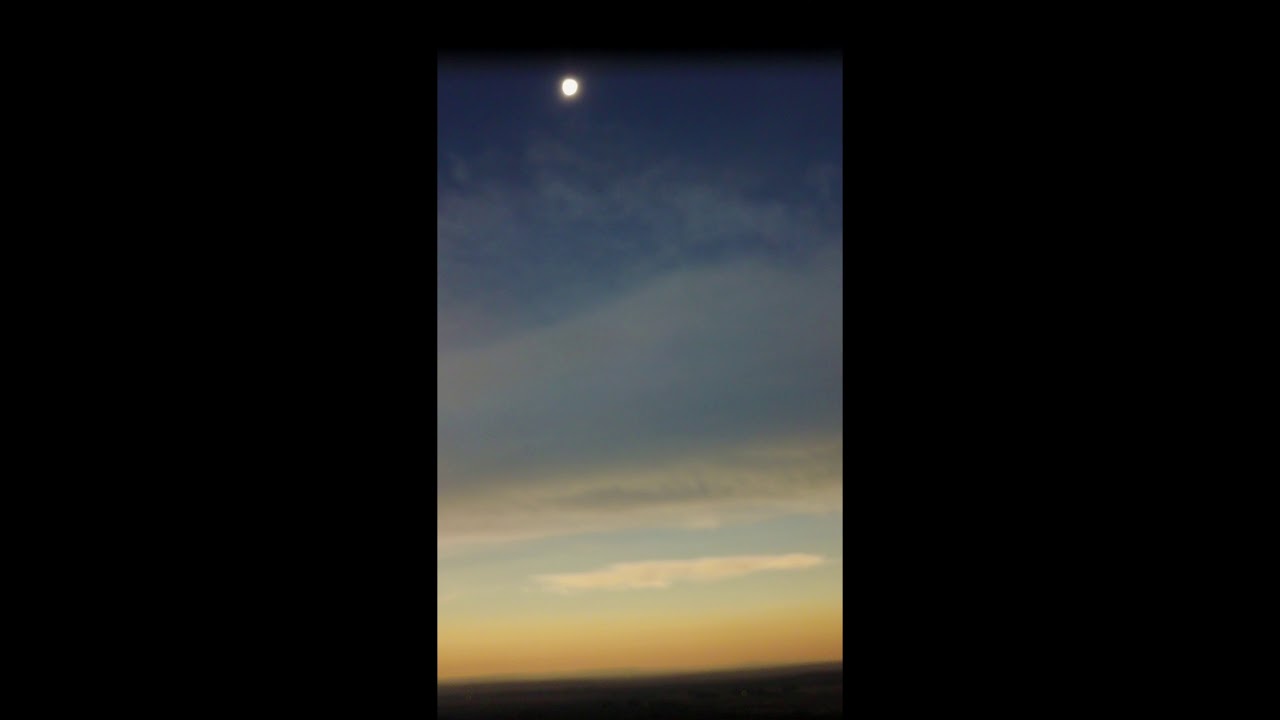
We were in Tennessee for the total eclipse yesterday. In the morning, the sky was completely clear. Towards late morning, a number of cumulus clouds formed in the sky. But as partial eclipse progressed, they all seemed to disappear. The sky was mostly clear for totality.
This was contrary to my uninformed expectations - I thought lower temperature would cause more clouds to form. The only explanation we could come up was that the clouds were being fed by thermals (thermal air currents) which died down as the sun dimmed. Is this correct? Or was it just luck?
What you started with is a “stable” atmosphere … more stable than could be overcome by the reduction of solar energy … if your atmosphere at the time was much closer to equilibrium, then this reduction of energy would have brought your atmosphere to an unstable state and clouds would have formed (or more probably a low level fog) … in Western Oregon the grass I was lying on started getting wet as though from dew …
The OP’s understanding is correct, just that the atmosphere was very stable at the start … the bit of turbulence that cause the cloud to form quickly dissipated …
I was in eastern Oregon and the only weather change I noticed was a 7 degree temperature drop. Some other people that were in central Oregon said at their location the wind came up, but then died out as the eclipse ended.
Where were you? I live in Tennessee and we had pretty scattered cumulus that actually got a little thicker as the eclipse happened. The largest cloud of the day approached the sun about 5 minutes before totality, but it looked like it would miss and it did.
The effects of eclipses on weather are pretty minor. What I experienced was that when the sun became about halfway obscured, I felt no temperature change in the shade, but I could stand in the sun and no longer feel it’s searing heat. It felt like it was obscured by a cloud, but it wasn’t. I doubt it was enough to disrupt cloud formation.
Also, moisture in the air makes temperature changes come slower, so muggy places like Tennessee probably saw less temperature change than drier locations, but I’d like to see some temperature readings surrounding the eclipse. I really wish I had done some myself, now that I think about it.
Some astronomy books speak of how fair weather clouds will often clear out at sunset (without further explanation). A friend and I reasoned the sun is driving the dynamics that form such clouds and/or the thermals that favor formation o these clouds. I wager the same could be true at totality.
I looked up the temperatures recorded at the Knoxville airport, (which may or may not be near the OP’s location but it’s near me). Partial eclipse started at 1:05, totality was at 2:33, eclipse ended at 3:58. There was a 2 degree drop near totality and 2 more degrees during totality, both of which took a little while to recover. The temperature pattern is more or less identical to Sunday’s and today’s except for that. Other than totality, the eclipse seems to have had no effect on temperature.
Oddly, it actually got cloudier at the start of the eclipse and stayed that way until it was over. “FEW” clouds means 1/8 to 2/8 of the sky covered by clouds. “SCT” means 3/8 to 4/8 of the sky covered by clouds. The number after that is altitude in hundreds of feet (so 040 is 4000 feet). It was FEW until right after the eclipse started and went to SCT045. It stayed that was for 3 hours until just about the time the eclipse was over, then went back to being FEW. This didn’t have anything to do with the eclipse, it just coincided with it, but neither the eclipse in general nor the totality seems to have had any effect on cloudiness where I was.
21 Aug 12:00 pm	84  FEW040
21 Aug 12:05 pm	84  FEW040
21 Aug 12:10 pm	86  FEW040
21 Aug 12:15 pm	86  FEW040
21 Aug 12:20 pm	86  FEW040
21 Aug 12:25 pm	88  FEW040
21 Aug 12:30 pm	90  FEW040
21 Aug 12:35 pm	90  FEW040
21 Aug 12:40 pm	90  FEW040
21 Aug 12:45 pm	88  FEW040
21 Aug 12:50 pm	88  FEW040
21 Aug 12:53 pm	88  FEW040 SCT250
21 Aug 12:55 pm	88  FEW040
21 Aug 1:00 pm	88  FEW040
21 Aug 1:05 pm	88  FEW040  **(eclipse begin)**
21 Aug 1:10 pm	88  FEW040
21 Aug 1:15 pm	88  SCT045
21 Aug 1:20 pm	88  SCT045
21 Aug 1:25 pm	90  SCT045
21 Aug 1:30 pm	88  SCT045
21 Aug 1:35 pm	88  SCT045
21 Aug 1:40 pm	88  SCT045
21 Aug 1:45 pm	88  SCT045
21 Aug 1:50 pm	88  SCT045
21 Aug 1:53 pm	88  SCT045 SCT250
21 Aug 1:55 pm	88  SCT045
21 Aug 2:00 pm	88  SCT045
21 Aug 2:05 pm	88  SCT045
21 Aug 2:10 pm	88  SCT045
21 Aug 2:15 pm	88  SCT045
21 Aug 2:20 pm	88  SCT045
*21 Aug 2:25 pm	86  SCT045
21 Aug 2:30 pm	86  SCT045
21 Aug 2:35 pm	84  SCT045		**(totality at 2:33pm)**
21 Aug 2:40 pm	84  SCT045
21 Aug 2:45 pm	84  SCT045
21 Aug 2:50 pm	84  SCT045
21 Aug 2:53 pm	85  SCT045 SCT250
21 Aug 2:55 pm	84  SCT045
21 Aug 3:00 pm	84  SCT045
21 Aug 3:05 pm	86  SCT045
21 Aug 3:10 pm	86  SCT045		*
21 Aug 3:15 pm	88  SCT045
21 Aug 3:20 pm	88  SCT045
21 Aug 3:25 pm	88  SCT045
21 Aug 3:30 pm	88  SCT045
21 Aug 3:35 pm	88  SCT045
21 Aug 3:40 pm	88  SCT045
21 Aug 3:45 pm	88  SCT045
21 Aug 3:50 pm	90  SCT045
21 Aug 3:53 pm	89  SCT045 SCT250
21 Aug 3:55 pm	88  CLR
21 Aug 4:00 pm	90  CLR	**(eclipse end)**
21 Aug 4:05 pm	90  FEW100
21 Aug 4:10 pm	90  FEW100
21 Aug 4:15 pm	90  CLR
21 Aug 4:20 pm	90  FEW100
21 Aug 4:25 pm	90  FEW095
21 Aug 4:30 pm	90  FEW095
21 Aug 4:35 pm	90  FEW045 FEW095
21 Aug 4:40 pm	90  FEW045 FEW095
21 Aug 4:45 pm	90  FEW045 FEW095
21 Aug 4:50 pm	90  FEW045 FEW095
21 Aug 4:53 pm	90  FEW045 FEW095 SCT250
I saw the same phenomenon in Riverton WY, and recorded it on my drone. Here’s the video:
My hypothesis is that the loss of solar heat stopped the convection that formed and supported these clouds. A friend suggested that they might then begin to fall, which would take them to a lower, warmer altitude below the condensation point so they’d begin to evaporate.
A contrary point. In Rochester, NY, the clouds began to roll in after the partial eclipsing started. Viewing was pretty good up until the moment of maximum coverage, at which point the clouds completely covered the sun.
Luck. In July 1972 some friends and I drove to Cap-Chat to see the eclipse. Light clouds began to form as the eclipse progressed. They were just light enough to see the Sun through, but not the corona.
This year, live TV broadcasts from Carbondale in southern Illinois showed that clouds formed similarly, but heavier.