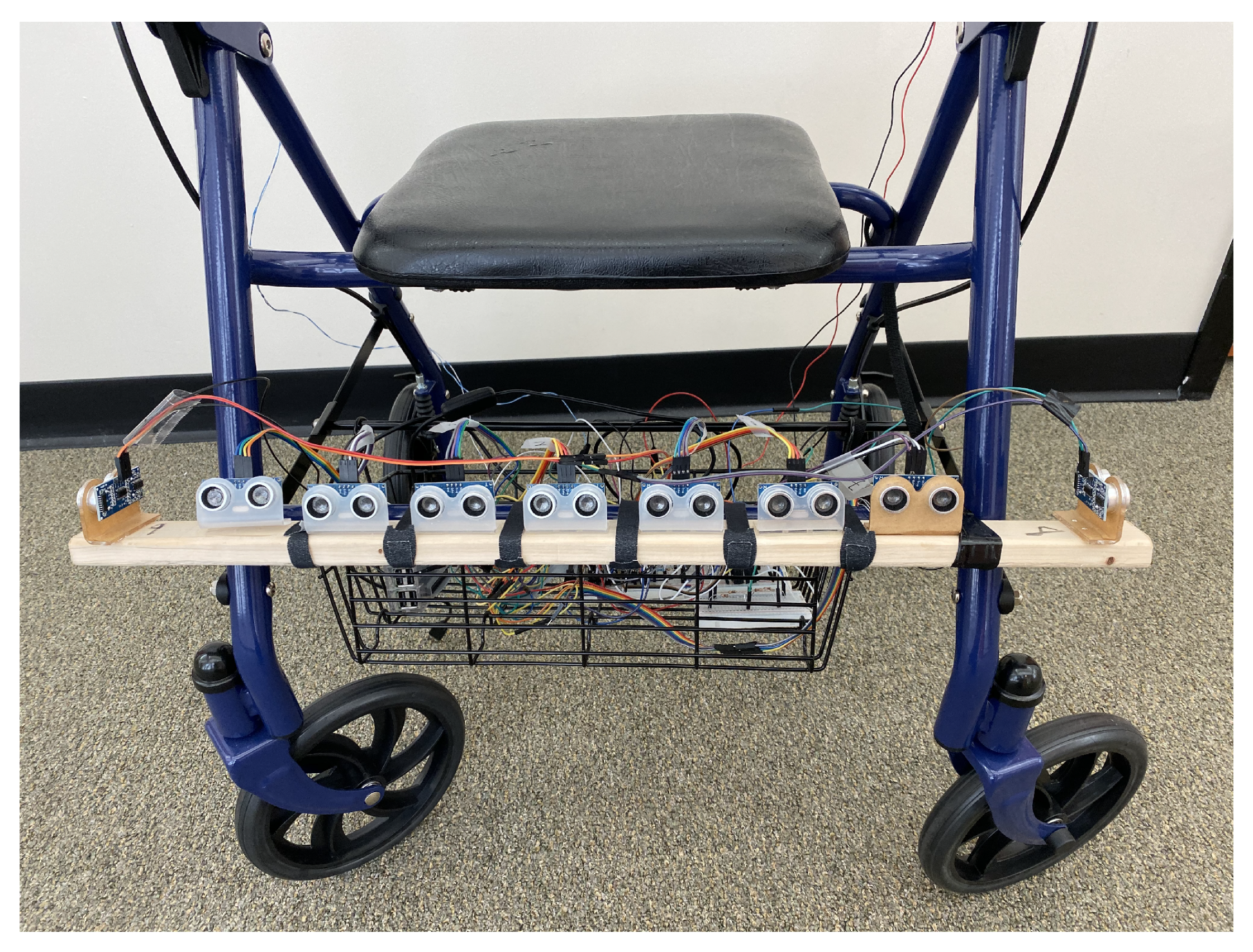
I have an acquaintance who is legally blind. Recently she’s been trying to find a device that she could attach to her rolling walker that would alert her when it was about to hit an obstacle, kind of like the collision alert on newer vehicles. The closest device that I’ve been able to come up with in my searching has been a suitcase made to help the visually impaired navigate airports, and all the references to that are seven years old, which makes me think it was a failed product.
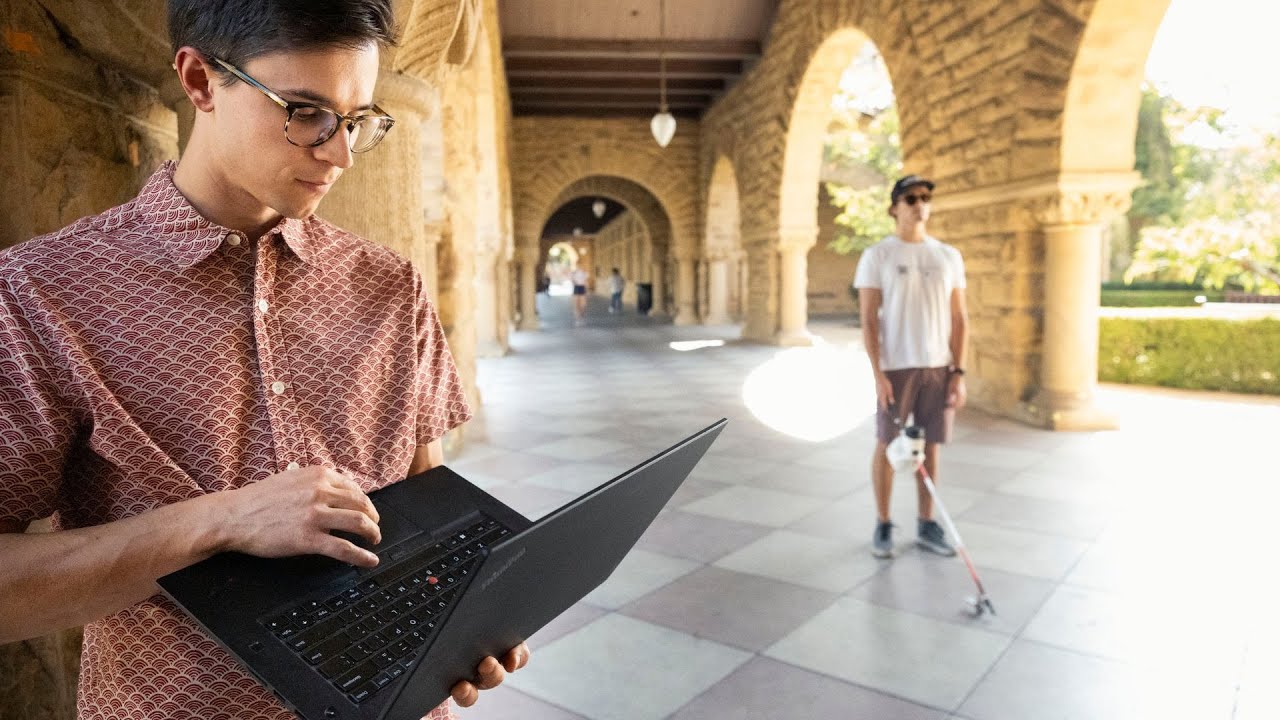
There’s a cool product, Glide (a kind of rolling cane that acts as a virtual guide dog), that is not yet on the market, but she’s elderly and needs the support of the walker. I found studies talking about the possible utility of such devices, but I haven’t found an actual product available for purchase. I was even looking at garage parking aids to try to find a proximity sensor that might be repurposed, but saw nothing promising.
It seems like a thing that should exist. The tech seems to be there. But I can’t find it. Can anyone point me to an actual device, a better direction in which to search or a possible alternative solution?
Possibly relevant: She owns a pair of Meta Glasses. I’m not really familiar with their capabilities but they do provide environmental feedback which might prove useful in this situation. Haven’t been able to find a specific application though.
I’m reminded of some clever bumpers worn by blind dogs. They resemble a large football facemask and let Fido move around and sniff stuff without as many unexpected collisions.
I’m seeing a some ‘smart canes’ and wheelchairs and other things, with or without (but mostly with) AI. I also see a research paper that mentions a walker but I’m not seeing any easily affordable and accessible anything, but it looks like it’s on the horizon.
If you know anyone that likes to tinker with electronics and coding, I would imagine they could set up an arduino with some ultrasonic sensors (or cameras or LIDAR etc) and program it to make a noise when they’re within X feet of an obstacle. Technically you’d probably also need some accelerators it knows where the alerting sensors are, which way they’re pointed/tilted, but even without that, I think you could probably make it work without too much trouble.
I saw those but I’m guessing someone that needs a walker is going to be able to hold a stick out in front of themself. If they were cheap enough, I could see mounting the guts of it on a walker though.
Thanks for the replies. @Joey_P is correct about the cane being a no go, though the tech in those things seems to be exactly what she’s looking for.
The BuzzClip device @Reply linked to looks promising. I don’t think clipping it on the walker would work because of the way it delivers feedback, but wearing it would seem to provide what she’s looking for. I’ll definitely pass that lead along to her. Appreciate the help.
I’m honestly surprised something like this isn’t widely available yet, because the idea feels pretty obvious with today’s tech. I’ve seen smart canes and experimental devices, but nothing really practical for a walker. The DIY approach with ultrasonic sensors actually sounds realistic, especially for a simple alert system. Even a basic solution like that could make a big difference day to day.
It does seem like even an entry-level but current car’s reverse assist system, the kind that beeps faster/insistent as you back up toward an obstacle, could be adapted. It wouldn’t even use the camera part.
I was looking for a dumb meme, something like this:
And I ended up finding this. Since part of it’s technology seems to involve having a wheel in contact with the ground, I’m not sure if it could be adapted, but it’s an interesting idea…also, now that I think about it, someone that needs a walker, probably doesn’t want it scooting out from under, even if there is an obstacle in their path.
It would be funny with couple frames at the drive thru ATM ‘Oh, that’s who’s using the Braille on those’ or a caption ‘OP’s dad heading to meet OP’s mom for first date.’
The latest motorized shopping carts in the grocery stores have radar that applies the brakes. There is a single emitter under the basket and a wire going to the controller. They are a pain in the butt in a crowded store but the general idea is obviously available for commercial use.
I am a bit of a nutcase, so I wanted to build a self-driving tank that would follow me around, and fire cold beer at me (on demand!), at a decently high trajectory so I could catch it. This is for the South African version of Burning Man, “Afrika Burn”
But obviously a semi-autonymous vehicle in a desert filled with semi-autonymous (ie, drunk and high) humans needs a huge amount of very interesting programming, aside from the the complexity of the chassis. I’ll probably use a mixture of Linux machines and Arduinos all on a local network onboard.
I’m quite taken with a semi-reduntant system of infrared detection for passed out people in the immediate path, Lidar for longer distances, and an Airtag style systen to get it to recognise me.
Work in progress, unfortunately only in my mind so far. And my mind… is a bit mad
I was thinking the exact opposite. Waaayyy too many false positives. Think about how far away from a curb, tree, or garage door it’s beeping at you when backing in; I wish there was a way to disable the beeping; say if I’m going in reverse < x mph it shouldn’t make noise. Think about how many close quarters situations it would be going off unnecessarily in real life. In an elevator, in the powder room, while standing along the ‘human rumble strips’ at the edge of public transit platform, or when behind someone waiting to get on the train/subway.
* I had a friend with an older Ford Explorer, if he had a bike on the hitch mount, it would scream when he put it in reverse because there was a bike about 1’ off the bumper & it thought a collision was imminent. There should have been logic that if the hitch is engaged then disable the alarm because that object is a fixed distance away & not going to cause a collision. Very annoying.
FWIW, those ‘human rumble strips’ are there, specifically to help the visually impaired know where curbs and other obstacles are.
Presumably that could be programmed around. Just like your car could be. Whether or not you like the way it works in your car is based on how they programed it, not something inherent to these types of systems.
Also, a system like this would lend itself to using haptic feedback so that cane can alert the user via vibrations instead of something audible.
My point was that proximity sensors don’t work well in close quarters environments. Just how are you proposing to program them to eliminate many false positives while still having relevant warnings?