Corpus Christi, TX and the surrounding areas are running out of fresh water

The city of Corpus Christi, where I live, and the surrounding area are in the process of running out of fresh water. We’re on track to become the first major city in the world in the modern era to run out of water. Here is a Youtube video with a good explanation of the situation and interviews with some of the key players. The topic is extremely complicated. I could go on at length in this post on all the different aspects of the problem. For now, I’ll start with this video.
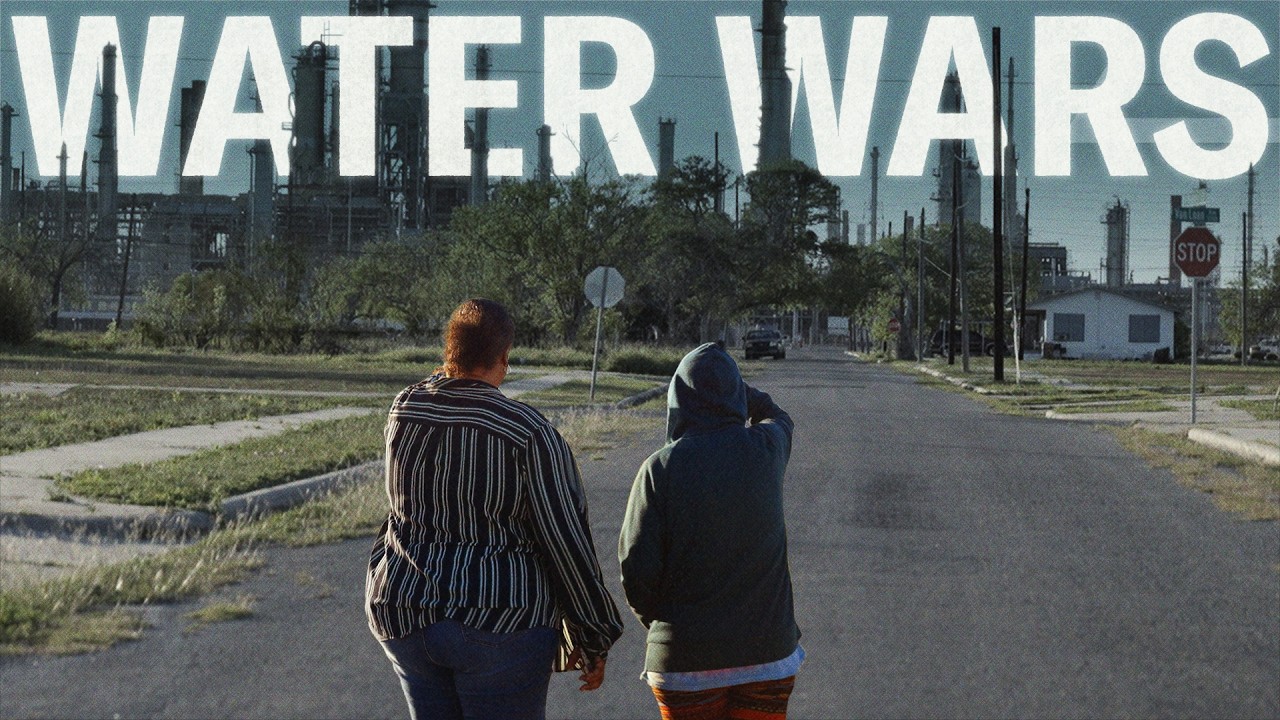
The are two main sources of the problem we are facing. One is an ongoing severe multi-year drought, and the other is high usage by large industries, including oil refineries, a steel mill, and a Tesla lithium processing plant.

On the supply side, the Corpus Christi city council has been focusing on both drilling more wells to increase groundwater supply, as well as trying to get a desalination plant built. Both are controversial for different reasons. The groundwater strategy risks the water supply of surrounding small towns, especially to the areas north and west of Corpus Christi. The desalinization plant favored by the mayor, two of the at large city council members, and the representatives from the big industries is hypothesized to turn Nueces Bay, Corpus Christi Bay, and the Laguna Madre into a hyper saline body of waste water.

On the demand side, people are angry that ordinary citizens are being asked to cut back further, with threats of fines and water shut offs for those who violate restrictions, while Big Industry remains on an “honor system” regarding how much water they use despite being officially asked to cut back.

For now, I’ll leave it at that. I hope for this thread to be a broad thread, not just focused on breaking news. If it’s OK with the mods, I’d like this thread to be a combination of breaking news, ask me anything, and advice from an outsider’s perspective, including on local politics dealing with this issue should anyone care to wade into that mess. Given what happened in Cape Town several years ago, I’m especially interested in hearing from @MrDibble and @Der_Trihs for any personal anecdotes and advice. I’m also planning on posting photos in subsequent posts of various scenes from the area, including of Lake Corpus Christi, so that there will be some documentation of how things are during the crisis (or how they were should the worst comes to pass and a mass evacuation is called for).

ETA: The link to the Youtube video didn’t load as I hoped. I’ll try again.

ETA 2: If a moderator can help me with the link, I would greatly appreciate it. My apologies for not being able to figure out how to get it to correctly load.

Here you go …

Another article:

As usual, a US crisis, (and yes no doubt this is one), becomes the worstest and firstest in the world without any recognition of equivalent and worse situations in the quite recent past.

Based on the current announcement from Corpus Christ Water, a Level One Emergency is projected to be announced in Sep 2026.

Compared to:

  • Cape Town, South Africa: (pop 433k) Came extremely close to “Day Zero” in 2018, where taps would have been turned off due to a multi-year drought. Water restrictions of 50l/person/day were foreshadowed.
  • São Paulo, Brazil: (pop 12mil) In 2015, its main reservoir fell below 4%, leaving the city with roughly 20 days of water.

Seems to me that would only be the case if the plant was designed to dump the salt back into the bay. But surely it could be designed to sequester the salt or even sell it as a commercial product.

For a desalination plant, we’re talking just an absolutely immense amount of brine (hundreds of thousands or even millions of gallons per day). And turning brine into dry salt is very energy intensive - certainly not remotely worth the price of selling the salt (which is plentiful and cheap). So maybe it could be done technically, but it would vastly increase the cost to operate the plant.

This particular plant, the Inner Harbor plant, is indeed designed to dump the water back into the bay.

There’s a competing plan, to build a desalination plant on Harbor Island. That island is in the Laguna Madre, between Port Aransas and Aransas Pass. It’s designed to dump the brine into the Gulf of Mexico. Funding for that project was recently denied by the state.

That project is the one I’m in favor of. Those opposed to it use objections that make little sense to me. They claim that it’s too close to the Gulf, and that this risks it being damaged by a hurricane. That much is true, but the risk is small in any given year, and the solution, IMHO, is to build other desalination plants along the coast that also dump brine far out into the Gulf, not into the bay system. There’s plenty of land just south of Corpus along the Laguna Madre that could used for this purpose. The land is owned by the King Ranch, and my guess is they would sell for the right price.

The unspoken objection, or at least my guess as to the unspoken objection and the real reason that Harbor Island had funding refused by the state government, is that the big refineries along refinery row wouldn’t have first dibs on the water from the Harbor Island plant like they would from the Inner Harbor plant. None the less, even the group behind that proposal has also admitted that a significant share of that water has already been promised to other industries. Just not those particular ones. Yes, there’s a pattern regarding who I blame for the crisis.

Thank you! I thought I had it figured out. A test post in ATMB using a different video worked, but then this one wouldn’t even though I tried doing it the same way.

Interesting. Now all three links work; mine and yours. I was on my phone then and didn’t want to write a dissertation on YouTube links.

I’ll quote one here that I wrote for somebody else having difficulties a couple days ago:

The groundwater strategy is also known as “mining fossil water” if you are drawing it off faster than it is replenished. You are using up a nonrenewable (on a practical timeline) resource.

That’s exactly what we’re doing. From the standpoint of the pro-industry members of the city council, it’s the only option they have left.

See also Ogallala Aquifer - Wikipedia. Vast areas of the USA are totally dependent on mining fossil water at unsustainable rates. Texas foremost among them.

What is the residential usage of water in Corpus Christi? Does the city ban or discourage irrigated lawns? Require low-flow toilets and showerheads? I think California has reduced residential water usage over time.

Here is the link to the city website that details our current restrictions, which is labeled as Stage 3 Water Restrictions.

We’re not allowed to water our lawns. In my case, that isn’t a big deal. I’ve allowed the yard to do what ever it’s going to do. I haven’t watered it since back when Obama was president. There’s been no talk of low flow shower heads or toilets. In addition to the restrictions on watering lawns, the other area of controversy for residential and commercial use is our numerous car washes.

I don’t understand why, but the people of Corpus Christi as a whole have an obsession with car washes. It used to be that when we talked about a business where there’s one on “every other corner” we would be talking about taquerias. Now we have car washes on seemingly every other corner. And they are all busy, almost all the time. Me, I haven’t washed a vehicle in years.

The next stage, a Stage 1 Emergency, is what has people angrier than the current restrictions.

We would be limited to just over 5K gallons per month per household. The first violation would be a $500 fine, the second would mean having water cut off for a month. At least that’s what’s being proposed.

Lawns are far and in between here, now. But there are still emerald green golf courses and cemeteries everywhere. I’ll always do my best to conserve water but I won’t really start stressing about it until I see those pointless acres start to turn brown.

I think commercial car washes capture and recycle the water used, so they aren’t actually using that much overall.

(BTW, I noticed that the car washes here in Connecticut really push a subscription model, in which you agree to monthly charges for unlimited washes. We don’t wash our cars often enough for that to make sense, so I refuse. But the hard sell is there. And that may explain the large number of elaborate car washes.)

According to the video posted earlier, residential users are subject to othese water restrictions, enforced by fines, while industrial users in the area use three times as much water as all residential users, and are effectively subject to no restrictions except being asked nicely to see if they can cut back. The city council seems extremely friendly to the big industrial water consumers like refineries or a giant new ExxonMobil plastics plant.

They used to be, back in the day. These days there’s a split, which is why we’re at an impasse. The mayor and two of the three “at large” council members are still very pro industry. So is the city manager. The third at large council member and the five council members that are elected by district are now opposed to the industry friendly Inner Harbor desalination plant.

How much waste water are they recycling?

Very little so far. The city reached an agreement to provide Valero, which runs one of the refineries, up to 8 million gallons of reclaimed type 2 water. That hasn’t actually started yet. Or if it has I haven’t heard about it.

Here’s how the city explains wastewater reclamation.