Question: Could drones make manual small arms obsolete?
Answer: Yes. I saw it in a documentary.

Question: Could drones make manual small arms obsolete?
Answer: Yes. I saw it in a documentary.
That will depend on the attitude of “the other side”. In the current Ukraine/Russia war, there is an apparent disparity. Ukraine is far more concerned about humans than the Russians. Russia targets cities in an effort to destroy morale, while Ukraine targets infrastructure like fuel supplies and rail lines.
This is a broad generalisation, of course, but surely Russia, even with its huge population, will run out of bodies before Ukraine (aided by the rest of Europe) runs out of drones.
IOW, targeting what Russia does care about. 
I’m not saying I think guns will become obsolete but If you could send in drones, there wouldn’t be humans to shoot at.
There will always be humans to shoot at. Wars aren’t about armies picking some battlefield somewhere and both sides sending their soldiers to those battlefields, except that now they’re sending drones instead. That’s sport, not war. War is about one side sending weapons to wherever the people are, and doing violence to them, and the other side trying to stop that. If the people aren’t on the field, then the enemy won’t target the field.
One tactic both sides use is setting up long stretches of razor wire, sometimes rotating razor wire. Anytime a fiber optic cable lands on it it eventually scrapes against the razors and gets cut.
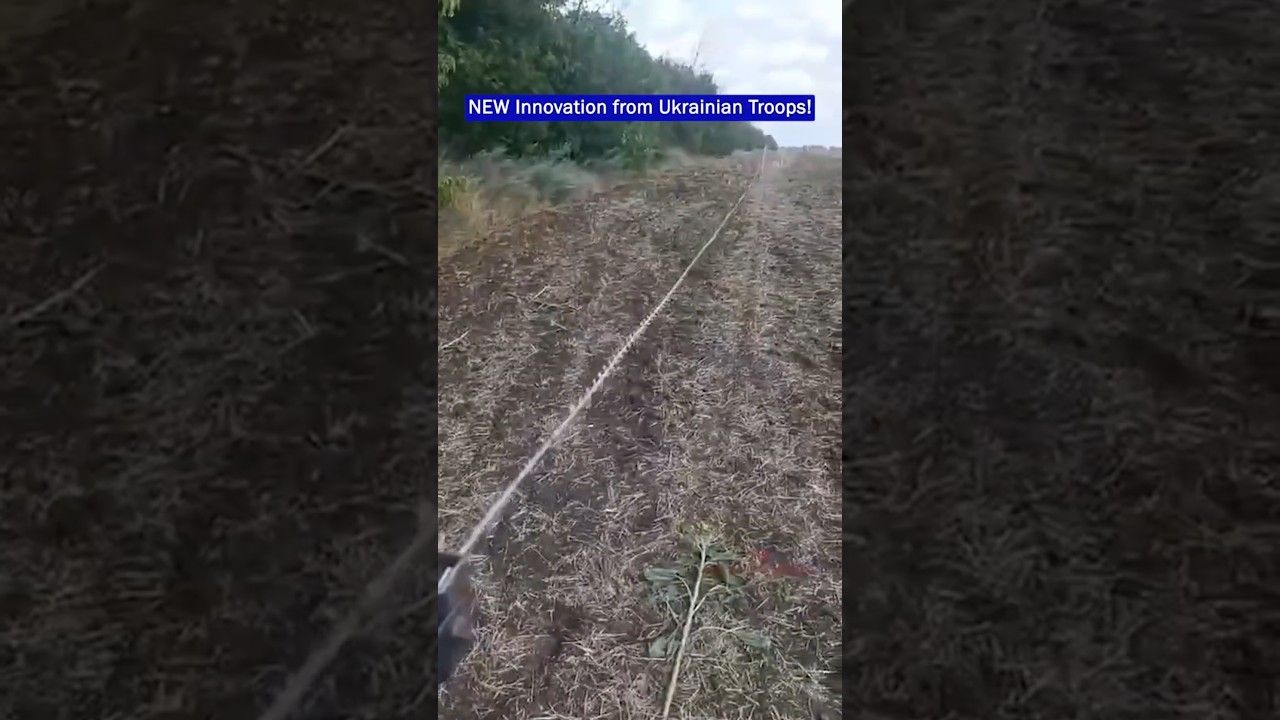
re: defending against drones.
I imagine everything is being explored. I saw nets being used at some base. Drones get tangled up in them. Something so simple and different never occurred to me. I just always think you gotta shoot them down.
What about wind? Or weather? or anything that could physically disrupt it’s ability to fly that is easy/free to deploy? Or anything else outside the box.
Swarms of short-range microdrones as a point defense?
The problem with nets or cutwires is that they only stop drones from getting past the location where the defense is. Ideally, you’d like to stop them some distance out from your actual emplacement.
I understand that Ukraine has a corps of anti-drone drones. I’m not sure how they work, but dangling some netting below a drone and then flying above the enemy drone would get the target drone’s rotors tangled. Ideally, the netting would easily detach from the anti-drone drone so it doesn’t go down with the other one.
True, but they are probably cheap enough to deploy widely compared to the cost of drones and the damage they can do. The problem with the nets is that they only stop the smaller and lighter drones. The heavier drones can plow right through them. The problem with the razor wire solution is that it won’t do much against the AI enabled drones that Ukraine seems to be heavily invested in. Get it close, designate the target, and the AI can handle the rest if the signal is jammed in the last half kilometer or so.
Yes, but most of them I’ve seen are for larger/longer ranged targets such as the Russian version of the Shahed, and do their work with explosives. I was wondering how small/cheap/reusable you could really make an effective anti-drone drone. Since it seems like such a drone wouldn’t need to be substantial to disable a quad copter drone, a swarm of bottle rocket sized drones with a logic of “is it moving across the sky, and does it make the sounds of a quad copter?” guiding them might be the answer. Of course, I don’t think I’m the engineer to develop such a thing.
Several manufacturers make anti-drone shotgun loads, canister rounds, 40mm grenades, etc
An underrated film and rare miss by Michael Crichton IMHO. Had the misfortune of being released around the same time as another indie film about killer robots.
Also had my second favorite terrible acting performance by a rock star (first goes to Mike Jagger in Freejack).
I do recall the bad guy (Gene Simmons) had this pistol that fired a sort of smart munition. It was really more like a tiny drone than a bullet, given the speed and size.
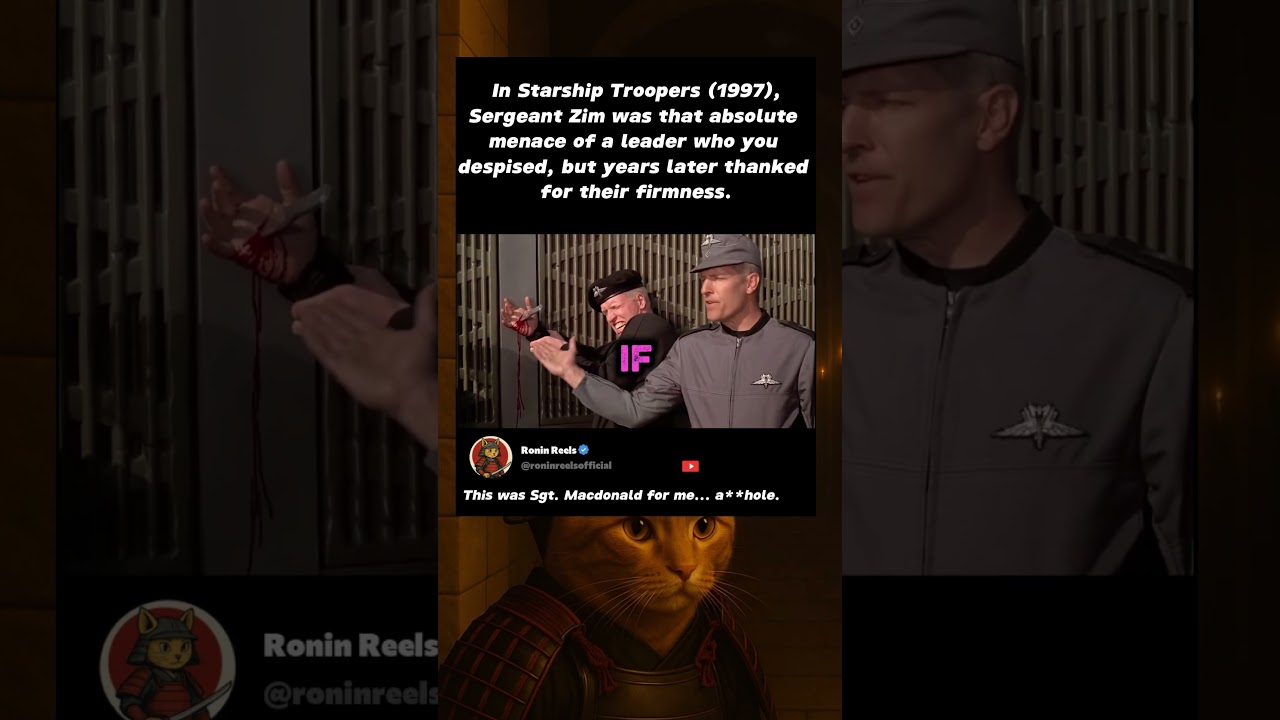
Another film about drones making conventional weapons obsolete:
Would you like to know more?
Moderating:
@msmith537, blind links without a onebox or description is discourteous to your fellow posters, and frowned on in GD and P&E. Note that the link to Runaways upthread had a onebox that gave enough information for context. And this one is less applicable to the discussion than the other cinematic examples being discussed. Still, not fully off topic, but next time, include your own argument, not just a link.
That said, to all with the cinematic examples, it would be better for posters to explain why they feel the fictional examples answer the OP’s question, rather than just links. This isn’t a Cafe Society thread on “drone/remote machine” movies after all.
This is just a guidance, not a warning.
@ParallelLines - Understood.
For context, my link was the scene from Starship Troopers where Sgt Zim throws a knife at Ace’s hand after he mouths off about not needing knives to push a button (which he can no longer do because he has a knife stuck in his hand).
The main point being that given wars are ultimately fought to advance human interests, the manual small arm will likely always be a human’s preferred method of personal protection. A drone isn’t going to do the operator much good if some commandos locate their control center.
At least baring some far-futuristic tech were every soldier has their own personal killbot that follows them around like a witch’s familiar ready to autonomously kill anyone or anything that threatens them.
An excellent explanation.
I wonder though if manual small arms will retain a semi-consistent presence for some time for the reasons you just mentioned. Similar to sidearms or smaller carbines for tank crews, for their personal defense if forward drone bases are breached.
As for on-body drone warriors, I’m reminded of an old 2000AD series, Rogue Trooper.
A synthetic (in this case biological) warrior, with synthetic intelligences for pieces of their main gear (helmet, bag, rifle) derived from his fallen comrades.
I bring it up because with increase in use, I expect more specialization in drone roles, or at least modular equipment and programming options. Just as we may have one “main” infantry weapon for small arms, but many adjustments, secondary weapons, specialist weapons and the like, I expect the role of drones will become more specialized over time. And that weapon systems will continue to be specialized for drone use rather than adapted versions of ones for human use.