Could we build huge classical warships today?

The OP question was could they be built today, not could they be built using the same construction techniques and detailed design. Unfortunately those were not recorded, and we don’t even know if a 130 meter ship was ever built.

As already stated, a 140 meter wooden ship was built in 1917 – The Wyoming – so it’s obvious 20th century man had the ability to make a ship in that size range: Wyoming (schooner) - Wikipedia

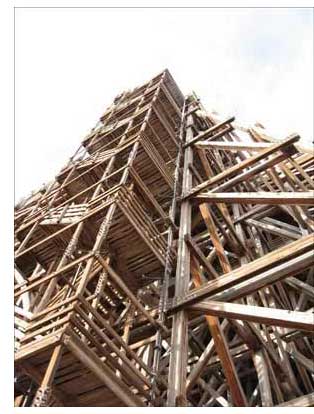
It’s not a ship, but the largest purely wood structure ever constructed was the Atlas-1 “Trestle”, built for EMP testing. Even the threaded bolts and nuts were made from wood: http://www.atlasobscura.com/places/atlas-i
ATLAS-I - Wikipedia
http://ece-research.unm.edu/summa/notes/trestlepics/trestle5R.jpg

Actually, we couldn’t make better cement than the Romans until very recently, because we weren’t sure how they made theirs. It turns out they used volcanic ash containing silicates.

Chains and slavery would probably not be necessary.

I’m curious about this - I had heard that we didn’t know the exact formulation until relatively recently, but not the that it was superior to our stuff. What are the advantages (and disadvantages) of the Roman formula?

It works underwater.

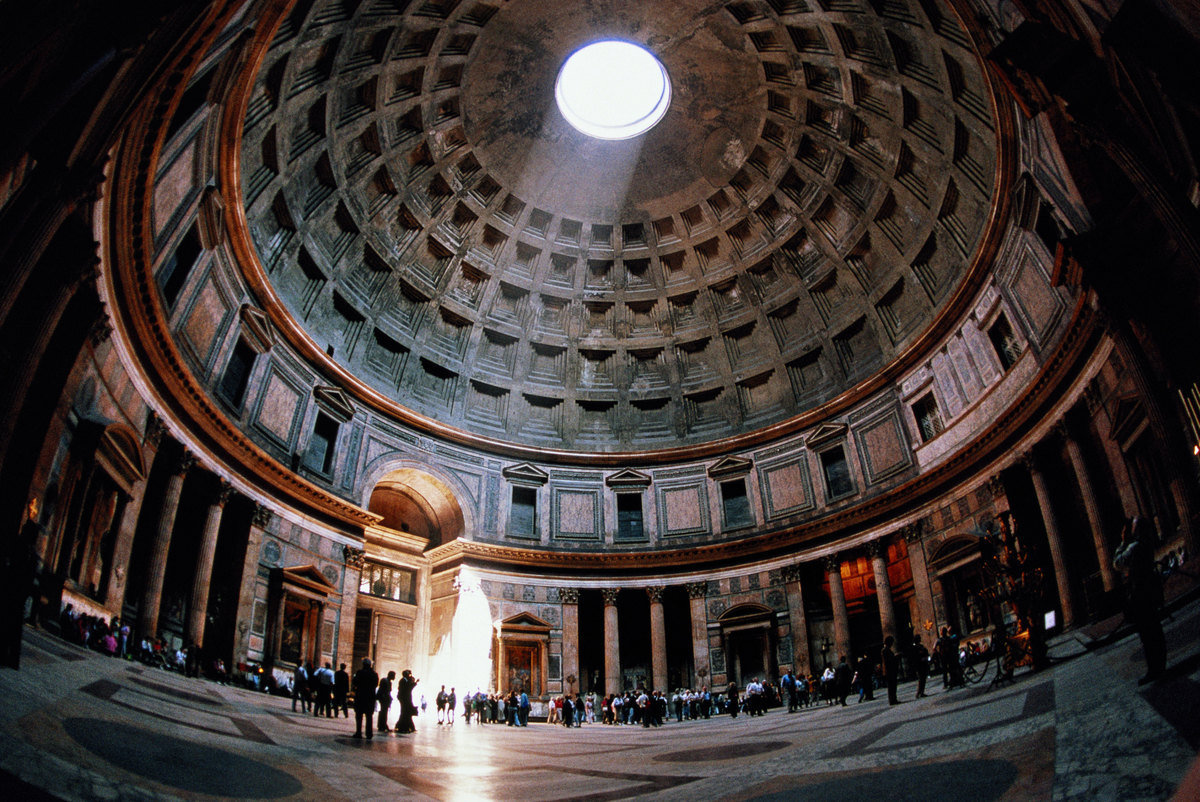
Roman use of concrete was impressive. The Pantheon is about 2,000 years old, and it’s still the world’s largest non-reinforced concrete dome: http://traveldigg.com/wp-content/uploads/2016/06/Pantheon-Rome-Inside-Photo.jpg

This article discusses whether Roman concrete was really that good: Why Roman Concrete Outlasts Ours – Simple Supports

Modern material science is vastly more advanced and includes things like Ductal Ultra-High-Performance Concrete: https://www.youtube.com/watch?v=LYpIhXgDufQ

The Qinglong Railway Bridge spans 1,460 feet and is made from reinforced concrete:
http://www.highestbridges.com/wiki/images/thumb/f/fc/BeipanQinglongDroneAerial.jpg/750px-BeipanQinglongDroneAerial.jpg

The Daniel-Johnson Dam in Canada uses multiple concrete arches and is 702 feet high: http://media.web.britannica.com/eb-media/02/78302-050-32E3C660.jpg

Ducon micro-reinforced concrete was used at One World Trade Center: https://www.materials.fraunhofer.de/en/business-areas/Security/ducon_a_high_performance_material.html

The above Ducon concrete has a compressive strength of 150 megapascals which is about 11 times stronger than Roman concrete: (PDF) The toughness of Imperial Roman concrete | Renato Perucchio and Marie Jackson - Academia.edu

Hydraulic cement is available at Home Depot. This may have been bleeding edge science in Roman days. And my hat is off to them for their ingenuity.

Today underwater cement is a low-tech consumer-grade commodity.

Or, to make it readable:

140 m long, and Wyoming (schooner) - Wikipedia

(If I got it wrong, I have no idea what an oM is. Maybe some Tibetan unit of measure.)

Yes, but hydraulic cement was a lost art until the early 1800s, and Portland cement (the first type of hydraulic cement patented) wasn’t as good as Roman cement. As noted above, there are Roman cement structures still standing that few modern buildings could even hope to outlast. It wasn’t until the mid-60s or so that we actually improved on Roman cement.

In my last visit to the old country I even saw fins on some buses (there are no public, government ones), and they were also the ones with a lot of religious signs and images.