How did they recover a shipwreck in 1583?
Doing all the combinations would be a lot of work, but this kind of lock shouldn’t require that kind of exhaustive effort. There are mechanical tricks that could likely be used. There’s a “lockhobby” community which hacks locks for fun. They show many ways to defeat locks, including locks of a similar type:
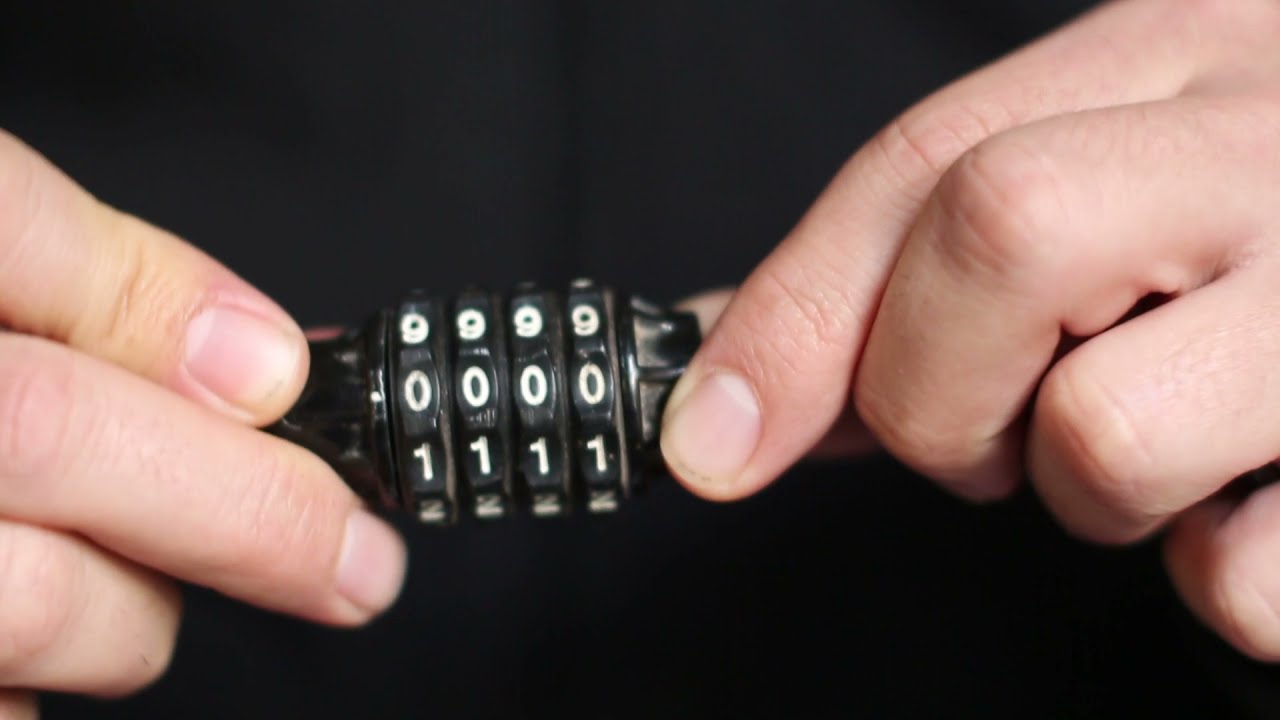
The video shows him opening a modern lock. I would expect this modern lock to be harder to crack than an ancient lock. If he could crack this modern lock within a minute, an ancient lock with similar mechanisms seems like it would be able to be cracked in a similar time.
Maybe.
I’m familiar with those locks, or at least their 1960s / 1970s incarnations. I rused to crack them the same way when I was a kid. I think most boys / tweens did that. 
The funky tolerances of ancient hand-made machines are going to frustrate at least some of the ease of making that method work as well as it does on modern machines.
I don’t think we give the ancients enough credit. Can you make a combination lock by hand? They probably trained for it their whole lives, the same way they trained to hold their breath underwater for a few hours at a time. It’s amazing what the human body is capable of when it’s not wasted on TikTok.
Just in case someone here is being whooshed (possibly me), the ship was wrecked in 1583. The artifacts were recovered between 1996 and 2017.
And the world record for breath holding is less than 30 minutes.
Yes, I was making a joke about the ambiguous phrasing.
And he breathed pure oxygen to replace the nitrogen in his lungs with pure oxygen to do it. Not something the ancients could do.
(If we are being wiseasses, of course the ancients could breath in pure oxygen if you handed it to them in a bottle, they just couldn’t concentrate the pure oxygen themselves).
Heh, yeah, sorry, I was just being a smartass too. It was too enticing a bait to resist 
I’ve cracked a lock of that style once, and once only (one showed up at my church’s rummage sale, closed and with no combo provided). It took me about five minutes, with no prior experience. And it had five rotors each with ten positions.
I suppose I can understand someone not trying, out of fear of damaging an antique. But I really can’t understand someone trying for years and failing.
IMO the only way to fail for years is to not understand how it works at all, so there was aimless fiddling, not deliberate organized trying.
That or he spent five minutes per year for each of 20 years. Except for the ones ending in 3, 5, or 6 when he forgot. 
With the lock in that position, the other things it could’ve spelled were:
P XFOS R
E MVZI O
Z DTLG G
D HQRK C
A BXFO B
(with the first and last letters fixed in place)
Ʒ is a capital Z, I think: Ezh - Wikipedia
PS there is a very interesting paper on these locks here: The Archaeology of Personal Security: Metal-Detector Finds of Early Modern Letter-Combination Padlocks | The Antiquaries Journal | Cambridge Core (but you’ll need some way of accessing it)
It has some really good diagrams of the inner workings of these locks, e.g. this small sample:
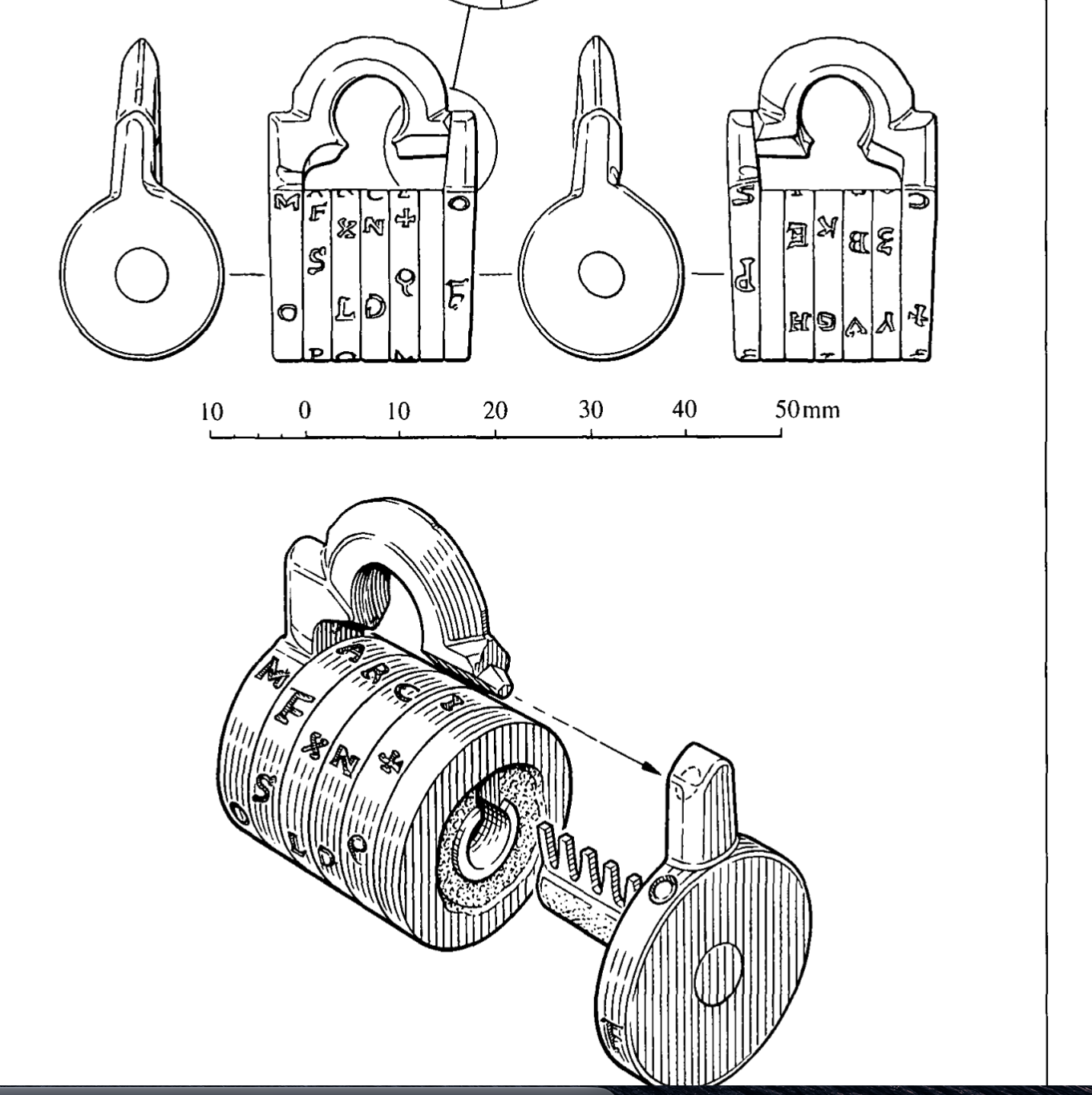
It references some of the same locks as used in the museum article, i.e., the ones that could’ve spelled MARCI or ROBIN, but the paper and the museum are not super clear about their layout — they contradict each other in exactly the way your question asked (why read it from the top).
You’d think that they’d make an intern try every possibility at some point.
I think these handmade locks were in limited supply? Someone of status like the Clergy or Noblemen could afford them.
The middle ages weren’t like modern times when a store has a aisle full of locks.