After all you were “Just asking questions”
Asking for permission to speak (at all) is a pretty common thing, depending on the situation. If in doubt, ask, but you’ll probably already know. If you’re speaking, you’re speaking freely. You’re expected to be candid and honest, but you’re expected to be respectful and to-the-point. There are no magic words that grant permission to speak insubordinately or disrespectfully.
There are some working contexts where everyone’s assumed to be speaking candidly and openly by default, not requesting permission, but you still have to keep your head about you as far as respectfulness. Tthat’s not really something professionals struggle with, though.
Ultimately, military courtesy is human courtesy with rank attached. It’s not that hard to figure out.
Here are two prior FQ threads on topic. The answer now is the same as then: It’s a Hollywood trope.
Oct 2016:
Sep 2014:
I’m surprised if it never happens. Even if it’s a Hollywood invention, well, a lot of the new recruits watch Hollywood movies, so I’d expect some to say things like that just because they think, from the movies, that they’re expected to say things like that.
If a subordinate had said that to me back when I was a Navy officer, I would have had to exert a tremendous amount of effort to not laugh.
I would probably just chuckle and tell them I expected them to always feel free to speak freely. Note that “speak freely” is not the same thing as insubordination.
But one of the strengths of the U.S. military (unlike many foreign militaries) is that subordinates are not penalized for speaking up. Which is not to say that their input will necessarily be followed…there may be larger issues that the subordinate is unaware of or not privy to. Ultimately someone has to make a decision, and that person is the one in charge, i.e. the commanding officer.
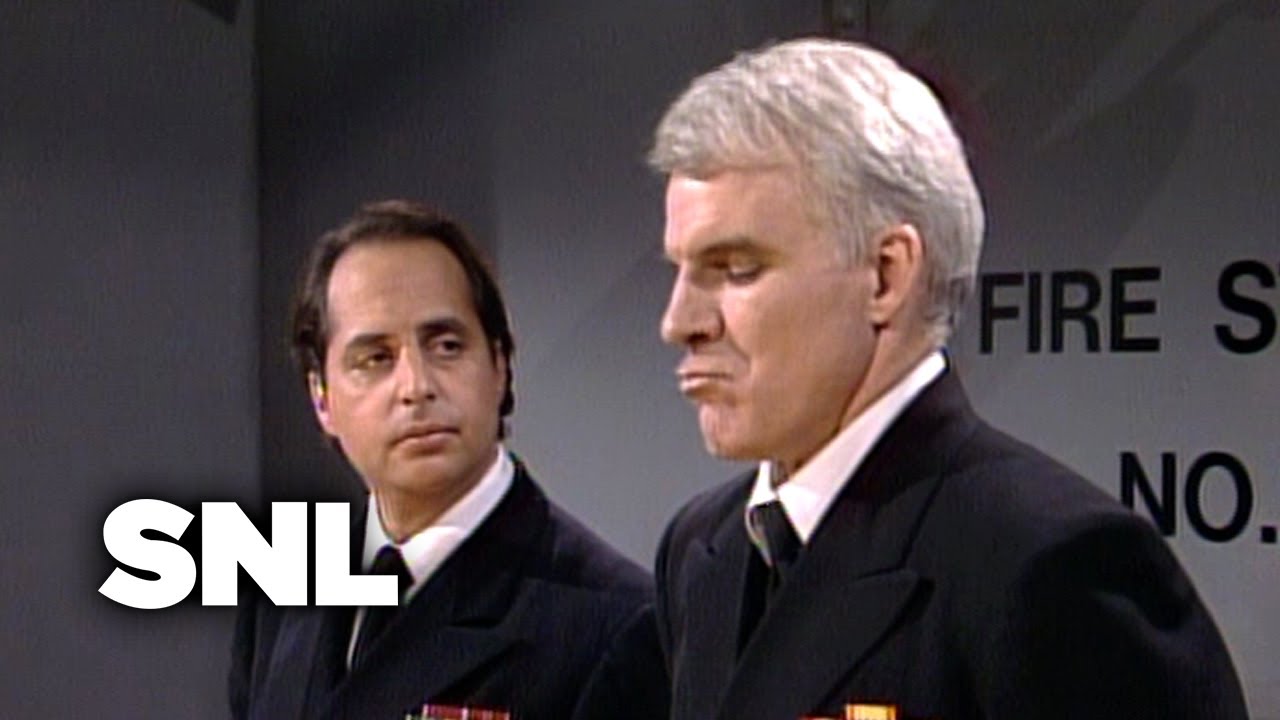
“Permission to speak freely” is Hollywood shorthand for “I’m about to be insubordinate.”
Relevant SNL sketch
Brings to mind Dilbert, of course, like anything institutional….
Or Anthony Newley:

TVtropes agrees with the consensus here:
https://tvtropes.org/pmwiki/pmwiki.php/Main/PermissionToSpeakFreely
Note of caution: Using it in Real Life is not a good idea. Neither is granting it, really. If subordinates are not speaking freely anyway, it is a pretty serious failure of leadership. Subordinates on the other hand need to know how to get the point across respectfully and unambiguously.
I have to laugh: I swallowed this Hollywood trope whole.
I, a soldier, said it more than once. Nobody taught me to say that. I picked it up from movies. It’s certainly not an official thing; it’s the same as saying “no offense.” The other person is free to take offense anyway. It basically means “brace yourself, and don’t shoot the messenger.” I wonder if I said it more because I spent most of my time at the bottom rung of ranks, so I had to speak to higher ranks a lot more than the rest of the people here.
So people do say it, but it’s nothing more than a regular ol’ figure of speech. You know what I never said, even once? “Self-licking ice cream cone.” Ridiculous and gross.
Debatable.
Ouch.
This shows up in one of the Mad magazine parodies (I don’t remember which, and a quick internet search doesn’t turn it up)
Soldier: Permission to speak freely, sir
Officer: Granted
Soldier: I take it back, sir. You really are a putz!