Look, if you don’t want a neck tattoo just say so.
Yeah, the written forms can be quite different than the familiar printed Cyrillic. The printed alphabet, though, I never found that difficult to learn. I never formally studied it, but I learned the letters (or at least the Serbian Cyrillic alphabet, which is largely the same – though I picked up the Russian and Bulgarian versions later) out of necessity when I spent three months in the former Yugoslavia. It took only a couple hours to learn, as many of the letters already correspond to English script, and many correspond to Greek (which I knew from the sciences and fraternities/sororities), so there really were only a handful of letters to learn. It’s not like other alphabetical or pseudo-alphabetical writing systems where you have to completely learn a new set of glyphs and how to put them together, and certainly not like non-alphabet or non-syllabary systems, which require extreme work to learn.
I’m damned glad I am retired. I don’t know what I’d do if faced with a room full of students who couldn’t read my writing on the blackboard, which I filled every day. My blackboard handwriting is fairly legible. I guess I could learn to print, but it would be slow. And no, I would not prepare all my lectures on slides.
Yeah, I already knew a little Greek. And learning Cyrillic I could figure out some Greek words in turn. I can still remember the first time that happened. Some pretentious Brit put “hoi polloi” in Greek in a sentence in a book I was reading. Ha, said I! I know what that is!
A large number of legal/legal-ish documents (lease agreements, etc.) have separate fields for printing your name and signing your name.
And I print in both of them.
Which is exactly what both of my sons do. Seems to work just fine.
How to Sign and Execute Binding Contracts | LawDepot.
While it does say there has been some argument about it, it concludes:
Although it can depend on your situation, generally a signature does not need to be in cursive to be legal. To execute a contract, one must simply meet the signing requirements of that contract.
For instance, to create a valid Power of Attorney, the document must be signed and witnessed by a notary public. In fact, most legal documents that are submitted to a county recorder require the parties’ signatures to be witnessed and the document to be notarized.
A notary public observes the parties as they sign, and then the notary seals the document to confirm that the named parties in the contract were indeed the ones who signed and consented to the document.
What’s important in this instance is not so much the format or style of the signature but that the signing requirements for the document are met. In other words, the notarization process eliminates any possible doubt about the validity of a party’s signature.
It honestly never occurred to me that a signature to a legal document must be in cursive.
The requirement is that the field for ‘printing’ your name is legible.
Blackboard? I haven’t had a blackboard in my classroom for almost 12 years. We use Promethean Smart Boards now. We type in what we want students to see on the board. No need to write anything by hand. We can edit and write in real time and it’s projected on to the board. Again, no need for anyone to write in cursive or be able to read cursive.
In which movie did I see someone signing an agreement with an X? I took it to mean that some people didn’t even have the ability to write in block letters, let alone cursive.
It’s a common enough trope, at least, for those who are illiterate. I assume it’s based on reality as how could the illiterate sign their names?
Thank you for that summary. I think you have your finger on it.
The reason I said “cultural decision” (like Chinese simplification reform) is that, while I have always thought of myself as a normal person with (more or less  normal handwriting, the implication in this thread is that I cannot expect people to be able to read a note I put on the office bulletin board, annotations or comments I write on a document (could be a couple of pages of this if we are working on something together), or anything I write on the blackboard [e-whiteboard or otherwise] if I do not feel like sitting down and typing formulae and diagrams in real time. [And, note, I did teach myself to type at a reasonable speed. Perhaps not enough to score a job as a secretary in the 1950s, but I can get the job done in a classroom in real time if I really have to, correct spelling and everything. And I figured out how to prepare both technical (or literary!) documents as well as slide presentations, as required. Do the students who show up in a college/university have to pass a mandatory typing class? How many WPM? Intro to Computers it sounds like not, if your experience of students not knowing how to save and organise files is representative.]
Coincidentally, how to file books electronically so that students are not forced to comb the stacks is something I have put some thought into, and it works pretty well most of the time (you can basically use a modern search engine and get the text in electronic format), but, even so, if someone is not able to find books in a library that does seem like it might still be a problem in an educational setting.
Russian vs. English handwriting:

(or
https://cdn.shopify.com/s/files/1/2779/0094/products/Spencerian-Layout_MASTER_590x.jpg

Does not seem that different, though a few of the letters, like “T”, have different shapes in Cyrillic vs Latin (this is true for the printed versions as well).
There is always someone who writes like

but, again, that’s true for English, too…
BTW, any Arabs here? If I understand correctly, in Elementary school they would initially start kids off reading and writing letters in “Naskh” style:

but after a couple of years move on to a more practical script:

What is the “new” way, if any? Analogous question for Hebrew, Malayalam, etc.
At about 4:11
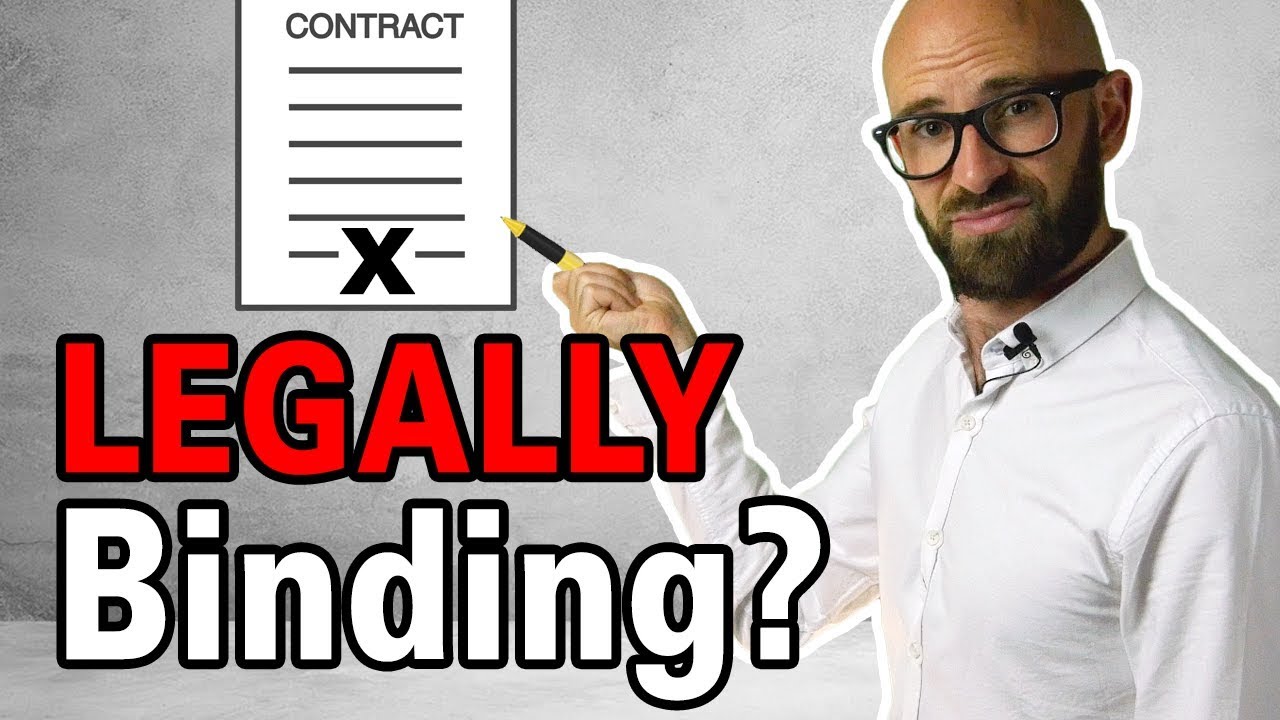
It goes on to say that illiterates sometimes sign with thumb prints.
I very much doubt that that would work for math. You have to draw diagrams, use Greek letters, script and bold letters and whatnot. All this can be done if you have prepared the details beforehand, but they take time and skill. Also, I type slowly, about 20 WPM.
On another question, I have a friend who is about 80 years old, grew up in NYC and never learned cursive for some reason. He prints everything including on the blackboard. But when he was younger, they would not accept a printed signature and he had to learn to scrawl something to sign stuff. This has to change, of course.
There’s a lot of folk law about signatures. There are also people who insist that you “sign your full legal name” on a particular document, even though that’s not how signatures work and it’s actually very slightly less beneficial for the other party to possess a signature you don’t normally use.
Out here in the real world, I cannot expect people to be able to read.
Most people can, but I’ve gradually come to realize that it’s not something you can depend on.
Cursive is a new term for me, in school it was called simply writing vs printing. I went to a Catholic grade school in the early 70’s. We printed with a pencil to the 4th grade when we had to buy a special pen, yes an ink!! pen with a funny grip to train us the correct way to hold the ink!! pen, this was very important! The good sisters would yank the pen from our hands and reposition in the correct manner. We filled many workbooks with spirals, lines and circles to master the line
flows needed for The Palmer Method. In my school penmanship was a very serious business.
About 3 years ago, I was tutoring a girl in grade 3 or 4 near Toronto in various school subjects. She was learning cursive writing, and this was one thing we practiced together. I don’t know if it was actually a required item on the curriculum, if the teacher had chosen to do it, or what have you. Her father was glad for it. He actually said to me: “Yay for cursive” and also questioned how those kids who didn’t learn how would learn to sign themselves.
I’ve always kind of been on the fence on the issue of whether learning to write cursive should still be required in school. In the late 80s, I was taught it in either grade 2 or grade 3 (I don’t remember exactly - I had the same teacher for both grades). I didn’t really like how cursive looked - it seemed to only make things harder to read (this opinion may have been colored by first seeing Serbian cyrillic cursive writing at home - I learned to read cyrillic, which in its Serbian form is 100% phonetic, as a pre-schooler. But I always had problems with the cursive symbols, some of which which look very different from the printed ones (for example, the little cyrillic “I” character looked in cursive like the Latin “U” symbol; the lower-case “T” symbol looked vaguely like cyrillic or Latin “M”)). I didn’t look forward to the cursive writing lessons and found them rather onerous. My teacher approached this task quite thoroughly. First we copied out all the characters once on a sheet. Then, we copied out one letter - large and small - multiple times, one letter a day. When we has finished this, we spent a rather long time (at least I think it was rather long) copying out a Mother Goose rhyme a day in cursive. We had a series of cards entitled “Sally Go Round the Sun”, with each card containing an illustrated copy of a rhyme, from which to choose. I deliberately looked for rhymes which had only one stanza. As the number of fresh one-stanza rhymes began to dwindle, I lost time that might have been spent writing looking for the remaining ones. The prospect of copying out TWO stanzas in cursive was quite unappealing to me. Finally, after many weeks of toil, we finished learning how to write cursive. And then our teacher told us that from now on, all our writing was to be in cursive. You can imagine how I felt. I adapted; I continued to use cursive into further grades. I think it took at least two teachers more before I realized not all teachers demanded we write cursive. Over time, my classroom notes developed into this half-cursive, half printed handwriting. Now as an adult, I pretty much only print.
I really don’t know; I wouldn’t require children to do all their writing in cursive, but am not sure how valuable it is in this day and age when we type and don’t write letters anymore to still teach it. The girl’s father’s comment about signatures is the most convincing one for me so far in favor of continuing to teach it (and my signature is derived from cursive, with my first name quite legible and my last name starting with a legible initial and continuing as a squiggle). But some above have written that you don’t need cursive to develop a signature so I don’t know if whatever benefit it provides justify its further inclusion in schools. Very much a YMMV item for me.