Yeah, like I didn’t know. 
Reread my post and you’ll get what I was saying.
Yeah, like I didn’t know.
Reread my post and you’ll get what I was saying.
They aren’t dying out here in Japan anytime soon. If you go to a clock shop, the majority of clocks available are analog.
I think the design, including analog vs. digital in the first place or some kind of mixture, is purely an aesthetic choice of the horologist;
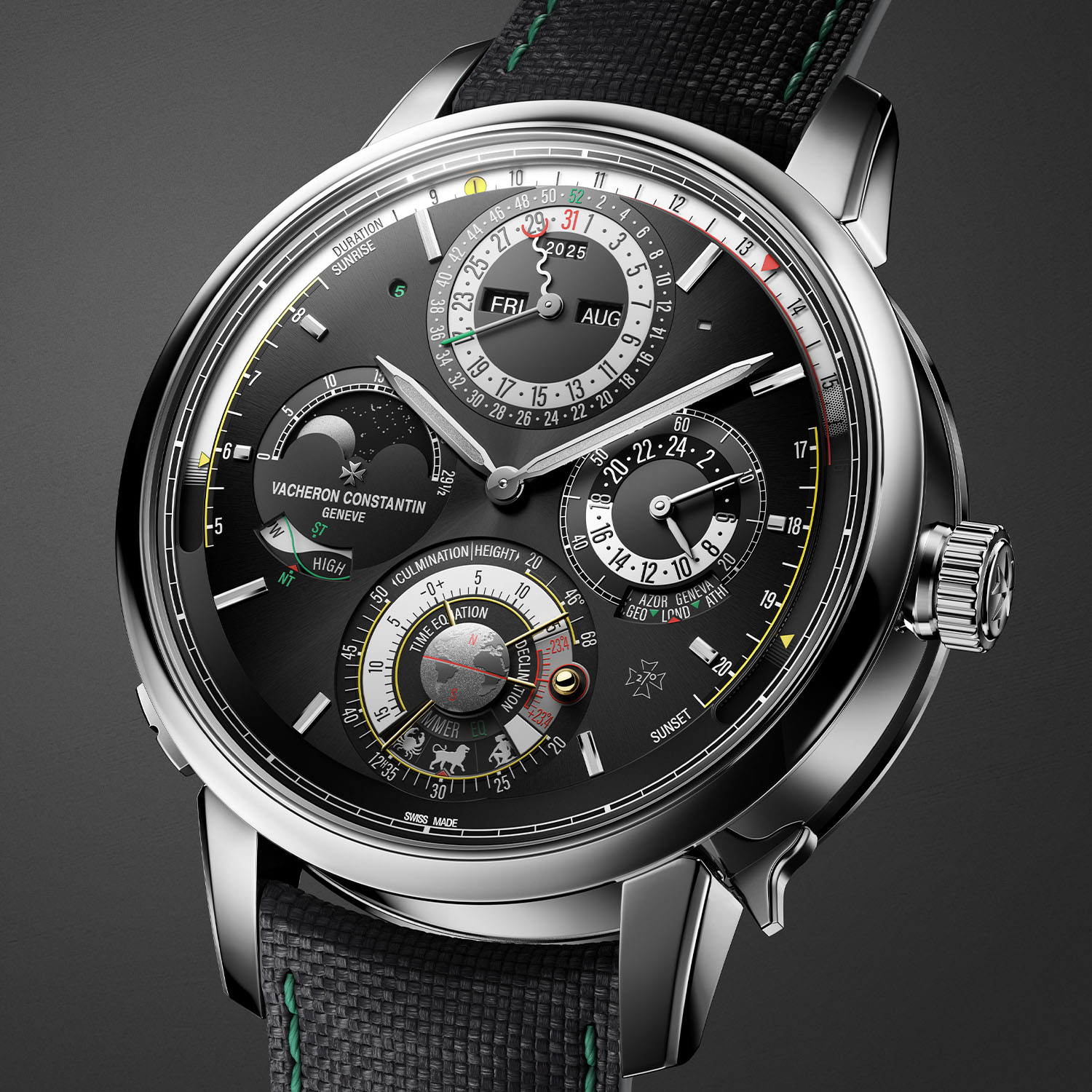
few need a wristwatch and one can get used to reading any kind of unusual or cumbersome readout.
If someone were “unable” to decode the readout of a traditional clock face, posed as, let us say, a mathematical problem, even given time and scratch paper and so on, that might be an indication of innumeracy or some kind of visual problem or dyslexia, but that is its own issue.
I think different people’s minds work in different ways.
I don’t own a car, but I rent one regularly, and recently I’ve noticed that the cars I rent often have a double speedometer, showing both an analog dial and a big digital number. Last week I was driving down the freeway and I realized that I had been looking at the digital number exclusively - if the analog dial had disappeared, I wouldn’t have noticed it. I guess I’ve always been better at processing information via letters and numbers than any other way.
Incidentally, I’m 51 years old and while I can read an analog clock, I’d much rather not do it. I can look at a digital display and do all the math I need to do to figure out how much time I have left, much faster than it takes me to figure out what the big hand and little hand mean.
In a nice car, I would expect it should be possible to set the screen to display whatever you want in whatever format you want. Having a digital speed readout on there by default seems completely unsurprising.
Very well said. I’m in total agreement.
OTOH …
Kinda like being unable to saddle a horse and thereby not being able to travel faster than a walking pace. /s 
Meaning that as technology progresses all sorts of once-essential near-universal skills first become unnecessary for most people, then unknown to most people. Which decline in penetration has always triggered whining from the geezerati.
We happen to be living through the decline of analog clocks, if not all analog displays.
I suspect analog clocks will have decades, if not centuries, more staying power than e.g. dial telephones which are now essentially only museum pieces or retro-novelties.
But the process is pretty much one way and soon enough analog clocks will hold a role akin to Roman numerals. Readily identifiable as such by nearly all, haltingly usable by some, opaque to most.
Yeah, i think that’s true. I used to work for an actuary who could barely read graphs. He could look at a page covered with numbers and understand it holistically. He was amazing at reading numbers. But he couldn’t really read graphs.
I’m the opposite, and when i want to understand data i often graph it this way and that.
Even so, I’ve mostly been looking at the number, not graph, of my speed on my new car. Because the number is in the heads up display and it’s right there. Despite my preference for pictures, I’m finding the number adequate.
We are? Allow me to refute that by reference to your former occupation, before you joined me and others in becoming a retired geezer. A modern airliner “glass cockpit” is basically a bunch of computer screens. Nothing would be easier for the designers than to display everything as numbers. Then you’d be looking at a wall of numbers on computer screens. How intuitive and comfortable would that be?
Instead, analog displays are simulated everywhere. The primary flight display is mostly analog. Engine performance data is usually presented as little analog dials with actual numbers underneath. Because humans naturally perceive analog more readily than digital numbers, and especially when needing to quickly detect when something is in an abnormal range. I can imagine no end of disasters if it were otherwise – “oh, that was an ‘8’? I thought it was a ‘3’!”
Just had a phone call with/ my wife and daughter. Wife says every classroom at the community college where she teaches has an analog clock, tho the halls have digital clocks. Dtr said at her kids’ grade school each classroom has an analog clock. And the kids are being taught analog clocks in math classes. Both believed analog clocks provided some information as to thee passage of time that digital clocks do not.
Just offered as a data point.
Given that time is told in these overlapping scales of 60 seconds to a minute, 60 minutes to an hour, 12 hours twice (am and pm) to the 24 hour day, having them visually overlapping on the same face is by far the best way to learn how they relate to each other.
To kids learning a digital world learning that 15 is a quarter of something as a routine scale is in conflict with the other digital information they are getting actually seeing how these fractions work in this context is really helpful.
Scanning the thread I have to admit was surprised to read @Left_Hand_of_Dorkness arguing against the importance of learning analogue clock reading in early grades. Kids will be learning fractions of circles, and learning about adding a fraction to and taking one away, so on. These are important concepts, actually pretty sophisticated ones. Might as well get exposed to them as while also understanding more about time and these odd scales that not standard that are used even where metric is otherwise used for pretty much everything else.
Learning that 30 is half of 60, that 15 minutes is half of that and a quarter of an hour … can be memorized or calculated; but better to also visually experience it, to understand it, and then to use that experience to provide a foundation in particular about circles later, using yet another scale of 360 degrees …
Yeah circles be handled differently.
To be clear, I’m arguing against the importance of kids being able to read analogue clocks. There are some interesting points about peripheral benefits. I’m not convinced by those, but I’m open to them. I definitely don’t think the skill is, by itself, important enough to justify the time spent on it.
The skill for the need of using the actual skill day in day out? Probably not. The process of learning the skill to help kids understand the quirky scales that are reporting time of day, to get a feel for what they mean? IMHO critical. Bonus that it helps with learning fractions in general and concepts of a fraction less or more and estimating. But as well for the how using circles is different than X and Y and even Z axes. Reading time on analog clocks is a first and fundamental experience with rotation as a dimensional concept dealt with mathematically. Rather than up down and across.
Those peripheral benefits can be important. I had to teach a bunch of young actuaries basic interpolation. Why tf hadn’t they learned that somewhere in school? I did.
Right, i learned interpolation in the context of using log tables and trig tables. Those are definitely not important skills today. I understand why they were dropped from the curriculum. Except it’s still important to understand how to interpolate. And that was accidentally dropped at the same time.
OTOH, I wouldn’t be surprised if kids today were learning other important stuff we didn’t learn as kids because of things they have now that we didn’t have then.
It would be nice if they taught them social media and how to safely navigate it.
And the difference between a legitimate news story and a bogus one.
It’s true that different people’s minds work in different ways, but it’s nevertheless a well established fact that analog displays are much, much better at highlighting abnormal conditions.
A speedometer is a good example but not the best because “normal” means different things under different conditions. A better example would be an engine temperature gauge. I really don’t care what the actual coolant temperature is, but I glance at the dial once in a while to see (a) if the engine has warmed up, and (b) if the needle is in its usual position, just below the mid-point. If the indicator was instead displaying a digital temperature, it might be harder to see and certainly harder to interpret, because what I really want to know is “what’s the temperature relative to the normal range?”
If I was supposed to leave the house at eight and I look at my digital watch and see 20:24 (yes, I use military time), I don’t think, “Huh… what does that mean?”, I think “Holy shit, I’m late!” And I don’t even have to do any calculations.
But yeah, I get your point. For relative status reports, a gauge can be better than a number - I certainty wouldn’t want my fuel gauge to be replaced with a digital readout, because I have no idea how much gas is supposed to be in a tank. But one possible solution combining both options could be, for instance, a digital readout that turns yellow when it approaches the danger zone and red when it crosses over. That way, you can have an accurate numerical reading and immediately know when you’re in danger.
Kids know how to do that much better than people our age.
That’s my main point. Not only are there important things kids are learning today; there are also important things kids aren’t learning today that we didn’t have to learn back in the day. That’s why I brought up spreadsheets.
This gets at a core distinction in the use cases of time, I think. It can be a coordinate or a quantity.
If you’re using it as a coordinate, then digital clocks are superior in every sense. The train and passengers need to meet at point X and time Y for satisfactory boarding. A number like 15:37 is ideal for this.
If you’re measuring the quantity consumed or remaining, then analog is superior. You can see a visual representation without having to do a numeric conversion. Incense sticks are fine, sundials are analogous to the sun, displaying how much sunlight remains. An mechanical dial covers the entire day, provides some numeric coordinating information, and visually represents any varied interval you might be interested in (minutes until 3PM).
It occurs to me that this might be part of the reason my kids seem have such a up fucked up sense of time management, because being digital-time consumers, they experience it strictly as a coordinate and not a quantity. They experience it as “almost time”, “time”, and “late” and they’re usually late if I’m not riding them. They have no ability to estimate how long a task will take, or how to budget the time needed for a project. Now that I think of it, I need to do some parenting in this area, which is scary because I’m the world’s worst at all of this, living mostly in the digital world myself.