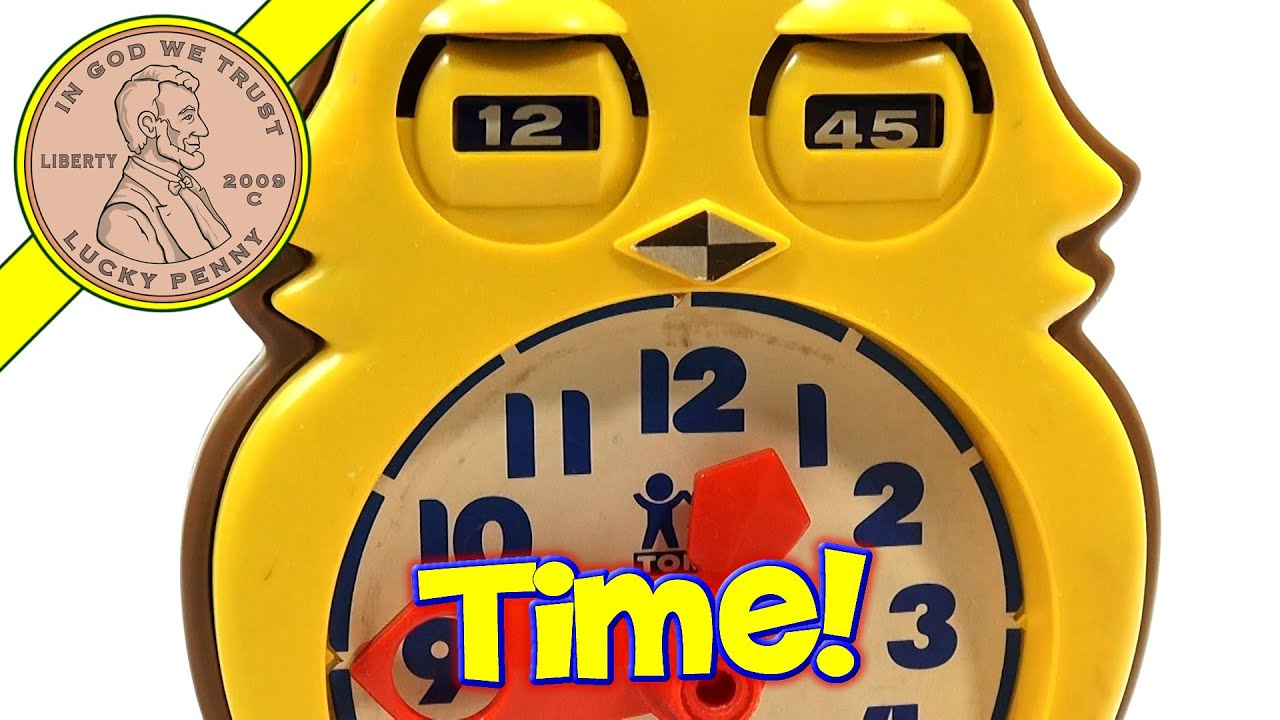
Spoke with a 4th grade teacher yesterday (3d grade last year). She rolled her eyes when I described this discussion. Said, if nothing else, they are incredibly useful for fractions. Her classroom has both analog and digital clocks. She generally tapes over the digital one.
Honestly for that stuff it will much more likely be more useful to teach them how to ask the AI the right prompts to create the spreadsheet.
I would consider what you suggest a complete waste of time that should be spent understanding how to ask meaningful questions and to develop alternative hypotheses and test them.
This is not a typical spreadsheet use. This is doing database work within a spreadsheet. While you can use a spreadsheet this way, and it’s often helpful to have a little bit of that somewhere in a spreadsheet, if your primary goal is database analysis, a spreadsheet is an awkward tool, and many other tools (SQL among them) are better.
I speak as an actuary who spends most of my working hours mucking about in big complicated spreadsheets.
My guess is Dseid is being somewhat hyperbolic, but is suggesting that teaching critical thinking is much more important than mastering one specific computer tool - spreadsheet.
At 65, I don’t believe I ever prepared a computerized spreadsheet. Never tried to use Excel. Don’t believe my life was any the less because of that.
By the time kids in fifth grade are in college or the workforce entering in those commands will be like me having to had learned how to use punchcards and writes simple program in Fortran Watfive, if that’s what is was called. Long time ago.
Creating spreadsheets in a computer program is not likely to be a needed skill a decade from now. Those kinds of programing busywork tasks are even now increasingly being done by AI. In a decade? Understanding what the data means, or not, and what to ask about it, what data is needed and what is superfluous, these are the science skills that matter to me. How to think about what we know. Habits of mind. Curiosity. Problem solving. Not working a program that will be yesterday’s program tomorrow.
Yes, we wouldn’t want to teach a skill that might be obsolete in a decade, like spreadsheets. Instead we should teach a skill that’s already been obsolete for decades, like reading an analogue clock.
Creating spreadsheets isn’t “busy work”. It’s about choosing what information to display, and how. It’s about deciding what questions to ask of the data.
Spreadsheets are certainly not the only tool for that. I don’t know whether it would be valuable to replace part of the 5th grade curriculum with spreadsheet use. But if you did, you’d be showing kids how to create graphs and check that a set of numbers are consistent, maybe introduce the basics of accounting. Not training them to do complex database calculations.
I remember enough about elementary school to know that we were taught to read clocks no later than 1st grade, and we may have started in kindergarten. My family moved to a different state when I was in the final month or so of 1st grade and all my timekeeping memories are from my old school.
I had one of these growing up, and I could tell time before we were formally taught it in school anyway. I’ll give some credit to Back to the Future for that too.
If you don’t want to watch the video, this clock advances in five minute increments when you press the left foot, or you can drag the minute hand around with your finger or turn the spindle. To see the digital time you can press the right foot to open his eyes. It’s a fully mechanical device so it has some decent action. Dragging the minute hand around with your finger really helps you understand the connection (literally and figuratively) with the hour hand. It also inadvertently teaches you a little about gearing if you try to go whole hog on it. There’s no finger hole on the hour hand, because if you try to turn it there’s too much resistance due to the gear ratio.
Regarding spreadsheets, while the computerized version is a relatively recent invention, they’re just a digital form of accounting ledgers and workbooks that have been around for centuries. I seriously doubt AI is going to make them go away because the spreadsheet is where you log the information first, and then do math on it second. AI might be able to automate the calculation process, but there still needs to be a chain of custody for all those numbers to allow auditing.
It’s possible that I was very unlucky, but when I was working I had the misfortune of people above me either not understanding that or letting their tendency to micromanage take over. My guess is that it was some of each . It wasn’t too bad when the issue was that someone filled the “completed” column in with an “X” and it was sent back demanding a date (although the column heading didn’t mention a date.) It was something else when there were twenty columns and you couldn’t see the entire spreadsheet without printing it out and taping pages together - and at least ten of those columns were completely unneccesary. There wasn’t quite a column for eye color, but it was close.The people who wanted the spreadsheets seemed to think if the information was available, it should be in the spreadsheet.
You’re not wrong in your concluding points, so back on topic, this is why we both believe that teaching kids to tell time on an analog clock has practical and cognitive benefits.
But I believe that spreadsheets will always be useful, because they’re not primarily a programming tool but rather, primarily a data management tool used for data organization and storage. It’s very useful even if no formulas are used to auto-compute values. A spreadsheet in that sense can be regarded as a simple kind of relational database that can be queried by other applications or organize data in a variety of different ways.
I don’t think knowing how to use a spreadsheet like Excel at least at a basic level will ever be obsolete, just as Word, which has been around practically forever, is still being used and developed. Word will be useful as long as we have written communication, and Excel or something like it will be useful as long as we have data.
To be very clear. AI definitely is able to automate the calculation process and the AI tools to do that will become widely available and used fairly quickly. Learning the tools of Excel, its commands language, is a silly thing to teach. Not what is important to be learning in science or math.
Learning what questions to ask of the data is very worthwhile.
But to the first - again, I personally think analogue clocks and watches are a superior data presentation but to me that is not the reason to teach it. Learning timetelling on an analogue clock teaches about lots more than that skill.
I took organic chemistry in college. I have never used organic chemistry knowledge since. And I am still glad of having taken the class because the problem solving skills for how to get from these starting products to that end result was a great intellectual exercise that taught a way of thinking. Same with High School geometry proofs. I even see the advantage of learning how to use a slide rule for other things it teaches about scales, about the beauty of how numbers relate.
Learning the command language of Excel? No benefit like that. Learning how to tell time on an analogue clock. To me definitely.
I don’t believe anyone has suggested “teach the command language of Excel”. That’s a straw man.
LHoD is talking about collecting appropriate data, organizing it, and looking at it, like by making simple graphs. These are useful skills that integrate well with “writing a basic essay”. They are both mostly about deciding what you want to say and how to present your ideas clearly.
How to DO Excel as a program. In a simple way maybe.
No question using Excel is confusing. It confuses me. Its UI is not intuitive to me. Training how to use its UI as a curriculum objective seems dumb.
Broadly data analysis and effective data communication are important skills for students to master. That is without question and is what should be taught. Spreadsheets may be a default tool for some for that, but are not at all key to that skill set.
Again, I’m not convinced that your motives, or methods, for raising these objections will admit to positive discussion, so I’m going to let this go unanswered.
This is pretty much right. When we teach kids to use Google Docs, we necessarily teach them the mechanics of using the specific Google Docs menus, and how to format paragraphs and whatnot, despite the fact that these specifics will undoubtedly change over time; what we’re teaching is both an immediately useful skill and a way to adopt new technology as it comes along, a way to learn programs themselves.
Something similar applies with Google Sheets: really what I want kids to learn is how to use technology to make sense out of numbers. Of course I teach the skills specific to the spreadsheet app in front of us, but in doing so, I’m teaching kids how to think about data, and how to learn a new app in general.
It would be astonishing if teaching a centuries-old and outdated technology like analog clocks had tons of peripheral benefits, but teaching a modern and widely-used tech like spreadsheets had none.
I’m going to humbly suggest you are rejecting spreadsheets for much the same reason people who aren’t comfortable with analog clocks reject them. It’s not a skill you’ve ever become comfortable with.
why i think learning any spreadsheet is good enough
I’ve watched the development of spreadsheet software over time. Early electronic spreadsheets were very accessible to people who grew up with giant green sheets of paper. There was a period when it was a joke that older actuaries weren’t comfortable with software (i once saw an ad that basically said, “our software is powerful enough for the kids, and simple enough that their boss will understand it”) and i worked with actuaries who struggled with email, etc. But an actuary who struggled with Lotus 123 was as rare as a writer who struggled with word processors.
I grew up with Lotus 123, having only a year or two of using calculators that produced a printed record before spreadsheets became commonplace. And being good at 123 made the basics of Excel easy. And being a strong Excel user made me able to help my son do complex things in Google sheets even though i had never tried anything like that in Sheets, and it’s syntax is somewhat different.
These skills are, IMHO, highly transferrable. I have never created a graph in Google sheets, but i endorse that as a fine choice of a tool for kids, because it’s free, it’s widely used, and if you can make good graphs in Google sheets, you are going to be able to transfer that skill to the next thing (which might well be powered with AI.) I say that confidently, and I’m about to go attempt to make a graph in Sheets just in case. If I’m wrong, I’ll return and apologize.
Again, i don’t know whether it’s worth adding spreadsheet skills to the 5th-7th grade curriculum, but i think you can make an excellent case for it, similar to the case for analog clocks.
Excel has little or nothing to do with science or math, unless you want to use its often-elaborate analysis and programming features. But that’s not what I’m suggesting.
I’ll repeat, since you seem to have glossed over what I said earlier – I’m saying it’s an important tool for organizing, sorting, and saving data – in a real and important sense, it’s a database. It’s a database that has its own UI but that furthermore can be queried from other applications via APIs much like any other DBMS. Some sort of database analogous to Excel will be useful as long as we have databases and data to populate them with, which is about as long as we have a surviving civilization.