The association between viruses and inflammation causing certain conditions is not nearly as robust as one would like. But what to make of this evidence that shingles vaccine may lead to a lower incidence of dementia and healthier aging?
If it does, that apparently hasn’t stopped Kennedy from saying the shingles and chickenpox are not available in Europe.
Yup pretty undeniable. This is pretty compelling research…
In propensity-score matched cohort studies with 436,788 individuals, both the AS01-adjuvanted shingles and respiratory syncytial virus (RSV) vaccines, individually or combined, were associated with reduced 18-month risk of dementia.
That’s still just a correlation, though, not necessarily a causation. It might be, for instance, that individuals who are more health-conscious in general are more likely to get the vaccine, and are also likely (for other reasons) to have lower dementia risk.
Yep. Cohort studies don’t prove causation. Still, interesting that vaccines may offer more benefits than those proposed by Health Secretaries.
Another source (limited gift link)
Are we talking the older shingles shot or the the newer two dose vaccine?
Or both?
Per the most recently gift link:
Why exactly this might be remains unclear. One possibility, says Dr Geldsetzer, is that the seemingly dormant chickenpox virus may continuously damage the body until such time as the vaccine helps fight it off. The other possibility is that the shingles vaccine provides a broader boost to the immune system—by encouraging the production of white blood cells, for example—in which case other vaccines may yield similar benefits.
Which (to me) means they see the correlation, and are at the stage of guessing at possible causation.
What I’d really like to see, is that we have a full generation (roughly) since the Chickenpox vaccine itself came into use. In 30 or so years, they, having theoretically no dormant varicella virus in their systems (well, not from chickenpox at least) would be a great control group to draw upon.
But the subjects were chosen at random from the two different age groups. Conceivably, the same percentage of the older group would have opted for the vaccine as the percentage of the younger group who did opt for it. The older group would have been just as likely to have the same percentage of health-conscious people as the younger group.
Having seen my mother suffer from shingles when I was young, I got the shot as soon as it was offered. If it turns out to have other benefits, so much the better.
Though that’s a big correlation…
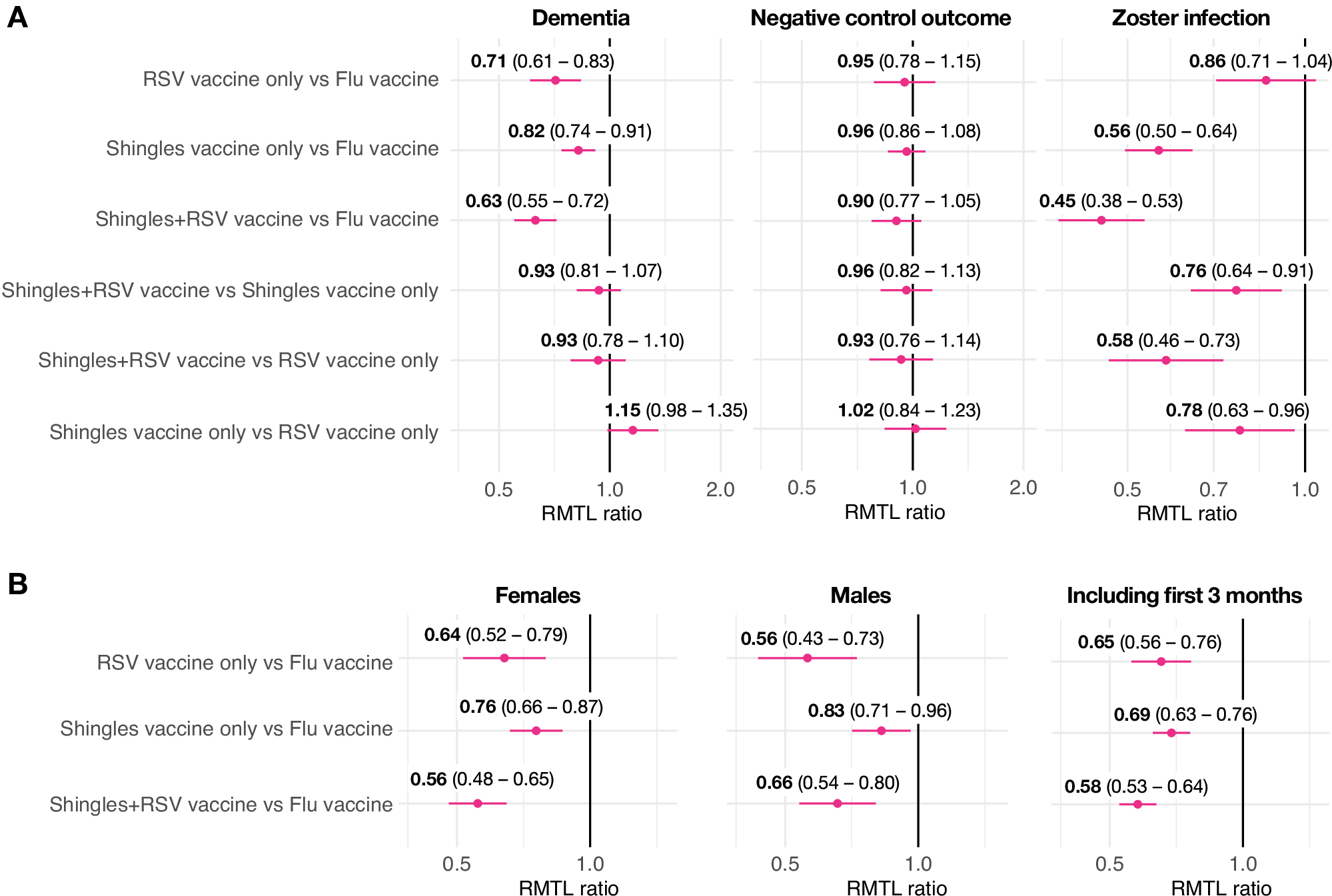
There are a lot of confounding factors that could be adjusted for in a study that large. I don’t know if cohort studies do that?
It says right there in the ScienceAlert article that they think it’s the adjuvant that has the effect, and that there’s no additional effect of getting vaccinated for both viruses, or just one. And it also points out that the Shingrix vaccine does indeed outperform the Zostavax (older) shingles vaccine.
Having had both Shingrix and the RSV vaccine, I’ll be happy they ward off both shingles and RSV, never mind any purported benefit against dementia.*
*along with drinking plenty of coffee, I should blurp fe foin, reely.
Same, except it was my dad. He got a horrible case of shingles after my sister and I got chicken pox. I got my first shingles shot dose two weeks after I turned 50.
This aligns with my (non scientific) theory that the body benefits from vaccines by exercising the immune system, making it strong.
It’s like driving a vehicle to keep the engine running smoothly, instead of leaving it in storage. You’ve got to run it through its paces or you need to worry about rust.
Your immune system gets “exercised” all the time, not just when you get a vaccination.
IMO there must be something interesting going on here. Because to me, the obvious confounding factor, namely that getting vaccination rate is just a very good indicator of how often you see a doctor, would have the reverse effect. These results are classified based on dementia diagnosis and if you aren’t seeing a doctor then you aren’t getting a dementia diagnosis until much later.
How would that overcome the confounding factor? They weren’t given, or not given, the vaccine based on the random assignation were they?
Hm, that’s true that that would tend to work against a correlation. Mitigating that, I think, is that dementia diagnoses often don’t result from the patient themself choosing to see a doctor: I’d expect that more often, they’d result from concerned loved ones urging an older person to be checked out.
Even with that factor working against correlation, though, that just means that whatever is actually causing the correlation is even stronger. It still doesn’t say anything about why the correlation exists.
The cohort from the older group who weren’t offered the vaccine would have presumably gotten the vaccine in the same proportions as the group that was eligible, had the older cohort been eligible. The people who took better care of themselves would have been more likely to have opted for it than people who didn’t take better care of themselves, in the same proportion as the eligible group.