In debates, arguments often arise over where a line should (or can) be drawn amid the continuum of greys that inhabits the space between black and white. What confuses me, however, is consistency; for example:
-In many cases, any line we draw is arbitrary - take the question of when a fertilised ovum ‘becomes human’ - the issue is so complex, and the process so gradual, that regardless of the point we choose, there will be cases on either side of the dividing line that are indistinguishable from one another (in which case, why draw the line there at all?)
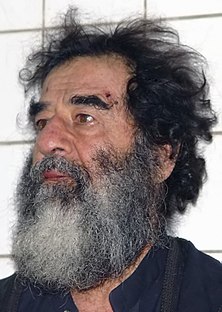
OTOH, take the question of whether a man has a beard or not - again, the process is gradual, in such a way that wherever we draw the line, a man with x hours of stubbly face fungus is virtually indistinguishable from his twin brother with x+1 hours of growth, yet, we can say without any doubt whatever that this man definitely has a beard, whereas this man definitely does not.
So what gives? How is it that in some cases, we can identify cases as being on one side of the line or the other, even though we can’t absolutely place the line of demarcation, but in other cases, our inability to decisively place the line of demarcation is used as argument that no case can be identified as being on one side of it, or the other? I’m sure I’ve argued on either side at different times…
I agree, this is actually a major problem that recurs repeatedly in political debate. Another obvious example would be: what constitutes porn (if such a thing as porn really exists)? Those who believe in porn, even noted Supreme Court justices, are reduced to “I know it when I see it” when asked to draw a line in that particular continuum.
And yet it must be possible to define things, even if there are other things that appear to qualify in the definition, but don’t, otherwise it’s all just noise and chaos.
It’s the politicization of the continuum that produces all the noise and chaos. If you define the continuum in the abortion debate to be human/not human, you will find that the pro life types will have defined the line as appearing when the egg is fertilized (some even further back than that, but I think they’re on the fringe) while the pro-choice folks would say that it begins somewhere further down the line, and that in any event where on the continuum you need to consider depends on what sort of conflicts there are between the fetus and its mother. Pro-choice advocates do not even want to consider this line, that’s why they are often willing to back legislation that considers the health and safety of the mother at issue.
There is probably a sane and logical place to draw the line somewhere between “baby” and “collection of cells” but so long as neither side is willing to look for such a place, they arent’ going to find it.
The “draw the line” fallacy rests on the false assumption that terms defined at the extremes of a presumed continuum for a specific quality can be applied as-is to items which fall closer to the middle of this continuum.
“White” and “Black” are the classic examples; these terms are defined only for items at the presumed ends of the the “non-chromatic brightness” scale. It would be fallacious to ask “how white is this gray object?” because the definition of “whiteness” applies only at the extreme of the scale. Now, the brighter student (no pun intended) would say that you could develop this scale of brightness in such a way that we can determine whether or not a particular shade of gray is “closer” to white than to black. I agree, but since “white” and “black” aren’t commonly used in this way, such a definition is arbitrary and highly arguable; moreover any definition would require us to re-examine the definitions of “white” and “black” themselves.
By this argument, we cannot even say at what point a slightly-shaded/colored “white” object can no longer be called “white”. “Off-white” paint, by it’s very definition, seems to not be legitimately white anymore, though most of us unaware of the specifc name would still likely say the paint is white. Again, this reveals the fallacy of assuming terms that are defined at the extremes can be used on the continuum.
To be clear, there are some continua that use definitions based on the nature of the contunuum; acidity is one, where a specific pH value can be used to say X is acidic or alkaline. But it is a fallacy to assume that all* qualitative terms work on a continuum in the same way, unless we admit to surreptitiously changing basic, agreed definitions.
One of those demarcations is in “ethnic purity”. This week’s decision to allow a Hawaiian school to exclude whites (with what percent white background?) is only the latest example. Last week an Indian tribe kicked out some members for not meeting the cut, although other members had minuscule ties to the tribe.