Emotionally raw "older" films

I don’t know if I’m just looking in the wrong places, but it has always seemed that older movies, roughly pro-1960 movies, just seem glossier than newer movies when it comes down to straight drama.

It might be an issue of being able to connect. For example, the characters in Cat on a Hot Tin roof, even though they are dealing with hard, HARD issues just seem to be characters. The girls in that film especially seem to just a little off. They’re real, but they also seem to have a Hollywood sheen or something to them.

Contrast that to something like Blue Valentine where you have REALLY REALLY emotionally raw scenes and giant interpersonal conflicts between Ryan Gosling and Michelle Williams. Or you can look at The Master where Joaquin Phoenix and Phillip Seymour Hoffman are able to just go at it in really long, intense scenes with eachother. The processing scenes and the jail scene allow for both of them to just go off on each other and it is SO raw and SO real.

Its something that’s just missing from pre-60’s movies. They seem to be about grand adventure and escapism instead of turning a mirror on humanity. Just sitting here trying to think of all the old movies I’ve seen, 12 Angry Men is the only one I can think of that really plays up human drama.

Maybe its because the word “fuck” wasn’t used in a movie until 1967 :rolleyes:

Anyway, if you can point me in a direction for those kinds of older films, I’ll be happy to oblige.
They were glossier. You mention Cat on a Hot Tin Roof which starred Elizabeth Taylor, one of the great beauties of the day, and she’s got lighting and makeup which flatters her. Or take Shirley Temple in Fort Apache or Natalie Wood from The Searchers and they also look like they’re all made up for a photo shoot rather than people who exist in a real world.

I know you’re not specifically talking about how people looked when you say films were glossier back then. But I think how the characters look is part of what makes them seem as though they’re just players on a stage rather than real people. One thing to remember is that acting styles have changed dramatically (ha!) over the last fifty years. We’re not used to their particular style of drama from 1953 here in 2013.

Silent film dramas often portrayed intense, raw emotions, and Lillian Gish was the best at doing it. Watch The Wind or Broken Blossoms.

For sound films, I’d suggest The Strange Love of Martha Ivers or Letter to Three Wives.

French director Alain Resnais’s Hiroshima mon amour just beats your suggested cut-off date. It actually has certain similarities to Blue Valentine now that I think of it.

I’m not hard on the 60s thing, it just seemed like a nice round year.

Oh yea! You’re right on. I absolutely agree with you. But one thing is that I feel that it totally takes me out of the film and I can’t really connect to it on such a hard, HARD level like Blue Valentine or the Master or whatever. I know there a lot of great actors out there but I really want to see something HARD from them.

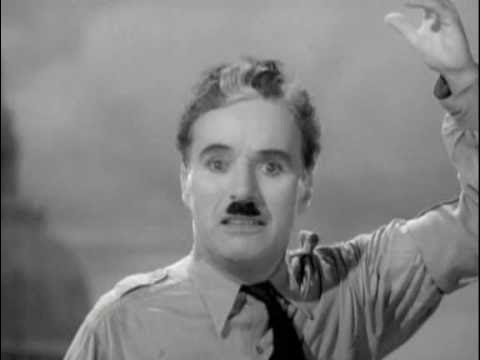
Now that its been in my mind a bit, I remembered the Great Dictator speech. So amazing and its from such a long time ago.

Lost Weekend was pretty raw. They certainly weren’t trying to make Ray Milland look pretty.

Two John Cassavetes films: Shadows (1959) and Faces (1968 release, but mostly filmed in '65)

Am I the only one who thinks that Hud is entirely deserving of it’s 7 Academy Award nominations? Ok, 1963.

Brings to mind The Caine Mutiny – which, so long as I’m thinking of WWII, brings to mind The Best Years Of Our Lives.

How about “On the Waterfront”? If you can overlook the dopey priest, it is a very emotionally raw movie.

The Passion of Joan of Arc (1928) is about as emotionally raw as you can get on film. (There’s a full version on YouTube, with an atrocious soundtrack that should be muted.) I recently re-watched Battleship Potemkin as well, and the Odessa Staircase scene still succeeds in all of its propagand-tastically violent and emotional glory.

How about Make Way for Tomorrow? If it doesn’t break your heart, you’re a stronger person than I am.

I was just thinking of that one… “Streetcar Named Desire” would also fit.

I could name many older films that have intense conflict and drama, some also with glossiness. “12 Angry Men” and “To Kill A Mockingbird”, as would “Gone With The Wind” - the latter, of course, containing plenty of gloss with it’s drama.

Two films that seem to me to be rarely mentioned, both from 1941 as it happens, would be “The Shepherd Of The Hills” and “How Green Was My Valley”. The former, directed by Henry Hathaway and starring Harry Carey and John Wayne (in one of his rare roles as a quiet, understated character), is set in the Ozark mountains around 1900, and powerfully depicts the conflicts of the traditional, frankly rather unpleasant, way of life with the not that much better modern way.

The latter is, to my mind, John Ford’s masterpiece, and possibly my all time favourite film. Set in a Welsh mining town in a similar time period to the previous film, it shares a similar theme of the coming of the new, but in this case the new is undeniably destructive, and the collapse of the families, and the way of life, is heartbreaking. The whole cast is outstanding, but Donald Crisp and Maureen O’Hara deserve special praise.

It’s probably also worth mentioning Ford’s adaptation of “The Grapes Of Wrath” from the previous year, starring Henry Fonda. It’s not quite in the same league as the others, mainly because it fails as an adaptation of such an important book, but taken as a film on it’s own terms it’s extraordinary.

Finally, if you want drama, you want to watch some Hitchcock films. There’s many I could list, but “Rear Window” and “North By Northwest” would be good ones to start with.

ETA Just saw you mentioned 12 Angry Men in the OP… Should read better.

The Wages of Fear was on TV a few days ago, and that was pretty intense and gritty.

Let me mention a couple of great old films. This is what passed for emotional rawness back then. I don’t know if you’ll consider it emotionally raw, but I certainly can see it that way.

Do I really need spoiler warnings for these two films? Skip this post if you really have to.

First, Casablanca: Humphrey Bogart’s character is clearly embittered about something of a romantic nature that happened to him back when he lived in Paris. In an early scene a woman who considers herself his girlfriend asks him where he was the previous night and if she’ll see him again soon. He blows her off, making it clear that he owes her no explanations for who he spent the previous night with or whether he’ll spend that night or any other night with her.

Then we find why he’s so embittered. The woman who dumped him in Paris enters his nightclub with another man. In a flashback we learn that the two of them were supposed to leave Paris together by train just before the German took over the city. She sent a note to the train station that he would get just before the train left saying that he had to leave without her and she could never see him again. In a later scene, she tried to explain to him why she had to let him go by himself. He asks her if she dumped him for the man she’s with now or if there were many other men between him and that man.

Second, The Maltese Falcon: Humphrey Bogart’s character is a detective whose partner in his detective agency has just been killed. He never particularly liked his partner. A woman comes into his office and hires him to do a job. The two of them soon fall in love. At the end of the movie, after doing the job she hired him for, he tells her that he has realized that she killed his partner. He says that it doesn’t matter that he loves her and it doesn’t matter that he didn’t like the partner. When his partner is killed, a detective has to do something about it. He’s going to turn her in to the police, knowing that there’s a good chance that she’ll be hung for her crime.

The emotion in Citizen Kane is pretty raw. Such an angry, regretful, bitter man.

Some more that might fill the criteria:

Force of Evil, where John Garfield betrays his brother.
Most of I Was a Fugitive from a Chain Gang, a film that spurred reform of the prison system due to its raw portrayal of prison life.
The Body Snatcher – Boris Karloff’s performance deserved an Oscar
M, most notably for the final scene
The Last Laugh, especially if you ignore the tacked-on studio ending.
Greed
I Walked with a Zombie – some very tense moments (this is the voodoo type of zombie, and the story is based on Jane Eyre).
Cat People – one of the most underrated horror films.
Paths of Glory

Doesn’t get much more raw than that. Also The Hustler, Cool Hand Luke and Hombre, Newman’s H movies. Nothing glossy in any of them, and plenty of raw emotion.

How about Treasure of the Sierra Madre?

Boxing movies are usually raw. For the life of me, I can’t remember the name of the one with the alcoholic barfly – the actress died just last year. She was brilliant, and may have been nominated for an Oscar.

Someone will remember.

I’m no film historian, but I wonder if maybe the Motion Picture Production Code had something to do with the emotional glossiness? Real raw emotion might lead the audience too close to questioning the morals. And anyway, with a depression/world war/cold war on, showing characters as being too unhappy might foster cynicism, and where would America be then?