No, it’s not going to knock the moon out of its orbit, or anything like that.
Space tracking expert Bill Gray predicts an impact of 5,400mph (8,700km/h) – seven times the speed of sound
Unscientific journalism like this annoys me. What is “the speed of sound”? In air, it depends on density and hence altitude. It’s much faster in water. In empty space or on the moon, the speed of sound is precisely zero.
Anyway, my only take on this is that after cluttering up the Earth and low Earth orbit with all his junk, Elmo is now cluttering up the moon. It’s actually more interesting watching meteors impact the moon, because the energy level is usually much higher, and when they impact the night side of the moon, you can see distinct flashes of light, a testament to the enormous energies involved.
It’s the whole “out of control drifting rocket debris” that ticks me off. Luckily, this time, it’s landing where it’s unlikely to do any serious damage. But I’m as ticked about this as I was about the Chinese satellite bits that were going to fall “somewhere in this general area” a few years back. I don’t even recall exactly where it was, but just the sheer irresponsibility of allowing that to happen so randomly is enough.
Our modern space programs are capable of calculating and controlling where every tiny speck of debris ends up. They just don’t want to spend that much money or employ that many people. It’s unacceptable.
It doesn’t need to be pushing the moon out of orbit to be irresponsible.
I doubt this.
~Max
How about we just say that they’re capable of more responsible control of space junk than is currently being exercised?


“Having made a mess of Earth, they’ll move to outer space.”
— Mr. Spock
Accompanied by this:

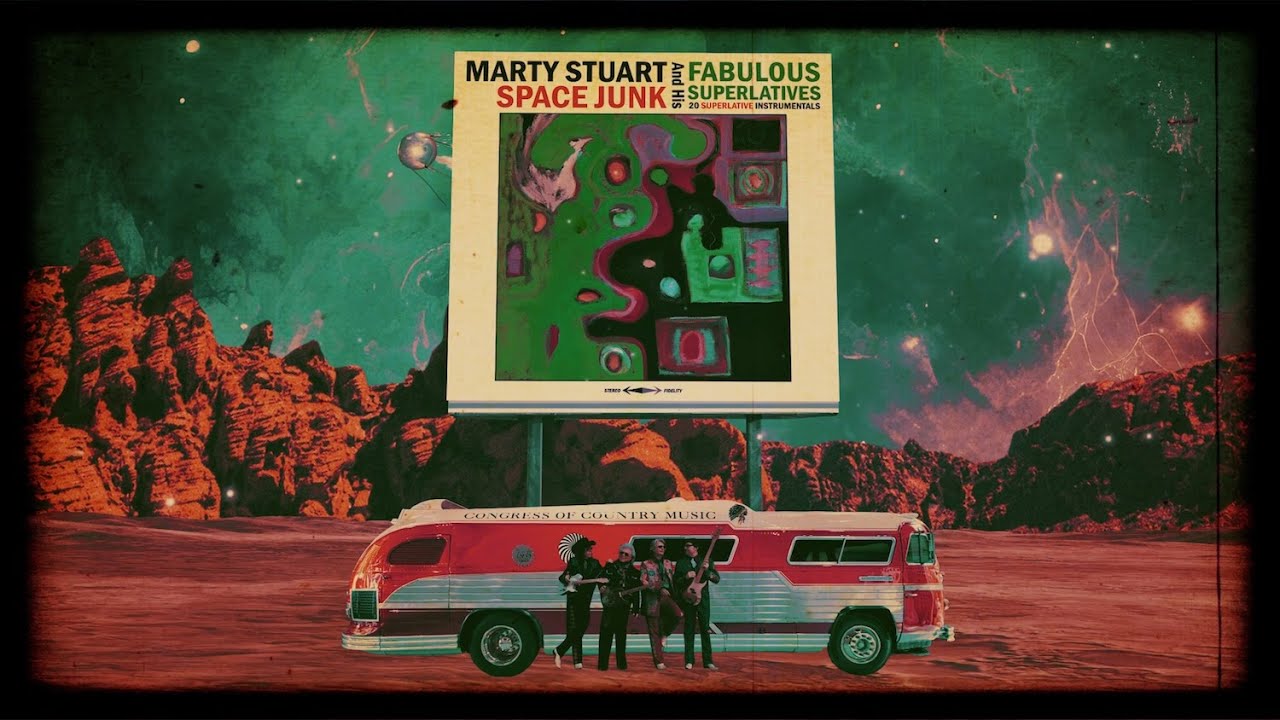
When it comes to Space Junk, I think Marty Stuart’s version is both fabulous and superlative:
So, you are saying spent rocket stages should have maneuvering ability to avoid hitting…a dead rock that gets pummeled every moment of every day naturally?
*2027*
It finally happens, the undisputed extraterrestrial ship is seen approaching Earth. Scientists and media all over the world panic, committees are formed to suggest the best approach to the imminent contact. The trajectory is calculated and disputed. It’s responding to signals, but which country is it going to land in? What are they here for, how do we respond? The whole world is talking of one subject.
The people of earth finally, for one glorious day, come together to build a welcoming committee. The finest linguists, physicists anyone with any clout at all, jostle to be there, on the day of days. Will this be a gift of the next stage in technology? An invite to a galactic consortium? War? Should we display strength or friendliness? The landing site is determined, the people and cameras gather.
The ship lands.
The dust settles, and the door cracks open.
The human selected for this momentous occasion steps forwards, in the manner chosen by the welcome committee. The being unfolds from the ship. In one of its many digits is a metal box, which is hand to the shaking person, retreats to the ship, and is gone.
The bewildered committee gather to open the box, is this a declaration of war? Will the ship return? The catches are awkward for human hands, but it is opens to reveal…
… an inscribed tablet with a 500,000 qiiirkdollar fine for galactic littering. Payment to double if not made within 1 year.
It just ain’t worth the risk.
I wouldn’t know Marty Stuart if I fell over him, but —
I. LIKE. THAT. VIDEO!
Capable, yes. Give a damn about not so much. Until it’s too late.
An analysis in 2025 reported that a large solar storm could knock out the ability to issue avoidance maneuvers of satellites long enough to result in collisions, thus potentially setting into motion a Kessler syndrome, and that there would be less than about three days to take action.[52] This was significantly worse than in 2018 when there were fewer satellites in orbit.[52]
Those are your words, not mine. I am saying that their disposal should be planned and controlled, not left to chance. And I think I said it pretty clearly. Your re-framing feels purposefully dense.
Moon: “I had a half century of peace and quiet but now, I see, I’m got to deal with these assholes all over again.” LOL
Okay, then I’ll just rephrase my response that I think a spent stage striking the moon is an extremely unimportant nothingburger. Out of the list of possible things to be angry about, it lists in approximately 10 millionth place.
Maybe 1000 years from now some scientists want to use a very specific isotope from the lunar regolith to answer some seriously important question about the fundamentals of the universe, but their samples are all tainted with SpaceX dust. And they’ll say, “Yeah, but at least a millennium ago some company was able to slightly increase their shareholder value by not caring about this.”
I’m just sick of for-profit companies never dealing with their externalities. We only get one moon, just like we only get one Earth. Why compromise any of it over stupid stuff?
Maybe. Or maybe you aren’t clear on the extent of the problem.
Are you under the mistaken impression that spent rocket stages haven’t been crashing into the moon for decades?
https://www.discovermagazine.com/this-apollo-rocket-stage-was-smashed-for-science-5796
I knew about the NASA one, and I have opinions on how cavalier the early space program was. I did not know about the one from 4 years ago, and I feel the same about it as I do this current one. “Someone looted Egyptian tombs in the past” isn’t really a good case for continuing to loot Egyptian tombs, so we stopped allowing that.
Obviously I have no idea if this or any other moon impact will impede research in the future, but scientists have been vocal about the amount of stuff being flung into orbit for years. I think we should all be more concerned about protecting resources for future generations, even if that resource seems “useless” now. 400,000 years of human existence and we act like we have to do everything now now now.
The NASA 5. Apollos 13-17. Not to mention the crashing ascent modules from all of the Apollo landers after returning the astronuts to lunar orbit. And every other crashed lunar probe from various countries over the years, including one of the two lunar landers launched by the SpaceX upper stage in the news.
Like I said, I have opinions about how cavalier the early space program was. But I learned two things today, so I appreciate that.