I was watching a tractor hook up to a trailer in our parking lot and was wondering how much stress the fifth wheel and the chassis frame were subjected to when the pulling away from a stop and when in motion.
Does the momentum of the trailer reduce the stresses on the above while in motion ?
I know the drawbar horsepower of the engine would be max when pulling from a stop and would it be a function of the load being hauled, at speed ?
At speed it is just enough to overcome deceleration forces such as friction and drag. From a stop it would be a function of the acceleration and the mass accelerated. These two are fundamentally the same thing, it’s all just acceleration.
My BIL drove big trucks for a living for a few years. You know, the ones with a wide, greasy plate for the hitch with a big hole in the middle. I asked him how big the latch is that holds the trailer on. He said, “You don’t want to know.”
The Tappet brothers, Click and Clack, had a puzzler about trains and couplings. The answer turned on the fact that locomotives have to go into reverse briefly before stopping to put slack in the couplings. If the locomotives stop with all the couplings under tension there’s not enough friction to start the whole train at once. That bang! bang! bang! as each car takes up the slack and starts moving is a feature and not a bug.
I spent my life working on big rigs. The latch is actually very strong. Even in accidents where both the truck and trailer are completely destroyed you will seldom see them uncoupled. The late will usually rip out of the trailer and stay on the tractor.
I’ve seen accident photos where the tractor, or trailer, is actually hanging off a bridge or viaduct and only held by that coupling.
Small is good. The latch is basically two jaws that grab onto the kingpin (and using the base plate for support). Some levers amplify the action used to move the jaws, something like a beefy boltcutter. They only need to move a couple of inches. They also only need to restrict movement in one direction, which is 90 degrees from the movement of the jaws. Hence they can carry a much higher load than that used to clamp them together.
That’s not accurate. As the kingpin slides into the ‘jaws’ it triggers a locking bar, moved by a powerful spring, to come across the opening,
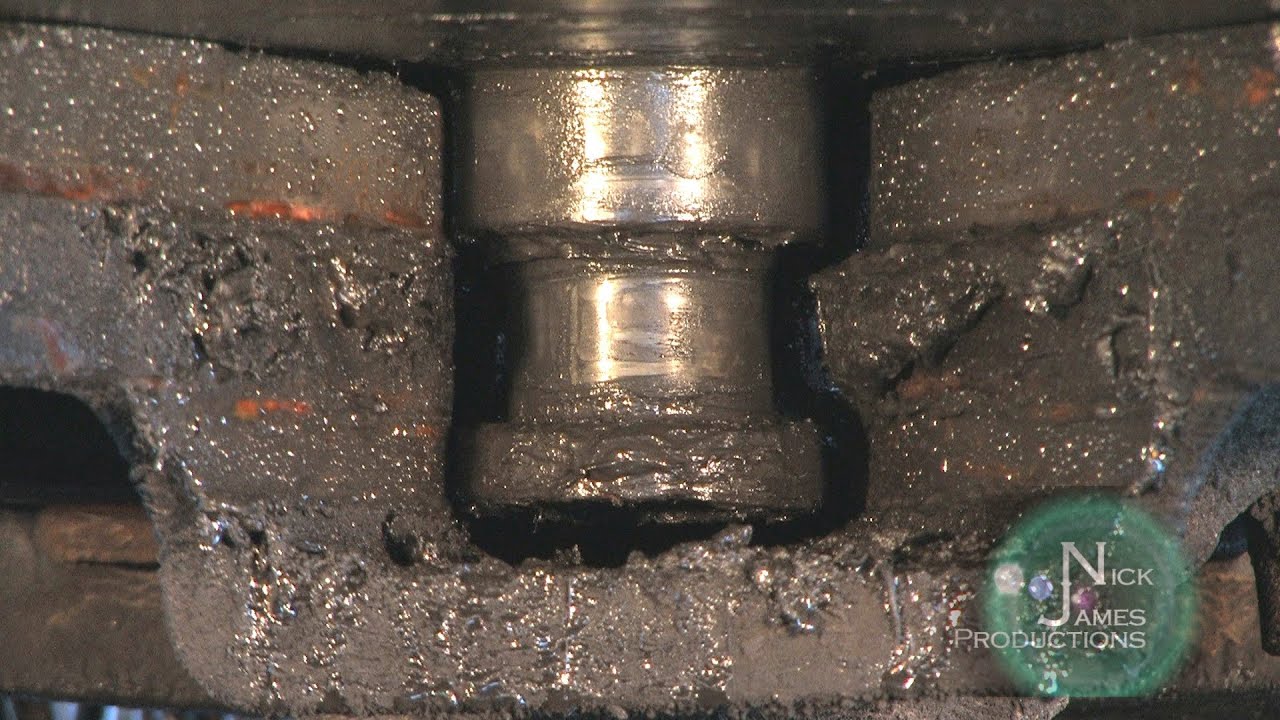
It looks like there are multiple styles. You can see the type I was referring to here:
