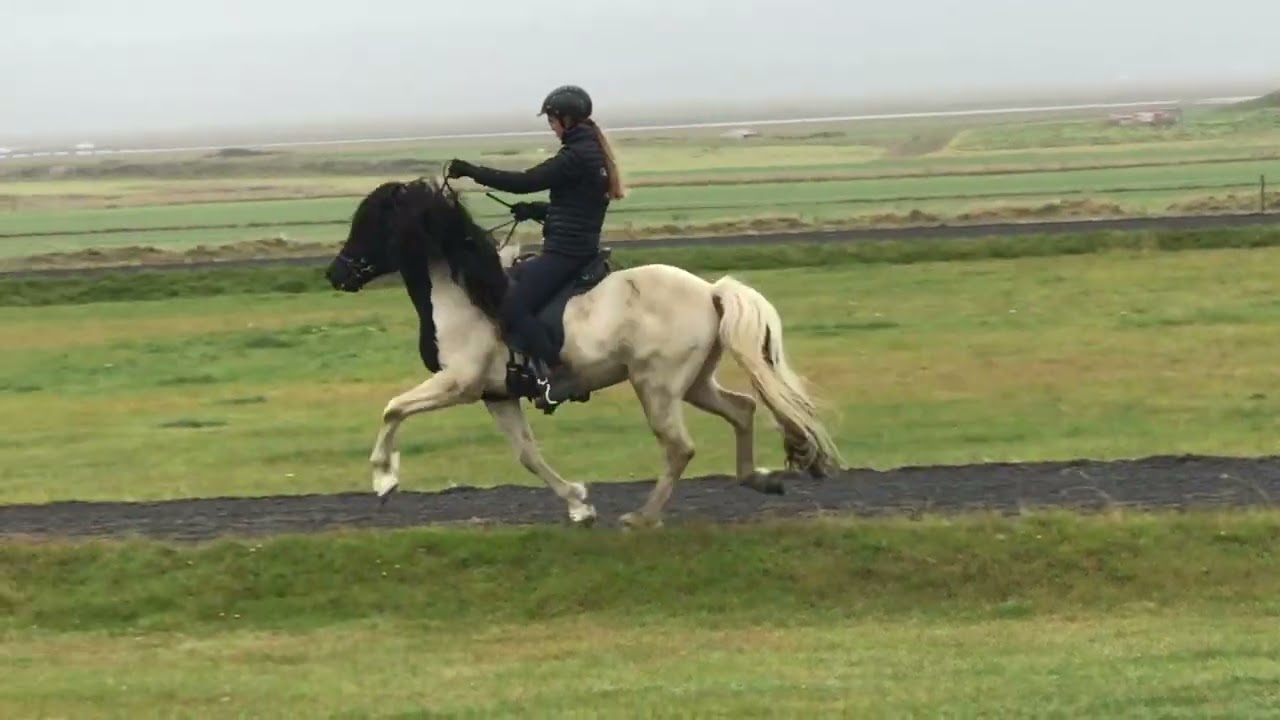
I’ve noticed in many Westerns the horse bobs his head up and down when ridden by an actor.
I see it often when an actor mounts the horse and is supposed to ride confidently down the street. The violent bobbing horse head gives away that the horse is not happy. Sometimes it looks like the horse is almost ready to rear up.
The closest I could find on youtube is this Grey horse. Jump to 1:12, its right after the shoot out. The grey can be seen twice. The first time the actor is trying to get the horse moving and his head/neck movement shows strong resistance. The 2nd time the grey is running but still resisting by twisting his neck.
Whats the actor doing wrong?
I looked and looked for a calm scene riding down a street. This is the best I could find.
I’ll start by saying that I’m not a horse person. Never ridden one, only been close to one a few times. I have, however, seen a lot of them in movies and on television.
I didn’t see anything unusual in your clip, but maybe that’s because I don’t have a lot of real-life horse experience to spot the difference (although, I am close to beating the video game, Red Dead Redemption 2, and have had a lot of horse experience there, if that counts for anything).
It’s much more obvious in a scene where an actor mounts and rides calmly down the street. Two horses are calmly walking and the 3rd is strongly jerking his head. It looks like he’s fighting the reins. I always thought it was an inexperienced actor on the horse, but that’s just an assumption.
I see it often in Westerns. But searched and searched YouTube with no luck.
I’m pretty sure that’s not true. Not even all horses have the same gaits. The tölt, for example, is a gait that is possible mainly by Icelandic horses, due to a mutation in that breed.
Does that horse have all the same gaits and also its very special gait due to breeding/training in an isolated setting or are you saying all four-legged animals each do their own thing with no commonality?
ETA:
Dogs basically use 6 basic gaits: walk, trot, canter, gallop, amble, and pace. SOURCE
Horses do the same (except your special horse). SOURCE
The link is correct. At 1:12 the men on horses are shot. Right after that it cuts to three men on horses on a hillside.
The grey horse is rearing up his head and shaking it.
It’s not the example I wanted. But that’s all I could find.
Which is weird. How many hundreds of times have we seen cowboys leave a saloon, mount the horse, and ride off? It’s a standard scene in Western tv and movies.
Horses bob their heads naturally, much like pigeons or chickens do when they walk. They don’t think about it; it’s just what they do. It is especially pronounced when they gallop, but it can be somewhat perceived when they walk.
As a longtime horseplayer, I’ve seen thousands of horses race at a full gallop. All their heads bob when they run. Close finishes always call for a photo finish, and if the finish is especially close, we’ll agree that “it’s down to the head bobs.”
In short, horses’ heads bob, because that’s what horses do when they move.
It might be that they could all use the same gaits, if you went to the trouble to train them, but they certainly don’t all use the same gaits naturally. Dogs, for instance, like humans, will naturally walk with their forelimbs out of synch with their hindlimbs, while cats will naturally walk with their fore and hind limbs in synch. And to take the human example, because it’s familiar, a human can synch our arms with our legs, but it takes a bit of thinking about it.
While dogs can both trot and pace, I’ve noticed that most don’t use the pace much aside from my girl dog, who paces a lot of the time. She even walks (speed) at the pace (gait) fairly often. She’s the only dog I’ve ever really noticed favors the pacing gait over the trot. She’s a weirdo.
That strikes me as the horse in question either was (a) momentarily spooked by the loud sound of the gunfire, (b) momentarily spooked by the other horses moving, or (c) its rider was pulling on his reins.
I have ridden horses quite a few times in my life. Been around them a bit. Once I was required to brush and saddle the horse I was going to ride before I was allowed to ride her. Then remove it and brush her down. In the times I was around them I often noticed them doing pronounced head bobbing while stationary. It often seemed to be some form of acknowledgement of your presence. But that is just a guess. A couple of head bobs. The horse would be in a calm mood, so it did not seem to indicate any distress or annoyance. It reminds me of people seeing you and giving a nod as a form of hello. But it might be a, oh crap, here comes that idiot wanting to ride me again, head bob.
This is a complicated question. I’ve been a horse person (hobby and professionally) all my life, and I’m over 60.
I think the grey horse you are referring to is actually a roan? Sort of a reddish hue with a lot of white in it? That horse galloping off with his nose in the air is probably reacting to the bit in his mouth - wanting to gallop off faster than his rider wants, and he’s trying to avoid the “whoa” from the bit.
Horses naturally use their head and neck to balance. The head goes up when the engine engages, like that roan taking off uphill, or if they are having trouble balancing they’ll raise their neck, sort of like extending your arms when you feel unsteady. A very well schooled horse is taught to use their body and develop musculature so they can balance with their neck level and steady, and more or less where the rider wants it. That takes years of dedicated training just like any athlete. These movie horses are not generally trained that way, they are trained to put up with a lot mentally and situationally, but it’s not the athletic training of a competition horse.
Very basically, horses will flip their heads up or yank their necks up and down for several reasons:
As a basic expression of irritation. For instance, at standing still when they want to move
As a reaction to the pressure on their spine from a person mounting
Trying to evade bit pressure (not necessarily pain, though it can be, but also because they don’t want to do what’s being asked), or
because it is easier to lighten the front legs to start moving than engage all their core muscles to move from the hind end stepping under while carrying weight.
Reaction to flies
A sore-backed horse will change their body posture (yank down, flip up) to try and relieve saddle pressure
Some horse develop a head tossing tic, as it were, much in the same way people jiggle a knee when they are still but their mind is going 1000mph
Most of the time it is rider influenced, but it’s not always bad riding or training. It’s generally a communication lapse, a lack of strength overall, or just the horse expressing opinions in a relatively polite manner.