How about these two Twilight Zone episodes…
- Astronauts get launched from Earth, and somehow end up on an unknown Earth-like planet. Oh, surprise - it’s Earth!
- There is a person living on an Asteroid that has a breathable atmosphere.
How about these two Twilight Zone episodes…
Bruce Almighty, where he brings the Moon closer- which would more or less very likely destroy both.
I don’t think you can fairly criticize a miracle for not obeying the laws of physics.
In 1946’s The Killers, Vince Barnett tells Burt Lancaster of his love for the stars. As he looks out the jailhouse window, he says he sees Orion and the prominent star Betelgeuse. He also says Orion is the “Great Bear,” and Betelgeuse is the “brightest star in the sky.” Orion is actually The Hunter, and Ursa Major (containing the Big Dipper) is the Great Bear. Betelgeuse, while quite bright, is the 10th brightest star. Sirius is the brightest star in the night sky..
In Independence Day, the invaders’ mothership is one-fourth the size of the Moon, which would wreak all hell with the tides.
Siriusly?
But… Based on the layout of their continents… They’re not on Earth… But their planet is canonically confirmed to be in the same location in the Galaxy?
But the Moon is a solid mass of rock and dust while their mothership, presumably, is not.
I haven’t seen it, but in The Green Berets, John Wayne supposedly watches the sun set in the east.
I addressed this for the TV Tropes entry for Earth All Along (in fact I just cleaned it up a bit)–tl;dr the astronauts in question would truly have to be completely obtuse and ignorant, just staggeringly oblivious to the most obvious indications that they never actually left their home planet, unless it is a situation in the far far future (or past). Meaning their training just utterly failed to prepare them for the mission they were ostensibly trained to be total experts in, not a single learned individual among any of the crew to notice the similarities. I mentioned how in these stories (such as Planet of the Apes, the trope codifier) that the Moon is often absent in these stories, because as soon as it rises the gig is completely up.
But you’d have all sorts of life forms which would look uncannily like those from Earth (forget bipedal sentient apes, how about horses?). Basically both the characters and the audience would have bought into the whole supertrope of Earthlike planets, with Earthlife biology, are everywhere you go, and the appearance of life forms very similar if not identical to those from our home planet would thus be completely unremarkable to them, and likewise to the audience who also wouldn’t challenge it. “Hmm…space horses? Sure, why not, let’s go with that, gang!”
[back more on topic] There’s also constellations too, and the 5 naked eye planets-did they get blown up, too?
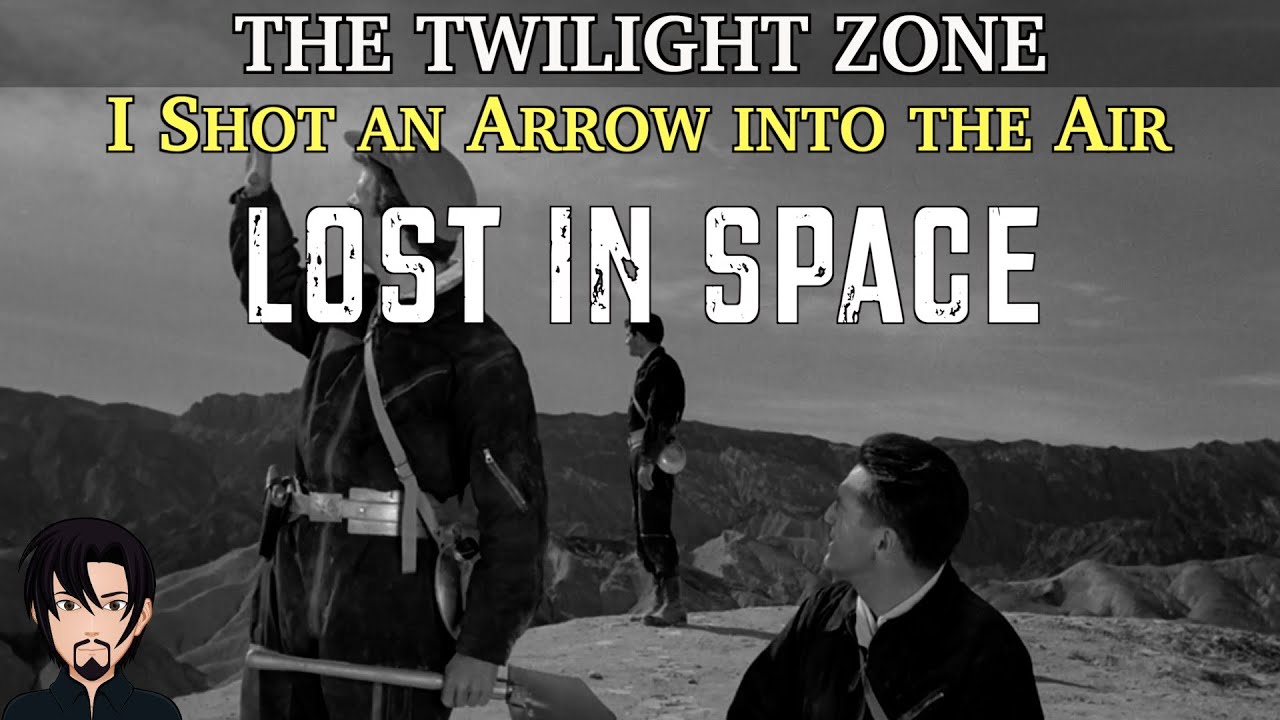
In a Twilight Zone Episode- I shot an Arrow into the Air- they land in a desolate desert, with no signs of life. (Season 1, Episode 15)
But they did 2 or 3 similar plots.
I think this fits.

I think it is easier to list the ones that aren’t glaring mistakes.
Here’s the list.
1)
IN STTNG Ensign Ro, she claims that the planet where the Bajorans are on is “13K kilometers from the Cardassian border”. Say what? Does the border follow the planet around its star? You can be 13K kilometers away and still be on the planet!
(from memory. At least the distances in the episode were ridiculous!)
Yeah, it’s definitely weird. I think their world is supposed to be a far-future Earth. At least, far-future by human timescales, but that’s nothing to the stars. Which still leaves the question of the continents, but, um, a bender did it.
So they think that they somehow managed to cross interstellar space, and just happened to end up close enough to some other planet to land on it?
The now-almost-completed webcomic Darths and Droids managed to actually come up with an explanation for that one: The beam from the Starkiller (and the Death Stars, but they were too small-scale to notice) travels at c, but backwards in time. The planet that they shot was actually destroyed decades earlier, except that at the time, nobody knew how it happened. And so there’s been all of those decades since for the scattered light from the beam to reach all of the other planets that watched it propagating across the sky.
It was painted the the mirror image when it was constructed in 1913 (except for Orion, for some reason). When it was updated in the 1990s, they opted to keep it with the mirror image.
In Splash, Madison the mermaid tells Tom Hanks that she only has six fun-filled days in NY because she must return to the ocean when the moon is full again. And they keep showing the moon getting fuller as their time together goes on. But the movie keeps showing a waning moon in the sky with the dark side to the right instead of a waxing moon with the dark side to the left.
Every freakin sequence (pick your movie/TV episode) that involves flying into a field of asteroids or other objects (e.g., the mines in Galaxy Quest).
And I am sure there was an episode of Star Trek: the Next Generation in which I heard Riker say, “Put the ship in a stationary orbit over the south pole.”
In episode one of Firefly Serenity is travelling at a speed that will take it from one planet to another in a few days, so it must be going hundreds of thousands of kilometres per hour, but when they come across a Reaver ship on reciprocal course they pass each other at walking pace
In TOS’s “Tomorrow Was Yesterday,” it takes the Enterprise several minutes to reach lightspeed in the 93 million miles between the Sun and Earth. They must have been spiraling instead of following a straight course.
JJ Abrams did the same thing in Star Trek 2009, where Kirk can see the destruction of Vulcan in the sky in real-time even though he’s marooned on an ice planet in another solar system. He really doesn’t seem to get how big space is.