The NHS doctor’s strike is not getting a lot attention in the U.S., but I did run across a reference to it on Cracked.com (of all places) and in this CBS News online article. The article prompts a few questions from this American, though, based on this paragraph:
The strike reflects the impasse between the government and the junior doctors, who are physicians with up to 10 years’ experience, over the government’s pledge to greatly expand National Health Service care on weekends.
1) What NHS care had been previously unavailable on weekends? I assume emergency care (car accidents, etc.) was always readily available. Was it just that patients couldn’t get in to see a doctor for minor ailments over a weekend? For instance, if someone came down with a bad sinus infection Friday evening, would that person have been forced to wait until Monday morning to be seen by a doctor and prescribed medication?
2) Why aren’t the interests of junior doctors and senior (?) doctors more aligned? It appears to be a case where junior doctors were leaned on heavily to do less desirable work of some sort. But what are the specifics?
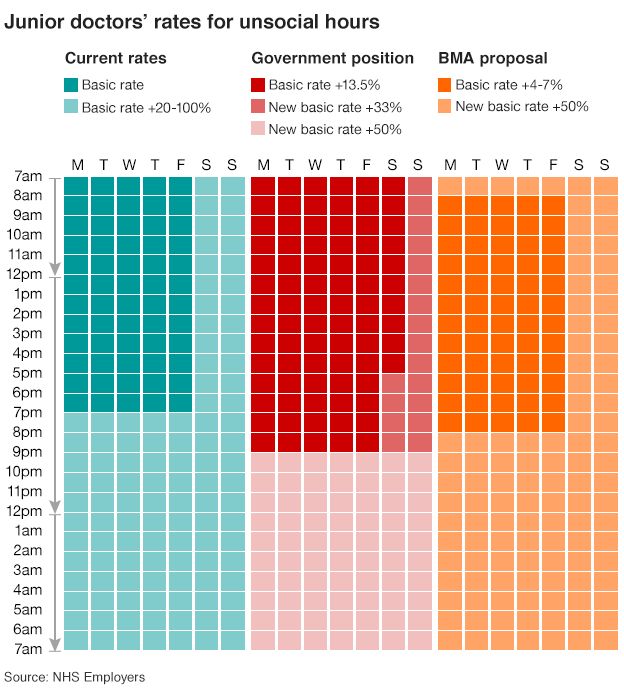
3) Are there no hours-&-compensation compromises on the table? For instance, I can understand junior doctors not wanting to go from 5-day weeks to 6- or 7-day weeks without additional compensation. But if the issue is not so much compensation and it’s more about “we don’t want to work weekends!” … well, I don’t know about the U.K., but in the U.S. “physician” is not usually considered a 9-to-5 Mon-Fri desk job though I know a lot of doctors can arrange their private practices to run in line with usual business hours. But for the junior doctors in the U.K. – has it been proposed that they’d still work 40 hours (or whatever it has been), but it’s just that those hours would be spread out differently? Or that they could not longer count on being off on Saturdays and Sundays, but would instead always have two other days off each week?
Thanks in advance to any clarity anyone can provide.