Also, just because it’s a house doesn’t mean it has a ton of value. In some of the worser parts of Minneapolis, you can buy a three- or four-bedroom home, fully two stories, some for $8000 or so. In these less desireable parts, the houses just don’t retain the value you see in traditional suburbs. My husband knows a low-income couple that scrapes together the capital to buy one of these houses, then fixes it up and sells it for twice what they paid, and we’re still only talking $10,000 to $20,000 sale prices.
I’m certain that some aren’t that great inside, but there’s probably an equal number that rival my own home in suburbia.
The really ghetto neighborhoods around here all have this pattern:
Thirty years ago, hardworking black people bought a house. They (or more likely just the widowed wife) still own it.
They had a big family.
Their grandkids, nephews, black sheep sons, etc. get evicted and come and live with them ten to a house.
Whoops, there goes the neighborhood!
Seriously, most of those houses are owned outright, at least around here, by decent people. It’s the hangers-on that cause the trouble, and you wouldn’t believe how fast it goes downhill.
You can check the prices on realtor.com if you have the zip code.
I looked into condos in San Diego (which has one of the highest costs of living in the US). If you buy a small condo in the ghetto (city heights El Cajon area) that was built in the last 20-30 years, they can be had for 50-60k. So a mortgage on that is only $250/month.
No idea about single family homes in south central LA, but the prices may be under 150k or so which would make a monthly mortgage of $750 affordable to a family with 2 wage earners.
A while ago, when I was considering jobs in Los Angeles, I found that rents were fairly reasonable compared to buying. I’ve seen this in other boom markets, like the early 2000s in Denver; a house in my neighborhood that would sell for $250K would rent for $900 a month or so.
What I wonder about is how poor people pull it off in places where both buying and renting is expensive, like NYC or San Francisco. Section 8 might help, but a lot of landlords (me, for one) don’t take Section 8 tenants; it’s too much trouble.
$150K isn’t what I would call a cheap house for someone that’s poor.
From your use of the term “flats”, I’m guessing you come from the UK or Europe.
So you probably don’t comprehend the physical size of US cities. The city of Los Angeles (not including any of the suburbs) is almost the same size as all of the ‘Greater London’ area; the whole Los Angeles metro area is about 7 times bigger than ‘Greater London’.
With that much land available, it’s much easier to have lots of detached houses, and they are cheaper to build than apartment buildings. And most people would much rather live & own a house than stay in an apartment.
This is just me going off of what I vaguely remember from a class I took in college, so someone is more than welcome to hop in and correct me here, but:
Most of the neighborhoods in the LA area that are now considered “black” neighborhoods were once very affluent, exclusively white areas. After WW2 veterans got back, many African Americans were finally able to buy houses due to the GI Bill affording them financing for the first time in history.
Real estate agents, very much aware of the latent racism a lot folks had, would go through an all white neighborhood and warn them that blacks were going to be moving in. The agent would offer to buy the house, but often get rejected. The agent would eventually arrange for a sale of a neighborhood home to an African American family, then go back through the neighborhood (where the white women would be clutching their pearls with fear) and give the family an incredibly low ball offer on the house, much lower than previously offered. Most families would eventually sell. Then, the agent would turn around and sell the house to the black family at an inflated price, making a huge commission. This was called block busting.
Anywho, so all the rich white people moved out of Watts in what was called the “white flight” and it became a predominantly black neighborhood. Houses are passed down from family to family, etc. and so forth.
Hope that gives you a little insight for your question!
Na, I have friends in Michigan who regularly use the word “flat.” Apparently, there is even a difference between a flat an apartment. Who knew?
Because they’re talking to a Brit, or are Brits themselves? I’m a Michigan native, and while I understand “flat,” I can’t think of a single person that would use it amongst our common selves.
FWIW, the same thing goes in Michigan as is described above, at least for SE Michigan. Blacks came from the south, found they were able to work for a decent wage, and bought land. Then came the 60’s. White flight to the suburbs. Detroit property becomes even cheaper, meaning even more blacks (less affluent than the workers) are able to afford housing. Of course this begs the question: why where there never apartments? As above, there was plenty of land. As a Michigander, I’m admittedly prejudiced against “high rises.” I think of them as ghettos. Imagine my surprise when I work in the Greater Toronto Area for a year, see many high-rise buildings (thinking they’re Canadian ghettos), and being informed that those are luxury accommodations! I’m not talking the downtown core where land is tight; I’m talking about shitholes like Mississauga!
It all has to do with what your expectations are.
For example, in SE Michigan, I consider my 1/2 acre an affordable luxury. In Western Michigan for 1/3 the money, I’d have 10 acres with the same size house. For three times the money in the aforementioned Mississauga, I’d be stuck in some stupid “semi-detached” (their wording for duplex with shared land) with a bit of drywall separating me from my neighbor.
And certainly there are Dopers who will say that I live incredibly richly, and others that pity my meager 1/2 acre, for the same amount of money and lifestyle. And as a human being, I pity the former, and envy the latter!
You know, I live in Michigan, but I’m not from here, so I don’t claim to be an expert, but I’ve never heard anyone use the word “flat” here. OTOH, in Chicago, there is a specific kind of apartment called a “two-flat” (or “three-flat”, but they’re not as common).
I grew up calling the apartment I lived in in San Francisco a flat. I’m not sure what that was all about, in retrospect. (My mom’s BFF is British and my mom, who’s a bit of an Anglophile, may have adopted it from her.)
In San Francisco, last I checked Bayview-Hunters Point had the highest home-ownership rate in the City. There are also more houses and fewer apartments there, and the population is probably less dense.
I have heard my San Francisco Bay area friends refer to “flats” as distinct from “apartments.” The difference being, a flat is an old building (usually a Victorian) that started out as a SFR but has been carved up into rented units, while an apartment was built to be a multiple-unit building.
It made sense to me. But I’ve never heard that usage down here in L.A. - probably because we tear our old buildings down a lot faster.
That jibes wtih what my friend told me when she lived in SF. She explained that “flat” was generally used for apartments that stretched from the front to the back of a building. Like when a townhouse has been converted so that each floor is now a separate apartment.
In Buffalo and Cleveland, there’s the two-flat; a duplex house with two identical large apartments, one above the other. Locals in Buffalo will refer to apartments in two-flats as “flats”, more specifically “upper flat” and “lower flat”, but other types of apartments are just “apartments”.
Yep, that’s how I use the term (I’m in Michigan :)). I got it from my parents, who lived in an upper flat when they first got married. Now that I’m married, my husband and I live in the lower flat of a two-flat. But before that, I lived in a studio apartment in an 8 apartment building, and my husband lived in an apartment in a different building.
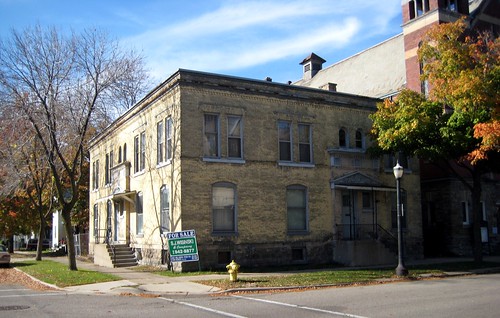
This is an example of a two-flat; the first floor and second floor are completely separate apartments (you may have two separate exterior entrances, or, like in mine, there’s a common front door that goes to a tiny vestibule that has the door to the lower flat and the door that goes to the stairs of the upper flat). The two floors are each a flat, not an apartment.
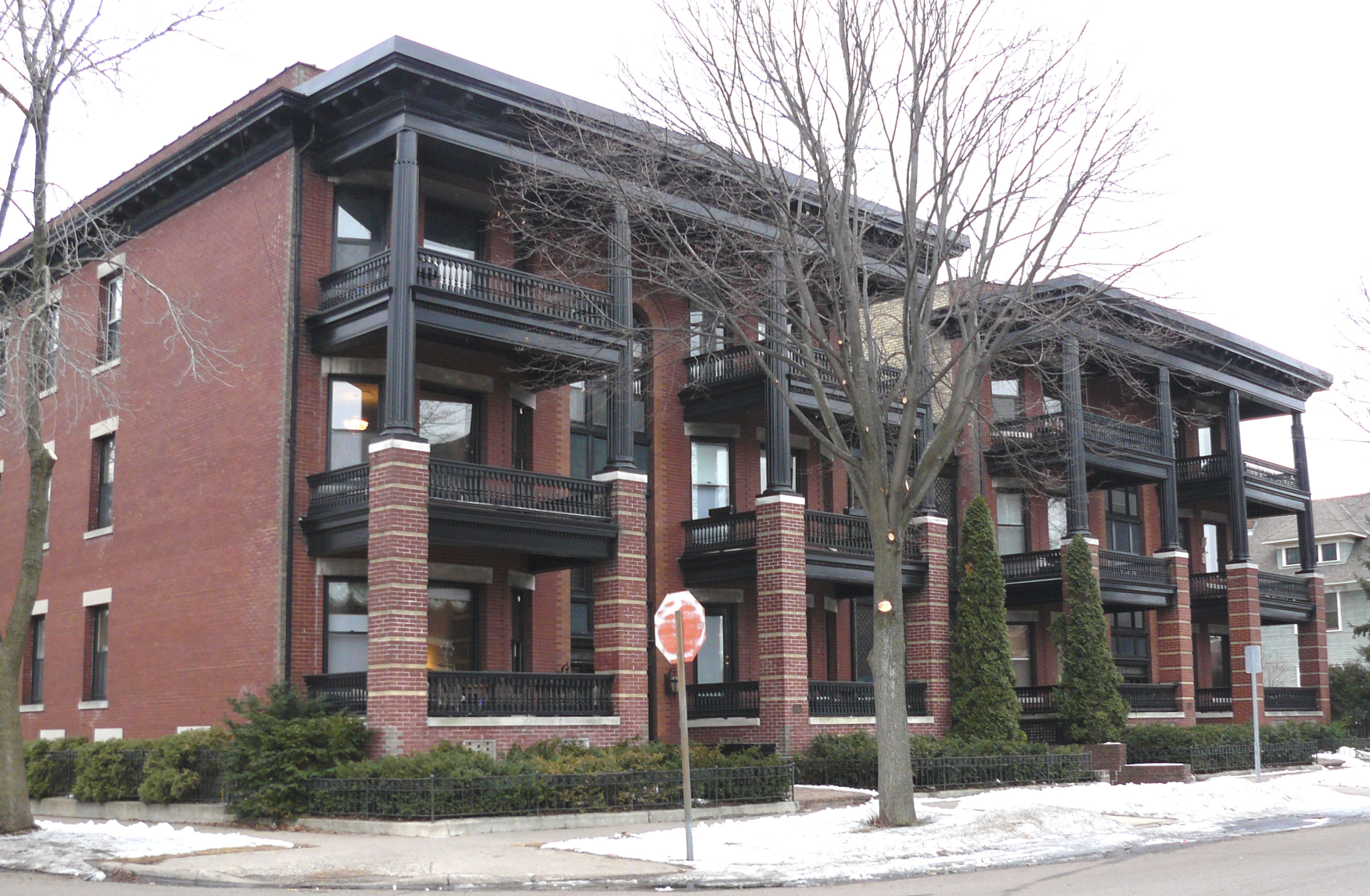
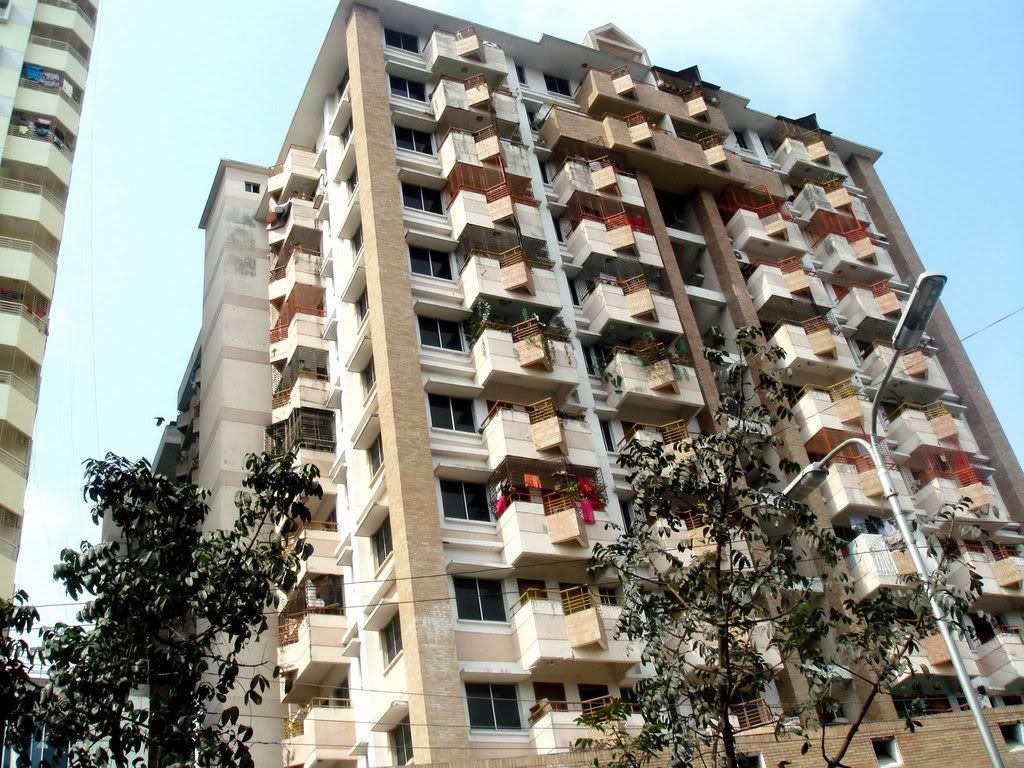
I’d call allofthese apartment buildings and the dwellings within are apartments.