How do pets and animals react to trans people?

Among animals that notice human sexuality and gender at all (like some pet dogs), how do they respond to trans individuals? Does it matter if it’s an owner they’ve lived with for a while vs a stranger they’re encountering for the first time?

I’m thinking more things like hormonal changes causing differences in voice pitch, scent, etc., but also things like name/pronoun changes (“go find mommy/daddy!”) or even behavioral differences if someone starts acting differently during or after a transition.

Have there been any notable studies on the topic? Anecdotes welcome too.

WAG: you can’t change your aroma and certain mannerisms are ingrained and your dog picked up on those 30 seconds after you adopted him/her. They’ve got your number.

I dunno; dogs can sometimes react to very superficial features, as well. I’ve met dogs who based their opinion of someone on whether they wore glasses, or had a beard. So they might be going by smell or pheromones, or they might be going by things like “wearing a skirt”. Or probably, different cues for different dogs, among those who even care at all.

I don’t think dogs understand “mommy” and “daddy” to have any meaning at all, beyond a name for a specific individual. It’s no different from “Go find Alex”.

I can say with certainty that our if our dog notices when I’m presenting authenticly, she doesn’t seem to care.

Counterpoint:

I was wondering about that myself. You think their schnozzes are on time delay of some sort?

One common topic among among trans fems online is how the hormones changed their body odor. They call it “girl smell.”

Taking hormones certainly does change your odor!

Or boy smell. But just like teens all stink, and the boys and girls smell different, trans people on hormones start to smell like the sex that matches their hormones.

When i was in my 30s, my cats treated me differently when i was ovulating. I’m sure dogs can can tell if you are taking hormones.

If the dog was with the person as they started HRT, then the dog would get used to the change in smell over time. The dog would know the person smelled different, but they wouldn’t be confused since they experienced the slow change in smell. But if the person went away for months when they went on HRT, the dog might be confused when the person came back.

A comparison might be when you have two dogs and take one to the vet for a procedure like surgery. The sick dog will have a different scent from the stress and procedures when it comes home. When you get the sick dog home from the vet, the healthy dog might become aggressive towards the sick dog. I’ve heard it’s because the sick dog doesn’t smell the way the healthy dog expects and the healthy dog doesn’t realize it’s the same dog.

I’ve something similar when we took our very fluffy mama cat to the groomer for a lion cut and a shampoo. Her adult sons didn’t recognize her by sight or smell and hissed at her when they got close.

Bird owner (or person owned by bird, if you ask him) chiming in:

Birds are much less smell oriented than dogs and cats. There is some evidence that the sort of bird I have - a conure - is less sensitive to such things than people are, as well as having a less sensitive sense of taste. Their primary senses are sight and hearing.

So a bird is not going to react to hormone-induced changes in body oder in people.

They will react to changes in appearance.

For example: for many, many years I had waist-length hair. A couple years ago I had my braid cut off (no need to get into the reasons here). My bird was VERY upset by this. He very much noticed it and it distressed him. Eventually he came to accept the change.

So pet birds may well react to the changes in appearance that occur during gender affirming transition. How strongly they react would probably depend on how sudden or gradual those changes are. They also get upset when one of the humans in their flock show signs of serious illness or injury, which is instinctual (a sick or injured bird is a target for predators) so surgeries also tend to distress them due to the human being in pain/discomfort, impaired movement, etc. However, as the human recovers and resumes normal activity birds don’t seem to worry about long-term changes. After all, they’re used to us changing our “feathers” every day (when we get dressed) so to them humans changing at least somewhat in appearance is normal.

When our birds have been young a person wearing something unfamiliar, like sunglasses or a hat, could startle/frighten them but over time they learn those are things humans wear and they stop reacting like that. They’re adaptable. They’ll notice if a person starts wearing nail polish or grows a beard or otherwise makes an alteration in appearance but I’m not sure they distinguish human gender.

Birds also are sensitive to sound. They can recognize a person changing their voice from low to high when speaking or interacting with them, and that doesn’t seem to be an issue for them. They themselves can vocalize higher or lower, and often in more complex ways than humans can. Not sure that any vocal changes induced by transition would bother them.

If the bird is around while the human transitions they’ll adapt to the changes. If they aren’t they really might not recognize the person when they return after months or years. Or maybe they would. Birds have a different cognitive existence than we do, we’re not always sure what they’re using as recognition cues. They might be using a combination of appearance and voice, and what they’re using as sight cues might be different than what we use.
Don’t know about dogs; we’re cat people.

I’ve never seen any evidence that cats respond to human gender, though?

I knew this woman. I was over at her place around the time I transitioned. She left me sitting alone in the living room for a while. Her cat walked in and came up to me to be petted. Then she informed me that the cat only goes to women and avoids men, so she set up that test to test me. We’re no longer friends.

Every cat I’ve known has reacted differently to men vs. women in the same household. One common explanation is the generally higher pitched voice of women that cats supposedly gravitate towards. Of course, variables abound.

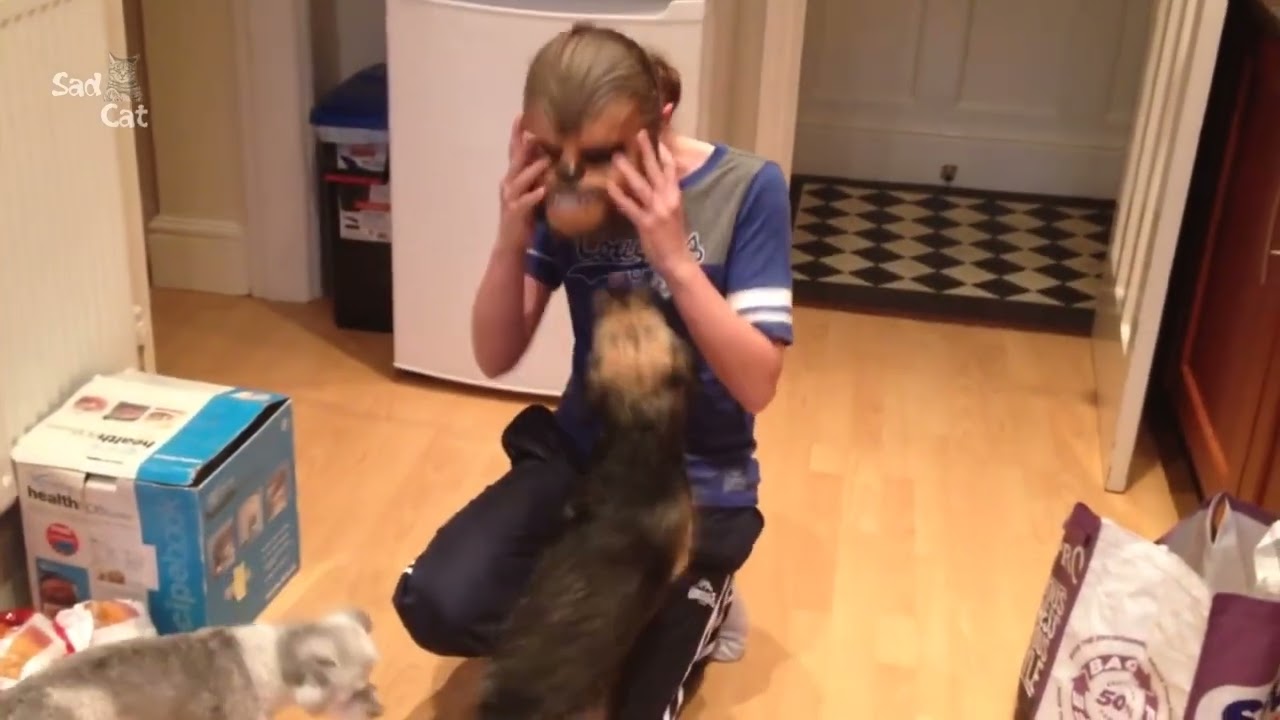
As far as dogs and their scent-filled world, my cousins’ dog would go bonkers the instant someone they knew donned a mask. So they definitely care about the indi-visuals. But I have maybe 1/100th of experience with dogs vs. cats.

I had a cat once that only liked men. Any man was an instant friend, he loved them all, and my husband was “his” person. All women were hated and he would often attack them unprovoked.

Except for my gay niece. She was the only woman he ever tolerated and would even sleep in the bed with her. All we could figure is she read as masculine to him.

I’ve never noticed the cats behaving differently towards women and men, but my cats really did notice when i ovulated.

One of the neighbors had an anxious bitch who had previously been abused by a man. They had to lock her in a separate room when they had male guests over. She totally freaked out, and was sometimes aggressive. She had learned to accept the man and the boy in her household. She was okay with male dogs.

I think “how they react” varies a lot from animal to animal. But i also think most cats and dogs notice the difference between men and women. It’s whether they care that varies.

Before opening this thread, when I saw the thread title this was my guess. But I can also see some dogs that might react to appearances (beard/no, eyeglasses/no, and skirt/no).

Back in ancient times my housemate had a Rottweiler who loved me and was sweet in general. After living with her for a month or so I came home from somewhere dressed up in nice clothes and a tie which wasn’t normal. She freaked out at first and barked at me and then quickly realized who it was. Poor thing felt horrible and cowered until I gave her some scritches.

These are really cool stories. Thank you all for sharing!

May I ask how they behaved differently? More/less affectionate?