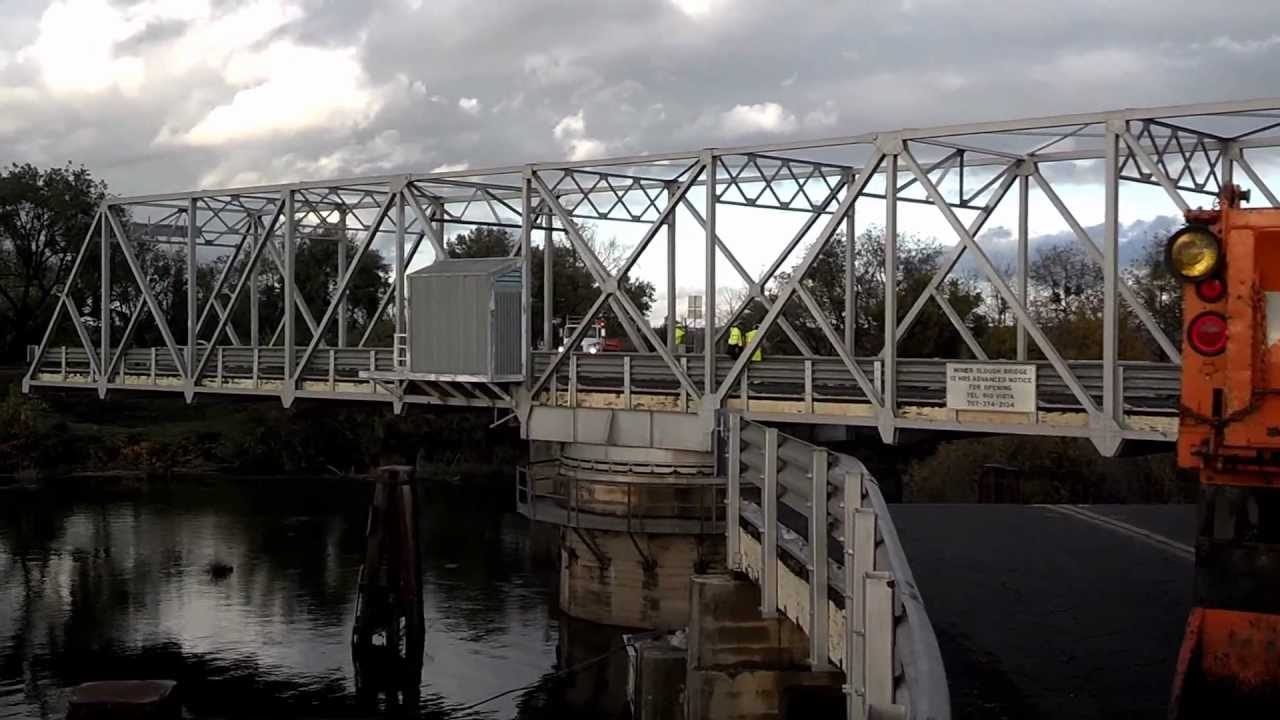
So I went down a rabbit hole of reading about the historic draw bridges around California’s Delta Region, which led me to this video of the Miner Slough Bridge opening. While the bridges on the main channel of the river open fairly regularly, this one on a relatively small slough sees hardly any boat traffic anymore. From what I understand it’s pretty much just opened once a year to test the mechanism, which is what I initially assumed was happening in this video. But no, it’s actually opening to let a sailboat through.
I assume busy drawbridges are regularly staffed and a mariner just has to radio the bridge operator to request that the bridge be opened. But in the case of Miner Slough Bridge, I doubt that’s the case. It looks like opening the bridge is a whole to do, and since there are no gates to stop car traffic CalTrans used trucks to block the road while the bridge was open. So how did this sailor, who looked to just be doing a pleasure cruise around the Delta, arrange to have them do this?
Farther up the river, the Knights Landing Bridge is another drawbridge that is pretty much only raised once a year to inspect bridge nowadays. But I assume if someone wanted to sail up the river they could similarly arrange to have it opened for them.
And re-watching the video I may have found the answer myself, at least for this specific bridge. I see now there’s a sign on the bridge that says “12 hours advance notice required for opening” and gives a phone number to call.
But feel free to discuss how this works for other bridges.
I live near the Delta, and we used to boat there a lot. This is how it used to work in the 1970s. Things may have changed with the advent of the internet and mobile phones.
Most (all?) of the bridges have signs on them instructing boaters where to call to request an opening. Of course, this requires some advance planning, so you generally make an appointment and a tender will be on site at the appointed hour. I don’t know if there’s a cost to it, or what it might be.
If the bridge carries a road it will usually be the relevant road authority, since any impact to traffic has to ultimately be approved by them. Road classifications on land also normally carry over across any bridges. Some bridges open only at set infrequent times to avoid disrupting traffic, others do a regular cycle and some will only open on demand.
Years ago I read about a company that was told that, due to flooding, they needed to open their drawbridge. And although they knew they had a bridge, they were unaware that it was a drawbridge
Decent bet that after a few (many?) years of disuse they were right. It wasn’t a drawbridge any more. At least not without significant expensive and time consuming renovation.
Some rotate horizontally, some pivot at one end, and some lift up at both ends carrying the span up between them. Cleveland has all of those types.
All of the movable bridges in Cleveland have a control house attached to them, but nowadays I think they’re all unmanned and remotely controlled. And we still get big ships through the Cuyahoga, so they all need to open on a regular basis.
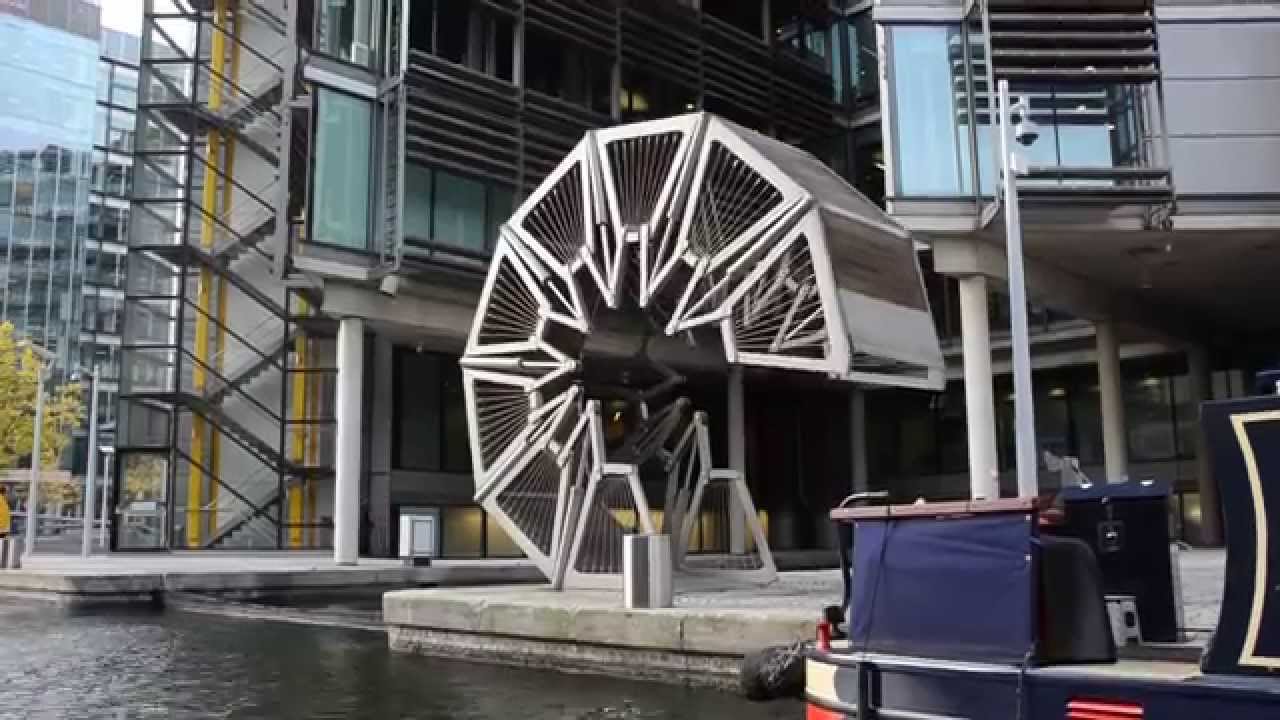
There are many types of draw bridges. Some sink into the water to allow ship traffic to pass over them, some slide back horizontally, and some do exceedingly weird things:
I notice there were no gates on the Heatherwick Rolling bridge to prevent pedestrians to start crossing as it started to roll. I can’t imagine some skateboarders will try.
That’s cool and all, but it looks like being cool is the only reason for its existence. There’s another (permanent) walkway back next to the building, and that little inlet of water seems to serve no purpose other than to have a cool bridge over it.
In Chicago there are schedules to let boat traffic through. I live there and can see some bridges from my place. They only ever open on a schedule (there are many of them and each needs opening…they are not regularly staffed).
That’s just Chicago though. Might be different elsewhere.Chicago has more than a few drawbridges though. Maybe the most.
The Coast Guard requires drawbridges on navigable waterways to be opened at least once a year (at least according to a friend whose career has been in bridge inspection). The drawbridges along the Rehoboth-Lewes canal almost never open except for the annual required opening. If you want them to open for you you need to provide 24 hours notice, but from the wording from the DelDOT it sounds like like they want 24 hours to consider your request - opening is not guaranteed a your desired time.
I might start off by saying that movable (or moveable if you like) span bridge is the accepted generic term, and covers drawbridges, swing spans, lift spans, bascules and weird and wonderful designs.
Any request will be a request to open in 24 hours time, pretty please, thank you, have I told you how beautiful your eyes are? etc. Depending on relevant laws and agreements it will be entirely up to the road authority to decide if, and exactly when, to do it, and they will always prioritise normal traffic over one-off disruptions.
A regular (~annualish) test opening would be necessary to ensure certification of the structure being fit for purpose, and would add to the normal cycle of bridge inspections that would be carried out on all bridges on the road network, although discussions on American infrastructure management suggest that these sorts of things are chronically underfunded and well in arrears and there is not necessarily a response taking place when problems are identified. The risk is always that testing the opening mechanism sees it fail when the bridge is in open position and it cannot be readily closed again. How embarrassment is that!
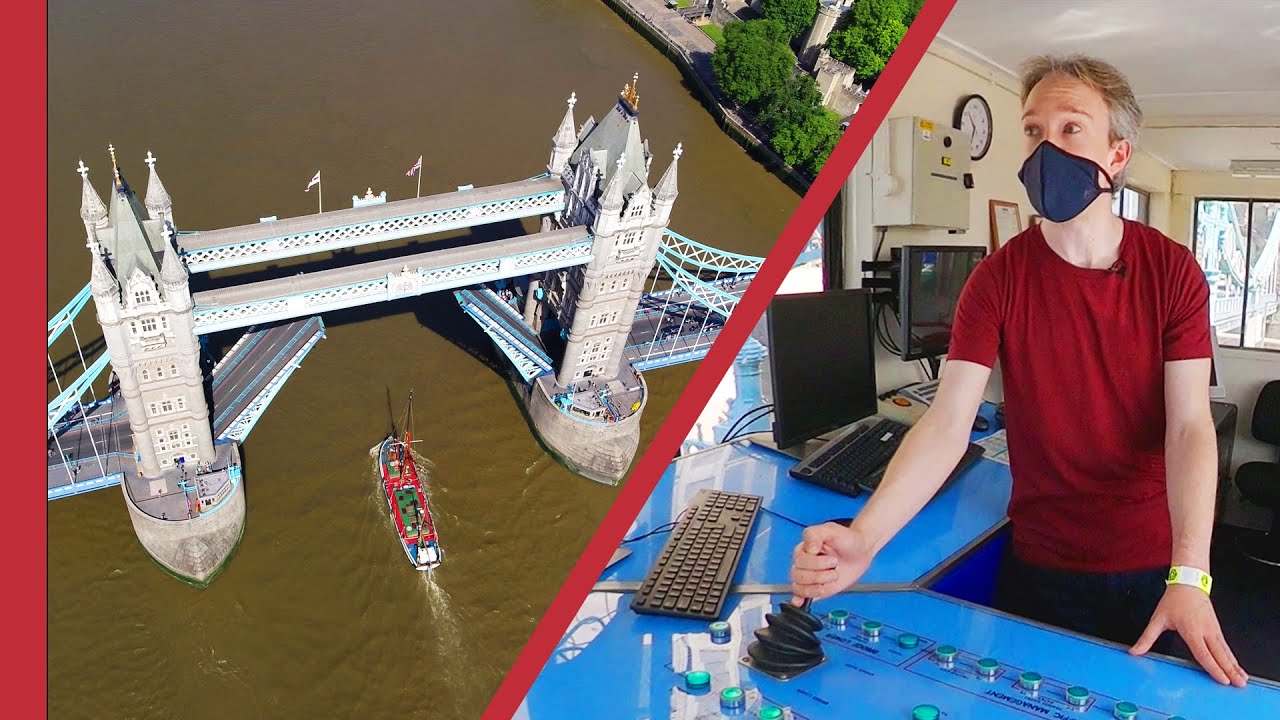
This is already straying from the “rarely used” criteria of the OP, but for the Tower Bridge in London, as seen in the video by Tom Scott above, ships have, by law, priority over road traffic, a leftover from the time when that part of the Thames was still important for commercial shipping. You do have to request an opening at least 24 hours before, and you need a confirmation, but “We are not going to open the bridge” is not an allowed answer.
Yes, Chicago is almost certainly the US city proper with the most.
The tri-county SoFL metroblob consists of the mainland, a mostly man-made waterway, and a 100+ mile long barrier island broken up with a dozen-ish outlets to the sea. Which entails quite a few drawbridges spanning the outlets or connecting the islands to the mainland.
Simplified history lesson & cite
Early in the 20th century they converted a long string of natural barrier islands protecting swampy areas behind into a single solid barrier island and a dredged shipping canal behind. The intent was to be able to run ships north - south the length of the Atlantic seaboard safe from marauding enemy submarines. WWII ended before they finished the job, and the growing size of cargo vessels had meanwhile rendered it moot anyhow.
So we ended up with an inland yacht canal from roughly Miami FL to Norfolk VA with inlets / outlets to the sea every few miles, and drawbridges all along to connect the barrier island(s) to the mainland. Between drawbridges over the inlets & drawbridges connecting the mainland, it adds up to quite a few.
To tie this back to the OP topic, most of these bridges, at least in urban areas are staffed 24/7 and most of them have a standard opening schedule like on the half hour, :15/45 or some at :20/:40/:00 after the hour. They’ll open on time if there’s waiting boats that don’t fit under but otherwise not.
Like @Whack-a-Mole I live in a high rise and I can see 2 of them from my residence and could see a third except it’s hidden behind another building. I drive or bike over one or more nearly every day.
Adding to LSLGuy’s South Florida comments - there are signs visible from boats/ships on the bridges that tell you how to contact the appropriate authorities if you need a bridge opened off schedule. I’m told it costs a good bit of money to do so, so you are usually better off waiting for the scheduled openings. I tend to be on rather small boats, ranging from 30’ down to kayak, and thus slip under without needing to coordinate.
According to https://www.ftlauderdaleboating.com/bridges_lauderdale.htm: Ft. Lauderdale’s waterways are crossed by several drawbridges that require boaters to request an opening. There is only one 55’ span on the ICW in Ft. Lauderdale, the 17th St. Bridge, providing access to Port Everglades and the inlet to the ocean. The rest are all bascule bridges, which we have listed below, with their respective schedule of openings and contact information. All bridges can be accessed by calling the bridge tender on channel 9. Remember to obey the law and avoid unnecessary bridge openings by lowering antennas and outriggers.