How many Black people during slavery/Jim Crow didn’t look Black?

I don’t think there’s an objective, factual answer to this question, and I’m interested in anecdotes as well as data, so I put it here.

In antebellum America, through Jim Crow, the concept of Blackness was defined by the “one drop rule” - just one drop of black blood was enough to brand a person Black, and subject to bondage or subjugation.

This led to tortured descriptions of “black people”. An Octaroon, for example, was 1/8 black. That means that they had 1 black grandparent.

Homer Plessy, of Plessy v Ferguson fame (that is, a U.S. Supreme Court decision that upheld segregation as “separate but equal”) was an octaroon. He challenged segregation by sitting in the white people section of a train. He wanted to get arrested so as to have a case. The only problem was that he didn’t look black. He had to tell the train porter he wasn’t supposed to be there before he could get arrested.

Sally Hemmings, Thomas Jefferson’s concubine, was the daughter of a white man and a black woman. Her children (from Jefferson) were able to live as white people.

Rashida Jones’ father was Quincy Jones, a black man. Her mother was Peggy Liston, a white blonde woman. Not quite the same combination, but consider her appearance.

I enjoy watching Henry Louis Gate’s genealogy show Who do you think you are? At least 2 celebrities- Joe Manganiello and Ty Burrell - discovered they had black ancestors. Under the 1 drop rule, Mangniello is an octaroon.
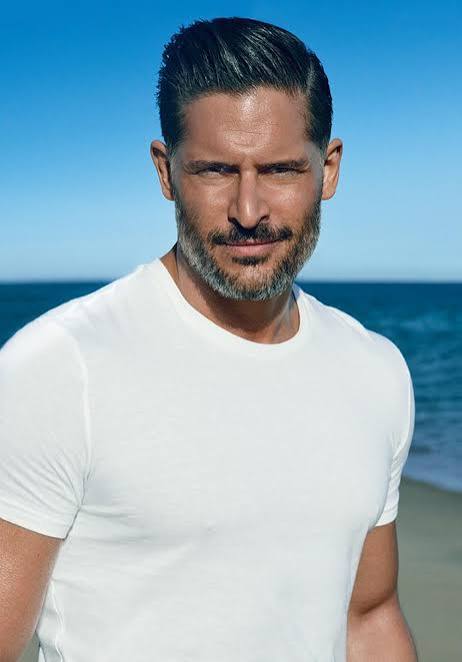
With these ridiculous ambiguities even back then, how shocked would we be if we were transported back then to find people we today consider “tan” to instead be slaves!?

What’s your thought on this? How many black people back then wouldn’t look black to our modern eyes?

A few years back the local North Carolina newspaper carried a report, I believe from the 1950s, about a registar who was confused that a white man wanted a license to marry a black woman. His secretary, who grew up in the area, knew the family, and informed him that the man in question was a member of a black family.

About the same number as now, most likely.

“Passing” was a thing back then.

Username checks out

People have 4 grandparents and 8 great grandparents. I suspect you missed a generation there.

If you’re interested, this woman just wrote a book about her uncle (grand uncle?) who left NOLA to go to Chicago and pass as white. Chicago didn’t have JC laws, though. Here’s a gift link:

https://www.nytimes.com/2026/05/15/us/degrange-family-history-race.html?unlocked_article_code=1.wVA.2-NY.z0WkwuWqUKQo&smid=url-share

My dad’s family was Boston Irish, and there was always some “scandalous” but not openly discussed idea that there was some “problematic” blood in his aunt’s (by marriage) family.

One of his cousins dug into it and we learned it was true - my great aunt was descended from a pretty accomplished group of children of a slave owner and one of his slaves, one of whom became the Bishop of Portland Maine:

His siblings were equally accomplished, several becoming the “first African American” X. But no one talked about it, due to the racial implications.

Years ago, PBS had a show called Genealogy Roadshow (only two seasons IIRC). One middle-aged woman had no knowledge of her mother’s background/ancestry. Her mom never talked about it. Turned out that her mom grew up Black in the South and left cutting off all ties to her family. No one in the daughter’s family had any idea.

Also, I have an aunt by marriage who I’m certain is at least mixed race. I remember some whispering when I was a kid, but we lived 2000 miles away and weren’t that close. I like her and my cousins, and the idea of them having non-white ancestry had no real impact on me.

Carol Channing’s father, born in Georgia, moved to New Jersey and passed for White his whole life. His mother was Black.

The Census Bureau included a category called mulatto, which was used to count mixed-race persons, from 1850-1920, with some omissions. Some data can be extracted from them, although modern scholarship agrees with those at the time who wanted to drop the category that its accuracy was extremely suspect.

1850: 405,751 total, including slaves.
1860: 588,245 total, including slaves
1870: 584,049
1880: not recorded
1890: 1,095,951
1900: not recorded
1910: 2,050,686
1920: 1,660,554

Mulattos or mulattoes (both spellings were and are used) were about 12% of the total black population in the earliest counts and rose to 15-20% in the 20th century. The 1910 census deliberately hired more black enumerators and that resulted in a higher count.

Mixed-race in early censuses mostly referred to black/white ancestry but also partial Native American ancestry. The latter would be a relatively small number probably not altering the percentages very much.

Other classifications came later.

In 1890, the racial categories of “quadroon” (defined as one-fourth “black blood”) and “octoroon” (one-eighth or any trace of “black blood”) were introduced. In 1930, for example, the “one-drop rule” included in enumerator instructions said that “a person of mixed white and Negro blood was to be returned as Negro, no matter how small the percentage of Negro blood.”

Damn, you’re right

It occurs to me that my grandparents were keenly aware of people’s ancestry. Upon hearing a last name, they’d associate it with an ethnicity. When my half sister was born, and to be named Tiffany, I asked if they should spell to with an I. “You can’t do that.” bellowed my southern grandmother, “That’s eye-talian.”

I think the preoccupation with ethnic blood is weird.

That’s a different show. Gates’ show is Finding Your Roots. It has a very specific focus on the ethnic backgrounds of his guests. He says:

I have a couple of missions. One is to show that we’re all descended from people who came to this country from somewhere else. Secondly, that we’re all related. If you go back far enough, everybody came out of Africa. This idea still makes some people uncomfortable.

What I find irritating about his show is his emphasis on how interests and occupations can supposedly be inherited from people several generations back. I would not expect that from someone of his erudition, and I suspect it is just for audience appeal and does not represent his real opinions.

To speak to the OP: it is my sense, from that show as well as other sources, that there was a good deal of inter-racial sex of the non-consensual kind (i.e. rape by male white slave owners against black enslaved women), and since the children would often still be enslaved, that this could easily and often happen over two generations, which is enough to create a percentage who could “pass” as white.

During Jim Crow there was probably less of this non-consensual sex (although there was certainly still rape of black women by white men, there was just less easy opportunity for it, and more social opprobrium against it), likely resulting in less blurring of the color differences, especially in the South, where Jim Crow was strongest and most entrenched.

In the period since inter-racial sex and marriage became more common and legal barriers gradually came down, I would expect that the range of “typical” characteristics, not only color but other characteriestics, between people of northern European heritage and people of African heritage has smoothed out quite a lot, so that there would be a lot more people now than during the periods in question about whose racial background casual observers remain uncertain.

tl;dr It’s a lot harder to tell ethic background now than it was then, in my opinion.

There were some Black entertainers in the United States who adopted a foreign persona by wearing a turban, fancy clothing, and giving themselves an exotic sounding name. Dicky Wells, a nightclub owner in Harlem, called himself the Maharajah of Hattan. NPR did a story on this a few years ago. Obviously the people who did this didn’t pass a White, but at the same time some of them didn’t look Black either. It’s just good evidence of race being a social construct rather than an objective reality.

On the other hand, when my German grandmother married my Irish grandfather, nobody in either family batted an eye… because they were both Catholics. But if Grandma had married a German Lutheran, or if Grampap had married an Irish Presbyterian, that would have been scandalous.

It should also be mentioned that it doesn’t necessarily take very much “white” ancestry to pass as white (or the other way around): If a “pure” white person has kids with a “pure” black person, their children will all be about the same intermediate color… But if two such first-generation mixed-race people have children together, those children will on average look like their parents, but they can also be as dark as their pure black grandparents or as white as their pure white grandparents, or anywhere in between. And since most modern African-Americans are mixed race, you can end up with extreme variations within the same family.

(my diaresis)

You may be interested in Ernest “Dutch” Morial, who was both the first African-American graduate of LSU Law School (1954) and the first African-American mayor of New Orleans (1978-1986). Today, Morial is the namesake of New Orleans’ largest dedicated convention venue, the Ernest N. Morial Convention Center..

Morial was descended from a New Orleans Creole family that maintained the French language in the home and, for better or worse, represented a different class (largely in pre-1960s New Orleans) from the descendants of slaves. This is what he looked like as a young man:

Here Morial is at the podium, late in his second term as mayor in 1985 (start at about 1:25). I saw this face frequently on local TV news as a child and teenager. The adults generally knew Morial’s background if they were locals, but us kids were oblivious. More videos at this link.

Here is a picture of Morial and his wife Sybil in 1967:

Here is their son, Marc Morial, who also served as New Orleans’ mayor from 1994-2002:

This raises a very interesting point. It is probably the case that there were more light skinned or ambiguous looking “black” people during slavery than before. Once slavery ended, there would be fewer mixed children to muddy the phenotypical waters.

I personally suspect that most black Americans today have some white ancestry, and I think it accounts for why American black people tend to look different from Africans. But I’m guessing that these white ancestors aren’t usually found within the last 175 years of the family tree.

I see a “bathtub curve”. As @Roderick_Femm said.

As said, interracial sex and kids were big during slavery. Voluntary or more often otherwise. And after roughly 1810 fresh wholly black African genetics were no longer (legally) imported into the USA. So the result is an ever increasing admixture of whiteness into the legally black population.

That came to an abrupt near-halt w Emancipation. Sure some consensual mixed race couplings continued. But the large bulk of forced master-slave couplings stopped. And animosity to so-called miscegenation grew to crippling intensity.

With the result that whatever the level of mixed raceness was immediately post-Emancipation, it mostly stagnated going forward.

Fast forward from ~1870 to ~1970. During which there was some very small African immigration. And not much offsetting interracial kid-making.

Come ~1970, interracial relationships & the inevitable kids therefrom began again in earnest. And have continued to grow unabated until (probably) the last very few years of MAGA-inspired troglodytic racism.

Which with any justice in the world will be a brief slowdown on the inevitable progress to one fairly consistent shade and shape for all humans.

Human horniness is an unstoppable force in the long term.

On a personal level, my wife’s niece got heavily into genealogy and traced her family line (father’s side) back to someone on a slave registry. She had no idea.

More generally, Michael A. Healy held the rank of captain in the Revenue Cutter Service (forerunner of the Coast Guard) off the coast of Alaska in the late 1800s. He was born to a mixed-race slave mother and an Irish landholder. He patrolled the coastal waters of Alaska for 20 years without being outed.

He was one of the brothers of the Bishop of Portland that my family learned about (post 6, above).

My cousin, who did all the research about this branch, actually went to Alaska recently for some reconciliation ceremony between the Coast Guard and the Alaska natives.

Another brother was the first black Jesuit and President of Georgetown, and a sister was the first black Abbess, up in Montreal.

All pretty serious Catholics, but that was not enough to keep them hidden from our memory for so many years, because, you know..

In a book about American slavery I read an anecdote of a slave who didn’t look black at all and could read and write as well as a clerk was being taken to a slave auction by an Italian who was one of the guards at the plantation. Knowing how to write he altered the paperwork on his slave papers and since his Italian Guard couldn’t read or write English, he told the person overseeing the slave auction that HE was the guard and the Italian man was his slave and they bought it because of how dark skinned the Italian man looked. When the auctioneers went to take ahold of the Italian man he fought back and in the confusion the slave escaped and used his knowledge and ability to pass to eventually escape to freedom.