ETA: I originally said “killed” rather than “ruined”, although if anyone has some cites that that’s not hyperbole, let us know.
Inspired by, of all things, the opening scene in the Bugs Bunny cartoon “What’s Up, Doc?”. We see that Bugs has made it to the very top and is living the dream; which circa 1950 is a luxurious Modernist home in the L.A. metro area, with of course a full-size swimming pool.
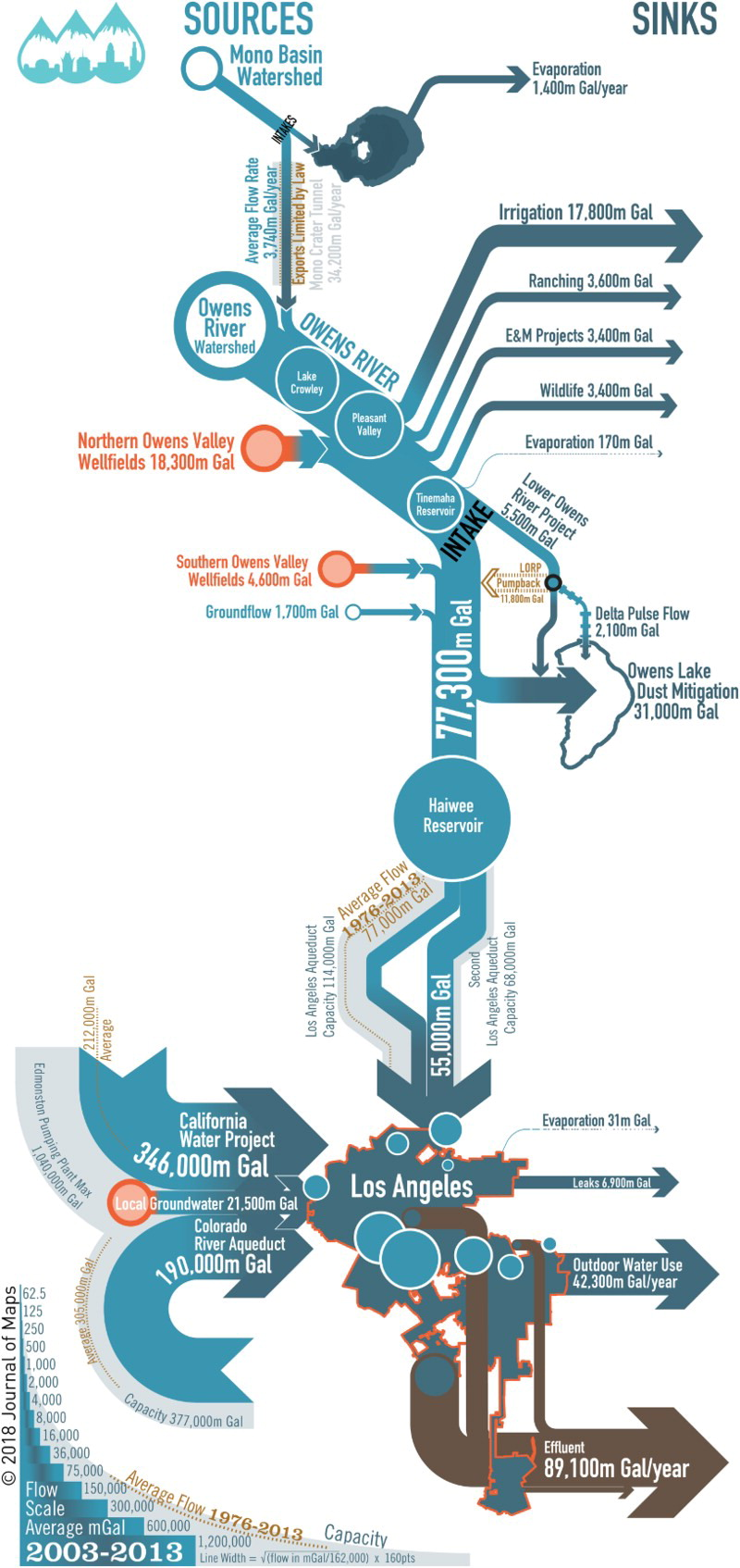
Doubtless that pool represents several irrigated acres of melons some farmer never grew. I am of course referencing the infamous “Water Wars” which probably most people who could afford a pool didn’t think about too much.
While not to disparage the genuine need of a large metro area for a secure water supply, I doubt any driven out of business farmers thought particular well of those swimming pools.
Worth noting that popular sentiment on who is the aggrieved has reversed in recent decades as California has endured multi-year droughts with a burgeoning population. Agriculture takes ~40% of CA’s water, urban areas ~10% (the rest ends up feeding the environment, sometimes inadequately). There has been some public backlash against irrigation for water-hungry crops like almonds and cotton, both traditionally profitable industries in CA.
Pools don’t actually use that much water, as it happens. The water is cleaned and recycled, and has a low evaporation rate. A lawn used IIRC about three times as much. Given that on the scale agriculture does things one swimming pool doesn’t use all that much water I doubt a single field went without because of it.
Water usage for agriculture here in California is largely controlled by old agreements going back over a century, letting the covered agricultural users buy water cheaper and often waste it on things like growing water-intensive crops in the desert. It’s much, much more likely that a big farmer starved the little farmers of water than somebody with a swimming pool. Both because they use much more water, and because they actually have the ability to demand that water and get it, which the pool owner doesn’t.
I’d like to see any evidence that any farmers were driven out of business solely due to a lack of water, especially so that rich people in Beverly Hills could have swimming pools (or movie stars). (I don’t doubt that some small farmers were driven out of business in favor of larger, industrial scale factory farms.)
Does LA or any of its suburbs require a surcharge for heavy non-industrial use of water?
If they were allotted a quota of water and told “that’s all you get”, I don’t doubt that not being able to fully use acreage could have tipped a farm into insolvency.
Googling (I live in Northern California, not near LA) it looks like they started doing that around back in 2016.
Penalties for customers who receive a property-specific water budget and do not comply with their Conservation Plan will begin at $1000 per month under the current Phase 2 water use restrictions in place through the City’s Mandatory Water Conservation Ordinance. Continued non-compliance will result in penalties up to $4000 per month. Penalties also increase if the City enters a higher phase of its water conservation ordinance and can top out at $40,000 per month for non-compliance under severe water use restrictions in Phase 5 of the ordinance.
IMHO you’d have to cite how many farmsteads were originally in Beverly Hills before there were swimming pools then count how many farms failed and link that to the construction of swimming pools?
Presumably the land could be sold at a higher price to a developer for houses than it could if it was resold to another farmer. How is that a bad thing?
The OP’s assumptions are utterly without basis in fact. It’s very loaded question.
Especially since back in the 1950s there was a lot more water in CA than all the cities and all the ag could use up, no matter how wastefully they each used water.
In California as a whole sure, but location as they say is everything; and LA definitely tapped its surroundings of available water.
That may not exactly be “driven” out, but it definitely meant the end of those farms. It kinda sucked to have to sell out a family farm that had been established for generations.
It looks like they were setting up regulations for water rationing during droughts. Those come and go. During a really bad one, there might be trouble if you try to fill a new pool.
But they didn’t have to. They could have held on to them. But they decided that the price the developers were offering them was worth more than the value of keeping the family farm.
Water use issues in California are complex. Some of it is from growing crops that do not belong there.
Almonds use up to 17% of the state’s agricultural water. You probably think a lot of people are eating almonds, but no. All that water is going into almonds for almond milk. Trendy, feel good, almond milk. They could quit that at anytime but they won’t. It takes more than a gallon of water to grow a single almond.