A dish washer, washing machine and tumble dryer ( if not gas heated) along with the ac unit blowing air arround the house even with a gas furnace for the heat that can add up to quite a bit of consumption as well. 150 a month is crazy low , awesome!
The OPs useage is really high , we used 2500 kwhr in a 3500 sq ft house in August in Houston Texas with the AC keeping it at 78 inside. When we changed the windows we are below 2k and running inside at 75. (we used to be at 3400 kWh peak useage before we changed the ac unit to a modern two stage one from the 1980s thing it was)
If you have an online account with the provider they may have useage broken down by day or even by the hour. You can maybe see if the usage was going on when you have the heaters on or if there is something else sucking power when you are out at work and no heating on ? If it’s when the heaters are on is the heat all going up the vents for the air conditioning? Maybe close those and close doors to rooms not used and every deg f to have the temp higher is a bigger and bigger usage and you fight increased heat flow out. 65 and a jumper. Dehumidifing can help as well , humid air makes it feel cooler and takes more energy to heat up, so one is tempted to crank the heat up.
My cost per KWH on the East Coast in Virginia is .15 cents. The formula involves the total of the bill (including fees, etc.) divided by the number of KWH used.
On the other extreme we are currently seeing some reasonably evil summer weather here (40ºC tomorrow) and aircon gets reasonable use. Peak power usage across the state is hot summer days. Winters less so.
Last week was quite mild and I pulled about 90kWh. Probably looking at 150kWh for this week of evil weather.
Sneak use of power seems to be around a minimum of 200 watts. But can creep to 400. No doubt the fridge is big part of this. Fridges can vary dramatically in their power use just depending on how often the door is opened. Claimed use numbers may not meet everyone’s use case.
Power here in Oz is pretty expensive. On my plan, peak power price (early evening) is 0.36 USD. Power can drop as low as 0.13, but is mostly about 0.21. This doesn’t include the supply tariff which is about 0.70 USD a day. Does include tax.
I have solar panels so I don’t expect to pay much if anything when it all washes up. I only get a measly .033 for power I generate. That about covers fixed supply tariffs and overnight use. So solar mostly pays its way by avoiding importing energy. That and charging an EV. Which is a game changer.
My house is probably not dissimilar to the OP’s in that I have floor to ceiling wall to wall glass on one side. Stopping convective heat transfer off the glass (in either direction) makes a massive difference. Emissive heat transfer can be big as well. It can account for a significant multiple of energy used keeping liveable temperatures inside. So curtains, double glazing and/or low-E glass. That and managing air leaks. Gas (and other combustion) heat that doesn’t use a balanced flue, and draws air from the inside of the house is a disaster. Luckily here heat pumps work well. Sadly there is not much joy to be had trying to cuddle up in front of a heat pump heater versus a proper burning fire. My cat is pretty good at seeking out the heat flow so he doesn’t complain.
My bill is between 800-1700 KWh, depending on how much of my heat is coming from the natural gas boiler vs heat pumps (which also provide cooling in the warmer months), with the peak in the summer.
Our rates come in at about CAD$0.16/KWh all in with taxes and fees.
Nitpick: I’m doubtful your rate is fifteen hundredths of a cent, which is what you’ve written.
Letting your home cool down and then heating it back up to its original temp is a zero-sum thing, but as you’ve noted, the savings comes from your heat loss rate being lower whenever the indoor-outdoor temp differential is lower. My point is that the savings just isn’t that enormous: setting your thermostat back will shave a few bucks a month, but it won’t cut your utility bill in half.
Modern gas furnaces do have multi-level heat capability, but if there’s a drastic difference in efficiency between the heating rates, then something is wrong with the furnace.
I just checked and for my ~1300SF highrise apartment we used 535kWh in the last month, peaked at 925 kWh last summer, and averaged 814 kWh over the trailing 12 months. Now this is SoFL, where we need a bit of heat in the winter and a bunch of AC in the summer.
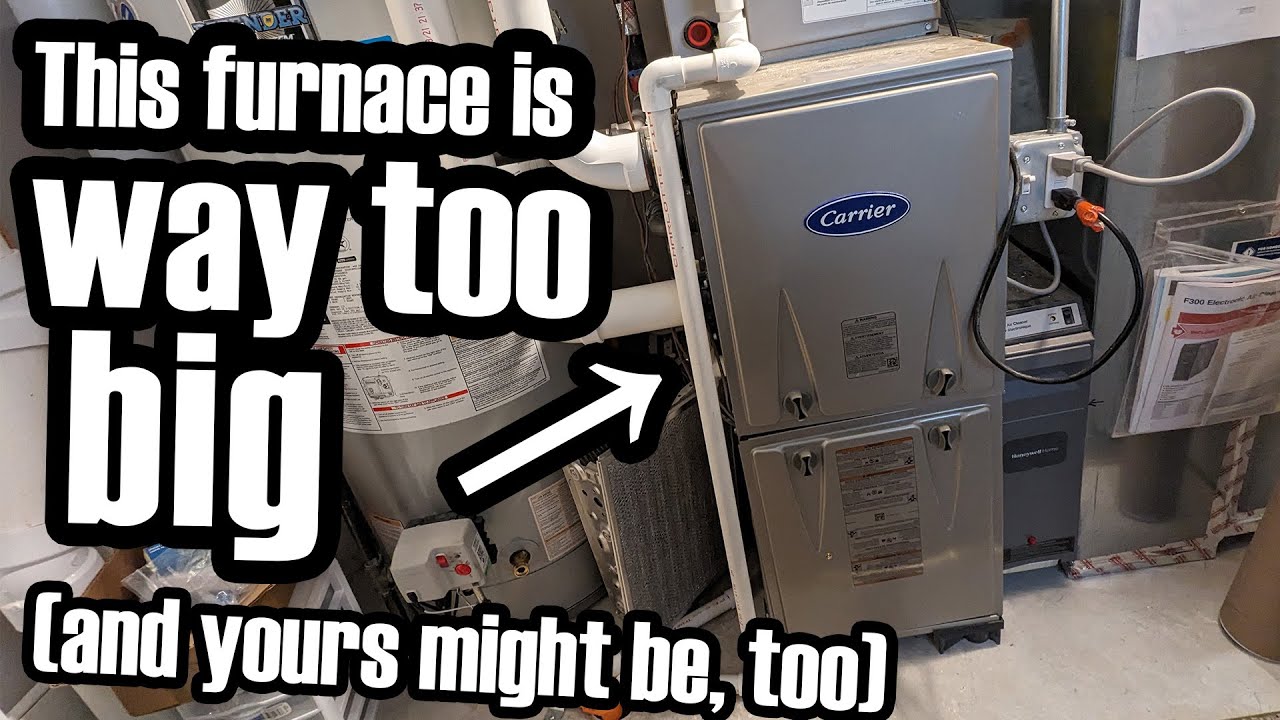
FWIW the YouTube channel “Technology Connections” (a favorite of mine) has just put out an hour long video on properly sizing HVAC for a home. I probably can’t make much use of the advice there but some here may find it useful.
There are some edge cases, for instance my house has a heat pump which is good enough to maintain a steady temperature most of the time, but not very good at increasing temperature. So if I set my thermostat 5 degrees colder for the night, when it’s time to recover in the morning it will use the heating elements in the furnace, which could end up costing more energy than just leaving the heat pump in charge.
I haven’t watched the video, but yeah–our house has a 190k BTU boiler with a minimum output of 19k BTU. I would like to keep our bathroom floors warm in the winter, but it’s way too little square feet and the boiler gets confused. It’s sized for -40F and cloudy days which we see once a year. We had to combine several zones to get the boiler to stop short-firing. It annoys me.
We have a smart thermometer, just like Tech Connections has in that video, and I can guarantee we use a lot less energy dropping our heat overnight and while we are away. I can easily see the amount my furnace runs and on the days we both work in the office for the full day, our furnace runs hours less on cold days compared to the days we are home all day.
Possible very low prices brings to mind the interesting electricity market we have here in Oz. Apart from Western Australia - which is too far from from the rest of the country to economically connect, Oz has a unified electricity market. Energy is bought and sold at five minute intervals - the spot market. And in times of overproduction, prices can go negative. Most consumers elect to have fixed price contracts, with their supplier taking the heat, but you can sign up for supply contracts that follow the spot market.
Prices can vary dramatically. (They are actually priced in MWh, but I’ve divdied everything down so they are in kWh to make it easier to compare.)
Today the spot price during the day was as low as -$0.043 per kWh*. That is a negative. Power generators that can’t throttle their output may actually pay to be allowed to output power. If you own a big coal fired power station this can be a problem. I know of owners of EVs that have flexible contracts that get paid to charge their EV on days like this.
On the other hand, if demand exceeds supply, things can get really grim. Tomorrow night the market currently expects this to happen, the future price then is currently sitting at $16.0 kWh. Remember , these are wholesale prices. It won’t get that bad, but $1 kWh isn’t uncommon. On an ordinary day, prices might swing from $0.04 to $0.20 kWh. The advent of solar and wind energy is a big driver in this volatility. If the sun is out and the wind is blowing prices plument, and maybe go negative. It the wind stops and the sky clouds over, prices can soar. I get paid $0.05 kWh for power I export. I pay as much as $0.53 kWh (retail.) If I was on a flexible rate contract I would be turning off the main breaker to the house tomorrow night. There are enthusiasts with batteries that play small scale arbitrage in this market.
A significant moderator in this is pumped hydro. Tasmania (from whence the devil comes) has a lot of hydro, and there is an interconnector to the mainland. A lot of electricity passes to and fro every day.
For ordinary consumers, no. For those that elect to go full exposure to the market, yes. There are retailers that will provide such contracts. Most people like the security of a known price.
Are you on hourly prices, or fixed rate? I typed in a random date (April 16th, 2023) and ComEd prices were negative between, roughly, 3 a.m. and 4 p.m.
I have wondered about a variable rate but I find it difficult to do the math of whether that is better for me or not (they raise the rate during the day if you do that…but I work from home now so???).
And by difficult math I mean I can add it up easily but I find it difficult to find reliable numbers so I can make a good comparison.